Showing posts with label appraisal. Show all posts

Sunday, July 24, 2016

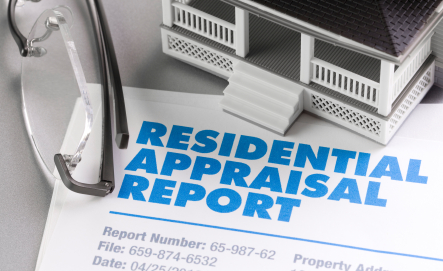
What If Your Home Appraisal Is Too Low?


You have signed a contract to purchase a house. Your potential lender has qualified you for the mortgage loan, on the condition that the house will appraise high enough to support the loan. Now you have learned that the appraisal has come in too low, and the lender is not prepared to commit the loan.

You have a number of options.

Let's take this example. Your contract price is $500,000, and you are seeking a loan which will be 80 percent of the purchase price -- or $400,000. Such a loan will help you avoid paying private mortgage insurance (PMI) premiums. However, the lender has appraised the house for only $480,000, and will only lend you $384,000.

Here are some of your options.

1. Cancel the deal. Read your sales contract carefully. Do you have a financing contingency, and do you still have time to terminate the contract if you cannot get the financing spelled out in the contract. If you have any questions about this, check it out with your attorney. Did you include a contingency for obtaining an acceptable appraisal? Read your contract carefully.

2. Put up more cash. You originally intended to put down $100,000 of your own money and get a $400,000 loan. Since the lender is only willing to lend you $384,000, you can -- if you have the cash and want to use it -- put up the additional $16,000 (or $116,000), and still buy the house. However, if the appraisal is truly accurate, give serious thought as to whether you may have overbid on the price. And don't forget to plug into your equation closing costs -- such as title insurance, recording taxes, title search, etc.

3. Change the terms of the loan. Obtain a first trust in the amount of $400,000, and a second trust in the amount of $16,000. This will help you avoid PMI. Talk with your lender about this; not all lenders like to use this approach.

4. Challenge the appraisal. You have the absolute right to obtain a copy of the appraisal. Read it carefully, and discuss it with your attorney and your real estate agent. You should then talk with the appraiser and/or the lender. If you believe there were errors in the appraisal, demand that the appraiser return to the property, and reevaluate the situation.

Keep in mind, however, that appraising property is not a science; at best, it is an attempt to determine what a piece of property is worth, based on a number of different methods of evaluation. While appraisers use such benchmarks as square footage, replacement value and other similar concepts, the bottom line in my opinion is that appraising a house is a very subjective exercise. Since no two houses are really similar, there has to be a lot of subjectivity involved in any assessment.

The best test of market value: what a buyer is willing to pay and a seller is willing to accept for the house.

Source: RealtyTimes,  Benny L. Kass
http://realtytimes.com/consumeradvice/buyersadvice1/item/46172-20160721-what-if-your-home-appraisal-is-too-low

Monday, July 11, 2016

How to Prepare Your Home for an Appraisal


Getting your home appraised can often be a nerve-wracking experience. Your home and your handy work will be on display to be judged and valued so that you can move forward with selling your home.

But it doesn’t have to be a stressful experience. With the right tools, tricks and savvy, the appraisal process can not only go smoothly, it can also help you make a giant financial leap toward a future in a new home.

Do your homework
“Just like anything else — for example, if you’re going to select a doctor, dentist, or lawyer — you do your homework to find out the appraiser’s market knowledge of the area,” says Rick Singh, a property appraiser in Orange County, FL.

Ideally, your appraiser will be a local who knows the area well and who has been around long enough to see changes in the market. It’s also crucial to hire an appraiser who is state certified.

Check your maintenance
Whether it’s a loose shingle, chipped paint or dirty carpet, be sure to take care of it before the appraiser comes. Anything obvious that needs work could potentially eat away at your home’s value.

Also, keep a list of maintenance work that has been done on the home. Have a running list of what you have fixed and upgraded in your home as well as the amount of money you have spent.

Maximize curb appeal
When you’re getting your home appraised, remember that your house should look like the nicest one on the block.

“Landscaping plays so much into making a good first impression,” Singh says. “And remember that a first impression is a lasting impression. Make sure [your yard] is tidy and up-to-date. Trim or replace dead plants, and make sure it’s nice and green.”

Ensure appliances work
Do you have a dishwasher that only works when you give it a little kick, or a refrigerator that doesn’t keep your food as cool as it used to? These malfunctioning big-ticket items in a home could be a huge disadvantage to your home’s appraisal value.

Show pride in ownership
Although your home isn’t necessarily valued on the interior decor, it doesn’t hurt to show that it’s well cared for.

This doesn’t necessarily mean you have to trade in your T.J.Maxx finds for a pricey interior makeover, but make sure your home is neat, tidy, and exhibits that you generally have an interest in keeping your home looking its best.

Know your neighborhood
Before you get your home appraised, be sure you know what comparable nearby homes are going for, because that can be a huge predictor of your home’s value.

Also, inform your appraiser of any extraordinary circumstances, like if someone in your neighborhood had to sell their home quickly. Sellers may have to lower the price of their home to get out in a timely fashion in the event of death or job relocation in another state.

It’s extremely important that both you and your appraiser are knowledgeable about your neighborhood to get as accurate a value as possible.

Understand that cost does not equal value
When you make improvements to your home, you hope that everything you’re upgrading will increase your property value — but this isn’t always the case.

“Sellers may think, ‘I spent $60,000 on my home and $20,000 on the pool, so the home should be worth $80,000 more.’ However, the market may say it’s only worth $5,000 more. Find out what the economic investment is, because the rate of return is so important,” Singh says.

If you’re not satisfied, reach out
If you’re dissatisfied with the appraisal value, Singh advises contacting the appraiser about your concerns. Make sure you have data to back up your claims when you call to voice your opinion.

“You can always get a second appraisal,” Singh notes. “If you really think something was done incorrectly, voice your concern to the appraisal board as a last resort. All appraisers are licensed, and they don’t want to jeopardize their license. However, I often recommend going back to the appraiser and showing [him or her] the facts.”

Source: Zillow Porchlight, Jamie Birdwell-Branson
http://www.zillow.com/blog/prepare-home-for-appraisal-200936/

Tuesday, March 1, 2016

The Features That Help a Home Sell Fastest—and the Ones That Don’t

spanish-house

Fasten your seat belts, it’s going to be a wild year in real estate! Our chief economist, Jonathan Smoke, has predicted that 2016 will be a true seller’s market, and it’s already galloping out of the starting gate.

Of course, not all homes are equal, and they don’t sell equally well, either. Most homes are a unique mosaic of attractive features (sparkling new granite counters!) and sometimes frustrating flaws (hey, what’s with the dilapidated porch?). Which part of that equation comes out on top will help determine what how quickly your place will move.

But what are the specific features that make some homes hotter than anti-Obama posters at a Trump rally? We set out to quantify just how much of a difference the most popular features can make in selling a home, and how certain features can slow the pace to a crawl—to separate out the stainless steel from the popcorn ceilings.

We studied millions of our listing records from the past three months and evaluated them based on two metrics: 1) the number of days each home stays on the market, and 2) the number of page views each listing receives from home shoppers on realtor.com®.

We analyzed the homes that generated the most interest and sold the fastest in relation to their architectural style and various amenities. Granted, it’s impossible to pinpoint exactly why Home A sold faster than Home B (could it really be those pink bathrooms?), but when you crunch a whole lot of data, some interesting patterns emerge.

Here’s what we learned:

1. The Spanish reign supreme

To our surprise, Spanish-style homes, which make up only 1% of our for-sale listings, are on fire, spending a median of just 47 days on the market, half the national average (93 days). So we did some digging and found that Spanish-style homes are mostly located in California’s coastal cities, where the markets are as blistering as beach sands in August.

After Spanish style, traditional homes draw the most eyes—and buyers. This broad category may sound dull, but not to shrewd home buyers with resale value firmly in mind. They know that a mainstream style is likely to appeal to the widest possible swath of buyers.

The opposite side of the spectrum: custom homes, which are sold in 109 days, 17% slower than the national median. So are Craftsman homes that emphasize handiwork and natural materials. They’re prominent in the Pacific Northwest and in Southern California, and are a tough sell these days, as evidenced by their median 103 days on the market.

Worst still: The 19th-century Victorian style, now mostly found on the Northeast, has fallen from favor in recent decades. The vibrant, sometimes wacky color combos (often layered on), carved decorative trim, and asymmetrical shapes just don’t seem to appeal to modern buyers. Go figure.

graphic_style

2. City skylines trump soothing waves

On a lazy afternoon, you curl up in the sofa in front of the window, with your Kindle and a cup of steaming Earl Grey. Can life get any better? Yes! Add a breathtaking view in front of you. Perfect!

It’s no surprise that a view makes a home more attractive to buyers. But a view of what, exactly? Ocean waves, snowy mountains, or just the trees in your own backyard?

It turns out that homes with a view of the urban jungle sell the fastest—at just 83 days on the market. If you guessed that homes with ocean views would be most in demand, well, they sit on the market for 98 days on average. But let’s get real; the median price of $749,000 for an oceanfront home is clearly not for everyone.

graphic_view

3. Stainless steel and granite are here to stay

Want to appeal to buyers weaned on HGTV and Pinterest? The right interior features can speed your way to a closed deal.

Ask home buyers to name their must-have features, and you’re likely to get a resounding (and headache-inducing) chorus of “Stainless steel!” Some argue that this mania has peaked, but our data shows it’s here to stay—at least for the foreseeable future. Homes with stainless-steel appliances sell 15% faster than average homes.

At one time (before central heating), a fireplace was the focal point of every home. Now that fireplaces are an optional feature—although they are mentioned in listings more often than any other feature—their charm among buyers is markedly waning. Homes with a fireplace now sell at the same pace as homes without.

graphic_amenity

4. Location, lo…

Yes, you know the old saying about the value of location in real estate. And you know why people keep repeating it? Because it’s true! (Also, it’s catchy and easy to remember, much like the Big Mac jingle.) But there’s more to location than just choosing between, say, Des Moines and Detroit. Once you narrow down the city or town, other things come into focus. Such as: What’s the neighborhood? And what’s in the neighborhood?

From shopping centers to public transportation stations to sports stadiums, we looked at dozens of public facilities that listings mentioned as being nearby. Homes near schools, especially good schools with keywords like “top” and “best,” jump to the top, with 76 days on the market and significantly higher views per listing. Also notice the high price tag—$330,000—of homes near good schools. Apparently, securing a bright future for your kids outweighs scoring primo season tickets to a local hockey team.

What kind of nearby facility scores last in terms of impacting home values? Hospitals, surprisingly enough. Practical though it may be to be located near a major medical center, those homes aren’t getting much love. They command the lowest prices, receive the fewest views, and stay on the market for the longest

graphic_location

5. Dream big, buy small

Americans love big homes: four bedrooms, three bathrooms, a large family room, a two- (or three!) car garage… we could go on and on. Our traffic data showed that the bigger the home, the more page views it receives. A 8,000-square-foot mega home receives about 30% more views than a cozy 1,000-square-footer.

Reality check: How many people actually end up buying an 8,000-square-foot home? Well, the middle point between fantasy and reality is 1,500 to 2,000 square feet. Homes within this size range are generally snapped up in 86 days.

graphic_size

6. The price is right

As the national homeownership rate hovers near a 50-year low, those who can afford to buy are making prudent decisions. Lower-priced starter homes are winning most buyers’ hearts. Homes listed at between $200,000 and $250,000 were sold in 83 days on average, significantly faster than in any other price range.

And of course the more expensive the home, the fewer buyers can afford it. If you happen to be selling a home priced between $2 million and $5 million, give it 133 days (4.5 months) to land a buyer. Minnesota’s most expensive home, at $24 million, has been on the market for eight years!

graphic_price

Source: Realtor.com, Yuqing Pan
http://www.realtor.com/news/trends/what-home-sells-the-fastest-according-to-data/?iid=rdc_news_hp_carousel_theLatest
Tuesday, February 16, 2016

Zillow Explained… And Why It’s Not To Be Trusted!


Let me just go ahead and say it bluntly: stop listening to Zillow.

Look, relying on Zillow to accurately determine your home’s value is, at best, a crapshoot. Zillow itself even encourages buyers, sellers and homeowners to conduct other research such as “getting a comparative market analysis (CMA) from a real estate agent” and “getting an appraisal from a professional appraiser.”

Sure, Zillow’s Zestimates® are quick, easy, and free… but so is dating advice from your twice-divorced Uncle Larry. The point? Just let a local real estate professional (who will actually see your home’s unique features in person) determine its fair market value.

Let’s dive in a bit further, shall we?
First, I don’t believe that Zillow is inherently evil. In other words, they don’t set out to intentionally mislead the general public. In fact, they do have their positive points. Nevertheless, what is the net effect when buyers and sellers use Zillow? They often get inaccurate information, rely on it (even swear by it, ugh!), thus causing migraines for Realtors and agents everywhere.

See, for those of you not working in the real estate industry, you assume that Zillow is a trusted resource to find out what your property is worth. You assume the information is factual, based on homes that have sold in your area (also known as comparables or “comps”), and therefore are to be considered true market value. I’m here to explain to you why this website is feeding you misinformation and why it should not be trusted.

To put it simply…
The fine folks at Zillow don’t have the slightest clue about your market. There are approximately 43,000 zip codes in the United States, and each one has variables that affect property values, such as: school district, knowledge of declining or flourishing areas, property taxes, proximity to interstates, hospitals, attractions and shopping, and bodies of water to name a few.

Let’s pretend that you live in a 3 bedroom, brick ranch with basement in “Perfect Town, USA”. When you plug your address into the search bar on Zillow, you will see a bunch of dots near your home. Those dots represent other homes that have sold, have foreclosed, or that are for sale or for rent. When you click on the dots, it will show you what the home sold for and the dot on your own home is just an average (also known as a “Zestimate”) of what all the others sold for, regardless of how it compares to yours.

Let’s say that half of those homes are colonials, are vinyl sided and not made of brick, don’t have a basement, or have 4 bedrooms or more, or are on the water, while yours is across the street from the water. Those are huge differences in the world of real estate, and especially to the appraiser who will seal the fate of what your home will inevitably sell for.

Zillow does not account for the condition of your home.
Your home may have been recently remodeled and has as updated kitchen and bathrooms, a new roof, new windows, new furnace, etc… and some of the homes being used as comps are stuck in the 1980’s.

It could also be the opposite and you may see an inflated value put on your home because others in the area have sold for more because they are new construction or have been renovated. Just because your neighbors’ homes sold for $500K doesn’t mean yours will too.

Appraisers need to compare apples to apples, so unless you live in a neighborhood where all the homes are identical cookie cutter houses, don’t ever expect to sell for what your neighbors sold for. Values change with every season, and the only true indicator of what your home is worth is the buyer. A Realtor can run a thorough comparative market analysis (CMA) for you and give you a pretty accurate value and suggested listing price, but what a buyer is willing to offer you is ultimately what your home is worth.

What a buyer is willing to pay is based on many variables too, including the location, the updates and amenities your house includes and how much competition you have. If you live in an area where it’s a sellers’ market, it means you have little competition and more buyers in the area than homes for sale. This is when you want to list your home, and can expect top dollar, as indicated by the buyer!

This doesn’t mean you ask an outrageous amount, because anything over-priced will not sell. If you live in an area that is a buyer’s market, then you need to compete with many other homes for sale and can expect your home to sit on the market longer. No matter what city you live in or how the market is in your area, one thing remains the same:

Zillow is not correct and you need to call your Realtor today to find out the value of your home! It takes a few minutes, it’s FREE and, most importantly, it will be accurate!

Source: LigterSideofRealEstate.com, Sarah D'Hondt
http://lightersideofrealestate.com/real-estate-life/zillow-explained-and-why-its-not-to-be-trusted


Tuesday, February 9, 2016

Vallejo man builds $1 million house, seeks to raise expectations, property values


Most of us know you shouldn't judge a book -- or a person or a city or neighborhood -- by its cover, and yet we all do it.

Vallejo builder Andy Salon said he's trying to help change this city's image "one house at a time," by building a first-class home and selling it for nearly $1 million.

Salon said he designed and built the two-story home in Vallejo's Heritage District, sparing practically no expense with many European-inspired luxury features, hoping to bring up property values in the surrounding area. He's asking $949,000 for the house that cost him $739,000 to build.

"I'm very proud of this house," he said. "I hope it brings the highest price of any home in the area. That will raise the 'comps' here, and increase property values."

Upscale shouldn't be so unusual here, he said.

"When they find out I'm asking nearly $1 million, they say there's no way to get that much in Vallejo," he said. He hopes they're wrong.

Local Realtor, Toni Foster whose firm, Twin Oaks Realty is selling the house, said she's impressed by the workmanship.

"It sounds like he has great aspirations and inspiration. It's a phenomenal house. And I hope he gets his money and does exactly what he wants to do," said Foster, who is not the listing agent. "I wish everybody felt the same as him, and wanted to bring the city up. I'm excited by someone that feels our town warrants the kind of craftsmanship that he's doing."

When Salon bought the lot at 738 Georgia St., about 18 months ago, it was empty except for a slew of old cement sinks, after the house that stood on it for at least 100 years, burned down in 1999, he said.

Another home of similar size, though 100 years older than the one Salon just built, sold several months ago for about $650,000, he said.

The four bedroom and 4- 1/2 bath, 2,600-square foot house, with a 600 square-foot two-car garage, has two fireplaces, wood floors throughout the downstairs and three levels of redwood decking. That includes one on the roof, accessible by way of a wrought-iron spiral staircase.

All the appliances, including a flat-screen TV and a security camera system with two monitoring locations -- come with the house.

The kitchen is all chrome and glass and the closets all have cedar floors.

Sliding back gates, tankless water heaters, energy and water-saving fixtures and appliances, including a bathtub spout in the master bathroom that resembles a waterfall, are among the special features. There's a panoramic view of Mare Island and to the eastern hills from the upstairs deck, and most of the upstairs rooms.

"You can turn on your heater or your central air-conditioning remotely, so the house is warm or cool by the time you get home," he said. "It comes with the latest model washer and dryer in the laundry room, upstairs. There's a remote for the toilets that controls the temperature of the seats and the water for the bidet."

There's a small glass shelf above the toilet paper dispenser, where one can lay one's cell phone or wallet. Salon said he tried to think of everything.

He included something called a Mansard roof -- a four-sided gambrel-style hip roof characterized by two slopes on each of its sides with the lower slope, punctured by dormer windows, at a steeper angle than the upper. It comes from the French architect François Mansart (1598-1666).

"Back then, in France, they charged extra taxes for a second story, so he used this style and called the second story a roof and only had to pay for one floor," he said. "The story grabbed me."

Other, clever little features include crown moulding, fire sprinklers, built-in surround sound and special USB plugs in the outlets.

"Everybody asks why I put so much money into this house," he said. "Everybody loves it, but they ask why, and I tell them, I want to change Vallejo, one house at a time. When I brought my plan before the planning commission, a couple of people opposed it, because, they said, Vallejo is a working class town, and there's nothing wrong with that, but I want to give it a little bit of an upgrade. I may not see it in my lifetime, but if we get 15 or so million-dollar homes sold here, it will start to change it."

Perception can be the greater part of reality, he said.

"People will start to see Vallejo in a different way," he said. He also said the improved attitude at City Hall encouraged him to test these waters.

"I want to make money on this, I'm not going to lie. I'm not a charity," he said. "But I live here, and I want to make a difference. One man can change the world, for better or worse. I, of course, am going for better."

Like Foster, Shelley Tappin, president of the Solano Association of Realtors and a Broker-Associate with Tipp Realty at Glen Cove, said she loves what Salon is trying to do with the house.

"It is rare to find a new home in the Heritage District that combines old charm with modern amenities," she said. "This home certainly offers some very nice features that buyers won't come across every day. I applaud the efforts and vision that the owner is contributing to the growth and future of our great city."

Source: Mercury News, Rachel Raskin-Zrihen
http://www.mercurynews.com/business/ci_29486969/vallejo-man-builds-1-million-house-seeks-raise

Friday, January 29, 2016

Listen to your Realtor!

Not that I would ever slap a client or potential client, but the picture illustrates the fact that these home price evaluation sites such as Zillow are often inaccurate, very inaccurate in some cases. Although Realtors are not appraisers, our Comparative Market Analysis (CMA), general knowledge of the local real estate market and knowledge of neighborhood are often far more accurate. Bottom line, listen to your Realtor.

Friday, January 1, 2016

REALTORS®' Top Concerns Heading into 2016

REALTORS®' Top Concerns Heading into 2016

An improving job market, still-low interest rates, and recent measures to make credit more accessible are all offering help to the housing market’s recovery, but several challenges prompting closing delays remain.

The latest REALTORS® Confidence Index conducted in November reveals some of the top concerns on real estate professionals' minds. The survey is based on more than 2,500 responses from members about local market conditions.

Here are some of the most common concerns that REALTORS® raised in the latest survey:

1. New mortgage disclosure rules: The implementation of the TILA/RESPA Integrated Disclosure (TRID) regulations on Oct. 3 has been delaying closings and having an impact on sales, according to members. About 47 percent of respondents reported longer closing times compared to a year ago, up from 37 percent in the October 2015 survey.  It typically took another 40 days to close a sale, up from 35 days in July 2015.

2. Condo financing: REALTORS® continued to report difficulty in obtaining financing for condominium unit purchases because many condominiums are not FHA or GSE eligible. Read more.

3. Tight inventories: A smaller number of homes for sale across the country are limiting choices for buyers and pushing prices up, decreasing housing affordability. REALTORS® particularly reported low inventory of properties in the lower price range and for those that are move-in ready.

4. Tight credit: Stringent credit standards continue to affect sales, particularly for first-time home buyers who are still struggling to qualify for financing, according to the REALTORS® surveyed. “Credit profiles that fail to meet tighter underwriting standards are conditions that continue to work against first-time home buyers,” according to the report.

5. Appraisal issues: “Late” and “low” appraisal valuations was also cited by REALTORS® as being problematic in transactions.

Source: National Association of REALTORS
http://www.realtor.org/reports/realtors-confidence-index

Thursday, September 17, 2015

5 Things Your Home Appraiser Wishes You Knew

appraiser-magic-no
So you thought you were in the homestretch because you accepted a great bid on your home? Think again! The closing process has only just begun—and for most sellers, the appraisal can be one of the scariest parts.

For starters, lenders often require the use of their own, FHA-approved appraiser. That means you get zero say in who’s determining the financial value of the home you’ve lived in, loved, and sunk your savings into.

Here are some things sellers can do—straight from the appraisers’ mouths—to navigate the process.

Keep in mind that appraisers aren’t magicians

The appraiser won’t know what your home is worth the second he walks in the door.

“People think we know the value of the property as soon as we see it,” says Michael Coyle, the founder of The Coyle Group in Lafayette Hill, PA.

That’s simply not the case. A good understanding of the appraisal process will go a long way toward comprehending how your home’s value is determined.

First, an appraiser will pull comparable listings (called “comps”) from the nearby area. These are homes similar in style, location, and footage sold within the past few years. Then, he’ll come by your house to determine its condition and quality, as well as any other factors that would affect the cost of the home, and use that information—along with the comps—to make an accurate assessment.

This usually takes at least a few days—and definitely more than a few hours.

Prep your space—and its occupants

No, the appraiser isn’t coming by to judge the cleanliness of your homestead—but it’s still good form to declutter, dust, and mop beforehand to show your home in its best light, according to appraiser Adam Wiener, the founder of Aladdin Appraisal in Auburndale, MA.

A good appraiser won’t devalue your home because it’s messy—but a neat, organized home might help you.

“Even if they’re not consciously aware of it, the appraiser might value (a messy home) a little lower,” Wiener says.

Also, make sure the occupants of your home are prepared for the appraiser’s arrival, including teenagers who tend to stay holed up in their rooms.

“And make sure everyone’s clothed,” Coyle adds. “Sometimes, they forget to tell the teenager.”

Get your paperwork in order

Before the appraiser arrives, gather all the information you have about the house and send it over. Most appraisers will ask for this upfront, either directly or through the lender or broker.

Coyle recommends having on hand a list of major improvements as well as detailed info about the age and condition of the roof, HVAC systems, and major appliances. For any DIY projects, make sure you have the original permits.

“My favorite customers are the ones who have all the information ready for me,” he says.

There’s nothing worse than an appraiser pulling comps for a 1,200-square-foot 1920s Cape Cod–style house, only to realize on the day of appraisal that your master bedroom addition adds an additional 500 square feet.

When that happens “none of my comps are any good and my values are off,” Wiener says.

And that means more work—and more time before a final assessment can be reached.

So go the full-disclosure route.

“Hand it to them on a silver platter: Here’s my neat, gorgeous house, shown in its best light, and all the things that are awesome about it,” Wiener says.

Don’t put too much stock in home improvements

We’re sure your brand-new kitchen is stunning—but don’t be surprised if it doesn’t proportionally raise your home’s market value.

Appraisers stress moderation in assuming how much your shiny, brand-new kitchen will add directly to the worth of your house. If you spent $50,000, you’re likely to see only a fraction of that returned in value. That goes double for a new pool, which “does not bring as much value as people think,” Coyle says. (This might vary if you live in a hot climate where pools are near expected.)

As for your finished basement: Sorry, but that’s even less help. Most appraisers use ANSI standards for measuring the square footage of a home, which excludes any rooms below grade. That doesn’t mean your basement has no value, but it doesn’t technically add space.

Don’t engage in listing ‘puffery’

Before listing, make sure you and your Realtor® take a realistic look at what your home actually offers. Are you including the basement square footage in the total? Are you hoping no one will notice your roof isn’t new? Preparing yourself ahead of time with a pragmatic estimate will ease the appraisal process.

And above all else, make sure not to fudge the numbers.

“There’s an epidemic of puffery,” Wiener says.

This is particularly rampant in areas where the assessor’s information isn’t accessible online. When you know potential buyers have to actually, gasp, go in person to look up the sketches, it might be a lot more tempting to pad some square footage here and there.

After all, who will notice?

Here’s who: Your appraiser—who’s happy to go to the office and pull 20 or 30 comps. And he won’t be fooled.

Source: Realtor.com, Jamie Wiebe
http://www.realtor.com/advice/sell/five-things-your-appraiser-wishes-you-knew/