Tuesday, October 6, 2015

Mark Zuckerberg moves closer to trial over property dispute

Not sure what to make of this one. Mark Zuckerberg, Facebook's CEO is in another dispute over his private property in Palo Alto. I know in the past there was a little bit of a controversy when he first bought the land on which his property sits because he then started buying up neighboring properties for "privacy reasons." 

Now it it seems that a real estate developer who owned a property adjacent to Mark agreed to sell it at less than market value in exchange for Mark introducing him to his high powered Silicon Valley contacts (I guess for the referrals, future business for his real estate business, etc.). 

So what happened? Mark failed to introduce the developer his high powered contacts and now the developer is suing for fraud and breach of contract.


Mark Zuckerberg moved closer to a trial over a developer's lawsuit alleging the billionaire committed fraud by reneging on a promise to introduce him to Silicon Valley's elite as part of a land deal.

A state judge in San Jose, California, on Thursday denied Zuckerberg's request to throw out claims that he didn't keep his word in a $1.7 million deal that ended plans for a mansion with a view into the 31-year-old Facebook Inc. founder's bedroom. Superior Court Judge Patricia Lucas said at a hearing she'll consider Zuckerberg's arguments before making a final decision on a breach-of-contract claim.

Zuckerberg's backyard privacy showdown took another dramatic turn when the lawyer for the developer confirmed during the hearing that he's seeking to withdraw from the case. Attorney David Draper, who represents developer Mircea Voskerician, didn't disclose why he wants off the case just weeks before it's set for trial. He declined to comment on it outside of court.

Patrick Gunn, a lawyer for Zuckerberg, said Draper has a conflict with his client and made the request to withdraw in court filings that don't describe what the conflict is. It's "not clear" why Draper wants to withdraw, Gunn said in an interview, noting that the judge has scheduled a hearing on the matter next Thursday.

Gunn declined to comment on the judge's ruling.

Source: San Jose Mercury News, Joel Rosenblatt
http://www.mercurynews.com/business/ci_28907899/zuckerberg-must-face-fraud-claims-property-dispute-trial

Monday, October 5, 2015

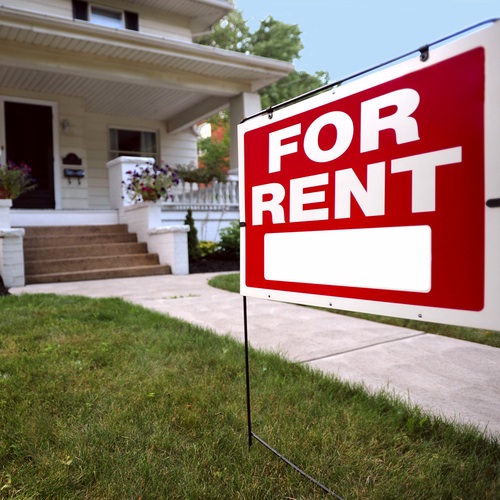
Should You Rent Your House to Others?

With rental prices rising, you may be wondering if now's the time to become a landlord. There are advantages to renting your current home while you purchase another to live in.

The advantage to renting your home is that you're likely paying a homestead mortgage interest rate, which will make it easier to make a profit than if you purchased rental property with a mortgage at a higher interest rate. As you've owned your home, it's likely appreciated in value, allowing your home to compete well in the rental market so you can use profits to put back into the home to keep it rentable.

Assuming you're current on your mortgage, have the credit scores to buy another home, and have saved enough cash for a down payment, now may be the ideal time to add a rental investment to your portfolio.

Real estate has always served as a hedge against inflation and against other investments, so the first thing to do is find out how rents compare to home prices in your area. Your real estate professional can provide you with market comparables that show you how much homes are renting for per square foot and how quickly they rent, as well as for what prices comparable homes are selling.

If the rental income is enough to cover your mortgage, you're in good shape, but there are other expenses to consider, such as income taxes, advertising, listing and management fees, and maintenance.

For income tax purposes, your current mortgage isn't considered a cost of doing business that you can deduct like office supplies or equipment purchases. You'll pay taxes on this gross amount, less repairs and management fees, if any. On the bright side, if you sell the property within five years and you've occupied the home two of those five years, you'll likely pay no capital gains at all up to $250,000 for an individual or $500,000 for a couple.

To qualify for a mortgage on another home, your ender follows a typical multiple home formula. Even though you may have your home rented, plan to deduct approximately 20% of rental income from your "investment." Why? Most homes have a period where they are not rented while they're on the market, which means no rental income. Your lender wants to make sure you can handle periods when your home isn't rented.

When you turn your home into a rental, it's no longer a homestead, but an enterprise. Tax laws require you to make a profit within three years of launching an enterprise, or otherwise you won't be able to take deductions associated with it. Also, expect to pay more in property taxes as you will also lose the homestead deduction rate, since you'll be applying for the homestead deduction on your new home.

On the other hand, one of the best ways to build equity is to have someone else pay your mortgage for you. The longer you own your home and the longer it's rented, the more the amortization tables turn in your favor. Every loan payment is made of principal and interest. The longer you own your home, the larger the percentage that goes toward reducing principal.

Based on the purchase price of your home, you can deduct "depreciation" from your income every year you rent it, but this amount decreases with time. You can also deduct some maintenance and improvement expenses which are not available to homesteaders. See your tax professional for more information.

There are other pros and cons of becoming a landlord. You'll be dealing with people who don't respect your home as much as you do and could cause damages. They may skip out without paying the final month's rent. You'll have two homes to maintain, and could get broken plumbing or appliance calls in the middle of the night. On the bright side, renters of single-family homes tend to be older, more responsible and remain occupants longer. Also many losses are tax-deductible to landlords.

Ask your real estate professional or someone else that you know who owns rental property for more insights. They'll be able to share real-life property management situations and costs that may help you to decide if this is the right step for you.

Source: RealtyTimes, Blanche Evans
http://realtytimes.com/consumeradvice/homeownersadvice1/item/38854-20151002-should-you-rent-your-home-to-others-htm

Friday, October 2, 2015

Santa Clara County October 2015 Events


Google plans expansion in Mountain View, now eyeing north San Jose

Yet another reason rents will remain high and the real state market is going to continue to be robust is the hot job market here in the Silicon Valley. Google is apparently running out of space at its headquarters in Mountain View and now considering expanding some of its operations to north San Jose. This seems to be the trend in the valley right now with Apple and other high tech firms reaching into San Jose to house their work force. This is great news for the overall housing market because where there is a hot job market, there is a hot rental and housing market. It's great for us Realtors and great if your a homeowner thinking of selling, not so great if you're a renter or someone thinking of buying a property.


Google is expanding in its hometown of Mountain View — and for the first time is strongly considering planting its flag in north San Jose in a big way, an indication that job growth in Santa Clara County remains robust.

Google is in talks to lease two expansion sites in Mountain View that together total 357,000 square feet, and also wants to grab about 150,000 square feet or more in north San Jose, according to multiple sources familiar with the space hunts and the commercial real estate market in Silicon Valley.

“Silicon Valley is a hot area, and this is where talented people want to live,” said Stephen Levy, director of the Palo Alto-based Center for Continuing Study of the California Economy.

The two Mountain View sites that Google is eyeing, the sources said, speaking on condition of anonymity because the discussions are private, are a 133,000-square-foot office project at 1001 N. Shoreline Blvd. being built by Calvano Development, and a 224,000-square-foot office project at 1625 Plymouth St. being developed by Broadreach Capital Partners.

Google’s efforts to broaden its reach in Silicon Valley make sense.

“This is not a bubble,” Levy said. “This is based on solid growth.”

What’s more, development and economic experts say Google’s interest in expansion isn’t likely to end any time soon.

“Everything we are looking at suggests that the growth we are seeing for Google and the technology sector is sustainable,” said David Vanoncini, a managing partner and senior vice president with the San Jose office of Kidder Mathews, a commercial real estate firm.

The two sites in Mountain View that Google is actively considering have yet to be constructed.

San Francisco-based Calvano Development wouldn’t discuss any specifics about potential tenants that might be in lease negotiations for the 1001 N. Shoreline site.

“We have had a number of serious inquiries,” said Mark Calvano, a principal executive with Calvano Development.

The company would consider constructing the office project on a speculative basis, that is, without a tenant and a signed lease, if the market is right.

“I don’t think the office market in Silicon Valley has ever been better,” Calvano said. “Technology is our future and companies are making incredible products.”

It also makes sense for Google to be looking in north San Jose, because space is getting tight in the Mountain View and Sunnyvale areas, and is nearly unavailable in the Cupertino, Palo Alto and Menlo Park markets.

“North San Jose is going to be a hotter market over time,” Levy said. “Office rents in the northern part of Santa Clara County are getting expensive. And you will have those BART extensions in Milpitas and Berryessa, which will have shuttles and provide more access to north San Jose.”

Source: Silicon Beat, George Avalos
http://www.siliconbeat.com/2015/09/17/google-plans-expansion-in-mountain-view-now-eyeing-north-san-jose/

Thursday, October 1, 2015

How to Make Sure Your Dream Home Is a Good Investment, Too

dream-house-money
You’ve probably heard real estate can be safer than the stock market, while still yielding decent returns. This can be true, but adding real estate to your portfolio is very different from investing in stocks, bonds, and certificates of deposit. Finding success in the housing market often requires being able to find good deals and ripe opportunities. Check out some tips below to help you launch your housing market investment career.

1. Assess your goals

It’s important to check your credit and have your finances in order before you get into the housing market. (You can get a free credit report summary from Credit.com to see where you stand.) If you are struggling to make your own mortgage payments, real estate investment might not be the right move. But if you are willing to put the time in to research a good location and deal, crunch numbers to test a property’s financial potential, and can manage the maintenance needed, then it might be a good fit for you. Just be sure you know what you are looking to gain from the experience and understand what it will take to get there.

2. Know the market

It’s a good idea to spend some time learning about the process of real estate investing. Real estate rules vary by state, so it’s important to know about the state you are looking at. You can read books or ask a local real estate expert.

3. Consider multiple buying sources

You can look beyond the local multiple listing service to find homes available for purchase. With your criteria set you can check the newspaper, Craigslist, and real estate auction sites for properties that match what you are looking for. You can also find good opportunities through word of mouth.

4. Find a good real estate agent

Not all real estate agents have experience or know how to help investors find the right type of properties. Before the real estate crash, only a small percentage of real estate professionals would even work with housing investors. As the market slowed, more became open to the idea and some have even taken courses to understand the ins and outs. It’s a good idea to choose a real estate agent who has sold several investment properties and understand your goals as well as the ideal return on investment.

5. Play by the numbers

If you are investing in real estate to increase your net worth, it’s a good idea to make sure it’s part of a balanced financial plan. Whether you are trying to build up a retirement fund or eventually replace income from a traditional job, it’s important to make sure the choices you’re making continue to fit into that plan.

You may find you need to hold on to a home you intended to flip, if repair or closing costs were more than expected. In this case, you can consider renting it out until you are able to sell it for the profit you are aiming for. Likewise, if you were planning to rent out the property, but someone offers you more than expected to buy it, you may want to sell and move onto the next property. It can be a good idea to let your goals and the numbers be your guide.

Source: Credit.com, AJ Smith
http://www.realtor.com/advice/finance/how-to-make-sure-your-dream-home-is-a-good-investment-too/

Wednesday, September 30, 2015

Why First Time Home Buyers Are Crazy Not To Buy A Home Now


With some of life's milestones, there may not be a picture-perfect time to take the plunge. But when it comes to buying your first home, the combination of good market conditions and your own financial situation can dictate timing. If you've got the credit and down payment, you'd be crazy not to buy now. Want to know why?

Rates are still low

The Federal Reserve was expected to raise rates this summer, but so far they have stayed put. There is still talk that rates could go up before the end of 2015. So what does that mean for buyers? Well, if you're a millennial, a rise in interest rates could spell bad news.

"If mortgage rates hit 6%, a third of millennials (people younger than 35 years old) wouldn't be able to afford homes as they're currently listed, according to an analysis by HouseCanary, a housing-data analytics company," said Money magazine. "Mortgages are huge loans, so a seemingly small shift in interest rates can change a borrower's monthly payment by hundreds of dollars (though going from the current 4.08% rate to 6% is in no way a small shift)."

Investopedia's example using a $215,000 home with 20 percent down (leaving a $172,000, 30-year mortgage) figures a monthly payment of $821.15 at an interest rate of four percent and $923.33 at five percent. Is that $100 a month enough to get you moving?

New low down payment loans

First-time buyers have typically gravitated toward FHA loans for their low credit score requirements and down payments of just three and one-half percent. But new loans from Fannie Mae require as little as three percent. Known as the 97% LTV (Loan To Value) loan or Conventional 97, it can be more affordable for first-time buyers because "the Conventional 97 program does not require an upfront mortgage insurance premium, and because its annual mortgage insurance rates are cheaper, too," said The Mortgage Reports.

Rising rents

In many market, home prices are up significantly from their lowest levels several years ago, but are still within range of many buyers. Rents, on the other hand, continue to go up, pushing household spending to new, uncomfortable, heights.

"Payments on a mortgage used to purchase a three-bedroom home were more affordable than paying rent on a similar home in 66 percent of the counties recently analyzed by RealtyTrac," said Mortgage News Daily. "Across all 285 counties analyzed, the average percentage of median household income needed to rent was 29.96 percent while the average percentage of median household income needed to buy was 29.00 percent."

Tax deductions

When you pay rent, the entirety of your payment goes to the landlord or property owner, and all you get in return is a temporary place to stay. When you own your home, the government essentially pays you money back for your investment.

"Your biggest tax break is reflected in the house payment you make each month since, for most homeowners, the bulk of that check goes toward interest," said Bankrate. "And all that interest is deductible, unless your loan is more than $1 million."

Any points you paid on your loan are also deductible the year you paid them, as are your property taxes. "These taxes will be an annual deduction as long as you own your home," said Bankrate. "But if this is your first tax year in your house, dig out the settlement sheet you got at closing to find additional tax payment data. When the property was transferred from the seller to you, the year's tax payments were divided so that each of you paid the taxes for that portion of the tax year during which you owned the home. Your share of these taxes is fully deductible."

Lower PMI

First-time homebuyers who put less than 20 percent down on an FHA loan will have to pay Private Mortgage Insurance (PMI). It's one of the drags of having limited cash. For the past several years, those payments have cost buyers an annual premium of 1.35% of the loan balance, but a recent change dropped the premium to 0.85%.

"This change is expected to save more than 2 million FHA homeowners about $900 a year and allow about 250,000 consumers to buy their first homes in the next three years," said Credit.com.

Remember also that your PMI may also be tax deductible, subject to a few restrictions (and remind yourself again what portion of your rent is deductible: none).

Source: RealtyTimes, Jaymi Naciri
http://realtytimes.com/consumeradvice/buyersadvice1/item/38570-20150924-why-first-time-buyers-are-crazy-not-to-buy-a-home-now

Tuesday, September 29, 2015

Realtor Saftey Month

One year ago, a fellow Realtor lost her life by just doing her job of showing properties. Ever since then there has been greater awareness on Realtor safety which I whole heatedly agree with. During my career I've had my fair share of sketchy characters to deal with at open houses and while showing houses, and thankfully nothing happened. I sincerely hope that with this awareness campaign that is underway will stop any other Realtors from becoming victims in the future.


It’s been one year since real estate agent Beverly Carter went missing and was later found murdered after showing a vacant home to a prospective buyer in the rural area of Scott, Ark. Since that dark day on Sept. 25, 2014, Brenda Rhoads, Carter’s friend and managing broker at Crye-Leike, REALTORS®, in North Little Rock, Ark., has been working hard to promote safety awareness in the real estate industry.

“I don’t want Beverly’s death to be in vain,” she says. “If there’s just one person who comes out of this and realizes how important safety is, that’s the most important thing. Beverly would have wanted that.”

A husband and wife have been charged with Carter’s murder. The wife, Crystal Lowery, was sentenced to 30 years in a plea bargain, and the husband, Arron Lewis, will stand trial on charges of capital murder, kidnapping, and robbery in January.

National Association of REALTORS® President Chris Polychron has responded to Carter’s murder — which took place in his home state — by making safety a major priority during his tenure. Rhoads and Polychron participated in a safety discussion, along with broker and chairman-elect of the Texas Association of REALTORS® Leslie Rouda Smith, during NAR’s Broker Summit in Seattle in August.

During the discussion, three points were reinforced:

Know whom you’re dealing with. Brokers are encouraged to create a policy that requires all new clients to come into the office before being shown a property. At the office, photocopies of the person’s ID should be taken and a showing itinerary shared with office personnel.
Use a buddy system. A broker could also encourage agents to pair up for open houses or showings by offering sign-up sheets or opportunities to coordinate during sales meetings.
Be aware of your surroundings. Agents should understand the layout of a property before showings or open houses. Counsel them to put the phone away while walking, stay alert, and look for signs of forced entry before entering a home. Crye-Leike, REALTORS®, has promoted a two-second rule: Take two seconds to look around when you arrive at your destination, after you step out of your car, as you walk toward the home or property, at the door, and as soon as you enter the property.
Carter’s murder has motivated other brokers throughout the country to make safety a part of the industry culture.

Sam DeBord, managing broker of Seattle Homes Group with Coldwell Banker Danforth, says brokers have the power to minimize fears agents might have over losing a client by creating an office policy that makes it mandatory to check clients’ IDs.

“It seems like we hear almost weekly now about [another] assault against an agent,” DeBord says. “I don’t want to be the person who gets that call to say one of your agents went out to meet someone you sent to them and something happened to them.”

Source: Realtor Mag, Erica Christoffer
http://realtormag.realtor.org/for-brokers/network/article/2015/09/making-real-estate-safer-industry