Showing posts with label Silicon Valley. Show all posts

Tuesday, September 20, 2016

Bay Area home prices down from August, up from…


Perspective home buyers Latu Motulalo and Filipo Motulalo leave a home for sale on Cherry Street during an open house event on Sunday, May 29, 2016, in Oakland, Calif.  The Motulalos were renting in the city of Mountain View before increasing prices forced them to move to Hayward.  The couple is now looking to buy a house.  (Aric Crabb/Bay Area News Group)The median sale price for Bay area homes fell in August to $675,000. It was the second consecutive month of price declines across the nine counties since since the median hit an all-time high of $710,000 in June.

The price for all homes — single-family homes, condos, townhouses — fell 2.9 percent from $695,000 in July. On a year-over-year basis, however, the median was up 5.2 percent from $641,750 in August 2015.

“The region’s median sale price has risen on a year-over-year basis for nearly four and a half years, and while those gains were consistently double-digit — as high as 33 percent — between mid-2012 and mid-2014, they have since been single-digit and fairly steady, averaging about seven percent over the past two years,” said Andrew LePage, research analyst for the CoreLogic real estate information service, which released the latest numbers.

“In July and August, those year-over-year gains dropped to around 5 percent,” he continued in a statement. “Given seasonal and other forces, including affordability constraints, it’s possible that the Bay Area’s median sale price hit its peak for 2016 in June when it was $710,000, the region’s all-time high.”

According to CoreLogic, 8,374 homes sold in August in the region’s nine counties — up 8.3 percent from July 2016 and up 3.2 percent from August 2015. The sales uptick reversed a months-long decline in sales.

“San Francisco Bay Area home sales perked up a bit in August, rising slightly above a year earlier for the first time since March of this year,” said LePage. “Job growth, low interest rates, household formation and other factors helped drive sales.”

In Santa Clara County, the median price rose year-over-year by 2.3 percent from $811,000 to $830,000. In San Mateo County, the rise was nine percent from $975,000 to $1,062,500.

In Alameda County, the median was up 6.4 percent year-over-year, from $639,000 to $680,000. In Contra Costa County, the increase was more marginal — up 1.3 percent from $502,500 to $509,000.

Source: Mercury News, Richard Scheinin
http://www.mercurynews.com/2016/09/20/bay-area-real-estate-prices-down-from-august-up-from-a-year-earlier/

Tuesday, August 30, 2016

Silicon Valley homeownership: Pretty much forget it, if you’re a millennial

My advice to young people in the valley is that home ownership is still possible but they need to start saving early, go to college and then get that good paying tech job, of which there are plenty. Granted, buying their first home is not as easy for millennials as it was in my parents day, but IT IS STILL DOABLE! Also, keep in mind that it is still a hot market right now in the silicon valley, a real estate market that won't stay hot forever at which time prices will go down. 


Surprise, surprise.

Young people can’t afford to buy homes in Silicon Valley.

The folks at Earnest – the San Francisco-based lender – report that millennials in the San Francisco and San Jose metropolitan areas have the lowest rates of homeownership in the nation: 6 percent and 7 percent, respectively. The Los Angeles and New York metros follow at 8 percent in the analysis, based on data from Earnest’s loan applicants.

Compare those dreary numbers with other metros where millennials (ages 18-35) are faring better: Miami (where 16 percent own homes), Seattle (17 percent), Houston (27 percent), Salt Lake City (32 percent) and St. Louis (35 percent).

“The high cost of homeownership is delaying buying among those aged 25-35, the years when home buying accelerates,” Earnest tells us. The dismal San Francisco and San Jose ownership rates stand in contrast to another set of numbers: “These job hubs also have the highest median incomes in Earnest’s data-set for this age range: $81,000 in San Francisco and $86,000 in San Jose, as compared with $56,000 across the U.S. overall.”

To complete the picture, the analysis looked at the age threshold in each metro when 25 percent own their own home. Topping the list is San Jose, where it’s not until age 42.5 that 25 percent own homes; the metro (which includes Santa Clara and San Benito counties) also has the highest median home cost, $958,000, according to the Zillow Home Value Index. In San Francisco, 25 percent own homes by age 42, while the median home cost is $812,000. (The San Francisco metro includes San Francisco, San Mateo, Contra Costa, Alameda and Marin counties.)

You can look at various charts and read Earnest’s report here.

Sorry, but if you live in California, you just won’t feel encouraged by this national analysis: “Los Angeles, San Diego, Sacramento, and Riverside are also among the 15 least affordable metros, both by highest median home costs and by highest age when 25 percent own.”

Source: Silicon Beat, Richard Scheinin
http://www.siliconbeat.com/2016/08/29/silicon-valley-homeownership-pretty-much-forget-youre-millennial/

Monday, August 22, 2016

Tallying new apartment construction in Silicon Valley: Hope amid the housing crunch?


We’ve got jobs, jobs, jobs in the valley, but no place to put the workers when they clock out at night.

Maybe there’s a ray of hope. A new report from the RENTCafé apartment-search website says that intense renter demand is driving a wave of new construction in booming urban markets, including the San Jose metropolitan area.

RENTCafé compiled a list of the top 20 U.S. metros with the most apartments to be completed in 2016 — and San Jose cracked the list, barely. It sits in the No. 20 spot, but let’s call it progress: 5,866 new units are scheduled for completion this year in the metropolitan area, which includes Santa Clara and San Benito counties.

Compiling data from new large-scale projects (buildings with 50+ units), the report breaks down Silicon Valley construction like this: 4,077 units in San Jose; 445 in Santa Clara; 378 in Milpitas; 378 in Mountain View; 378 in Sunnyvale; 128 in Morgan Hill; and a measly 82 in Palo Alto. For many, Palo Alto still signifies “Silicon Valley,” but the city can’t seem to get off its duff when it comes to making decisions about housing.

Among the top 20 metros, Texas leads the pack with a combined 69,000 units projected for completion in Houston, Dallas-Fort Worth, Austin and San Antonio.

Houston sits in the No. 1 position on the Top 20 list; it has 25,935 units slated to come online in 2016. The rest of the Top 5, in order, is Dallas (23,159), New York (21,177), Los Angeles (20,205) and Washington, D.C. (18,027).

Here’s the full report.

As you can see, San Francisco is No. 12 with 9,362 new units — more than doubling the 4,144 units completed in 2015.

Whether all this construction will be enough to ease further Bay Area rent hikes remains to be seen. The region now has 746,100 technology jobs, according to an analysis by this newspaper published earlier this week. That tops the record set during the dot-com era by 21,000 jobs.

Where will all these people live, and how will they do it affordably? Good question.

A second-quarter report from Novato-based RealFacts showed rents continuing to climb across the region’s nine counties, though at a slower rate than the year before. The average Bay Area apartment rented for $2,526 in the second quarter, up 4.3 percent year over year. The average San Jose rent was $2,503, up 4.0 percent. In Oakland, the average was $2,959 up 5.4 percent, and even far-flung Concord saw a sharp increase of the average rent to $1,760, up 8.3 percent.

Those numbers don’t capture the mom-and-pop landlord rentals that tend to be less costly.

But they still are a good indicator of the region’s entrenched housing predicament — which drives thousands to commute long distances from more affordable communities to their jobs in the valley.

And incidentally, if you’re thinking of finding some relief by moving to Sacramento, think again. Among the top 5 markets for projected rent growth this year, according to RENTCafé, “Sacramento will have the smallest number of new apartments added to its inventory in 2016, an unimpressive 730 units in large-scale developments. This actually represents a 30% decrease compared to 2015 when 1,000 units hit the market.”

Source: Silicon Beat, Richard Scheinin
http://www.siliconbeat.com/2016/08/19/report-tallying-new-apartment-construction-silicon-valley/?_ga=1.22882299.1788795839.1424213200

Monday, August 15, 2016

Silicon Valley housing market is 'looney-tunes,' real estate broker says

Great article and video from CNBC about the craziness of the Silicon Valley housing market. As a Realtor, I have benefited from the hot housing market. The video below pretty much sums it up.


The housing market in Silicon Valley is "looney-tunes," real estate broker Fred Glick said Friday.

That's because it's all about supply and demand, with people flooding to the area from around the world.

"We just keep adding people like crazy and we can't get enough supply. That's why people have to share houses. That's why renters know that they have to pay an exorbitant amount of money," the CEO of real estate brokerages Arriva and U S Spaces said in an interview with CNBC's "Closing Bell."

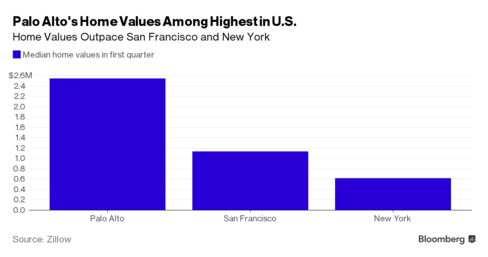
The median home price is $1.1 million in San Francisco and $2.5 million in Palo Alto, according to Zillow.

 Pro on housing costs: LA and SF are 'Looney Tunes' Pro on housing costs: LA and SF are 'Looney Tunes'
Friday, 12 Aug 2016 | 4:15 PM ET|03:40
The housing market in Silicon Valley is "looney-tunes," real estate broker Fred Glick said Friday.

That's because it's all about supply and demand, with people flooding to the area from around the world.

"We just keep adding people like crazy and we can't get enough supply. That's why people have to share houses. That's why renters know that they have to pay an exorbitant amount of money," the CEO of real estate brokerages Arriva and U S Spaces said in an interview with CNBC's "Closing Bell."

The median home price is $1.1 million in San Francisco and $2.5 million in Palo Alto, according to Zillow.

Kelly Porter Real Estate
Erin Lubin | Bloomberg | Getty Images
Things have gotten so pricey that this week alone two high-profile people have been driven out of the Bay Area. San Francisco Federal Credit Union CEO Steven Stapp said he's taken another job in Portland, in large part because his rent in San Francisco is too high.

And a member of Palo Alto's planning commission, Kate Vershov Downing, posted a public letter of resignation on Medium, saying she and her family can't afford the $6,200 rent of a house they share with another family.

Glick said the real estate market is a local issue, with different cities facing different conditions. In Philadelphia, for example, it is "generically busy," with houses in good areas with good prices being snapped up quickly. In Tuscan, Arizona, however, there is two to three months of inventory for houses under $300,000, he said. And Houston has an overbuilt luxury problem, he said.

"It depends on where you go," said Glick.

One thing that won't impact the market will be if mortgage rates rise, he said.

"Mortgage rates don't matter because the way it is, you are thrilled to be a mortgage," he said, noting that it is a nightmare getting mortgages approved.

"If the rates go up, people take a five-year ARM instead of a 30-year fixed," he said.

Source: CNBC, Michelle Fox
http://www.cnbc.com/2016/08/12/silicon-valley-housing-market-is-looney-tunes-real-estate-broker-says.html

Wednesday, August 10, 2016

Return of The Bidding War, But Only For Certain States

Wow! Ten of the top 30 cities are right here in the Bay Area.


Return of The Bidding War, But Only For Certain States

The phenomenon is very uneven geographically, but CoreLogic says that one factor behind the sustained pace of home price appreciation is the return of bidding wars.

The company's analysis is limited in that it was done on the city level in markets where there were a hundred or more closed home sale transactions in the second quarter - criteria that is in itself a bit self-defining.  They also included properties where the sale price was bid up by $5,000 or more above the list. The cities that emerged on top for bidding wars were no surprise; they were mostly in the West and primarily in California, but some of CoreLogic's findings were still interesting.


Seventeen of the top 30 cities where multiple offers are most frequently pushing home sale prices above list are in California, and eight are in Washington.  And where they are occurring, bidding wars are not an isolated occurrence.  Almost eight of ten properties sold in the second quarter in Santa Clara went above listing price; in two other California markets, Milpitas and Fremont, it was seven of ten.  In each city falling in the top half of the list a minimum of 60 percent of sales were above the listing price and for the entire list bidding affected at least half of closed sales.

On a percentage basis, the largest average increase over listing price was in San Francisco at 12.2 percent followed by San Mateo at 11.0 percent and Montclair, New Jersey (the only market east of Colorado) at 10.8 percent. The low (keeping in mind the $5000 analysis floor) was 3.3 percent in Maple Valley, Washington.  Given some already pricy markets, the extra dollars paid by buyers was impressive, ranging from a low of $12,500 in Thornton, Colorado to $232,000 in Los Altos, California.

CoreLogic Principal Economist Bin He, who wrote up the analysis for the company's Insights Blog said, "Let us pause for a moment and think about this: if you happen to get into a bidding war in San Francisco CA, which actually occurred in six out of ten closed sales in Q2 2016, you'd better be prepared to pay an additional $134,000 for your dream home."

So what is driving the bidding wars?  He says it is that old villain, tight inventories.  While they exist in much of the country, with an average of a 3.75-month supply of homes on the market nationwide, it follows that the inventory would likely be lower in those markets which also have the greatest demand.  In California and Washington, the inventory is 2.6 months and 2.04 months respectively.

We are generally told that inventory is lowest in the bottom tier of home prices.  It would be interesting to see CoreLogic repeat this analysis with a lower floor for the list price/ceiling price relationship.  It might add yet another layer to discussions about the missing first-time homebuyer.

Source: Mortgage News Daily, Jann Swanson
http://www.mortgagenewsdaily.com/08082016_home_prices.asp

Friday, July 22, 2016

Facebook's neighbors are losing their homes. What's being done about it?

This is happening all over the silicon valley, not just the City of East Palo Alto close to Facebook. 

The big tech companies need workers, they pay them well so they can afford the high cost of housing and the high rent. So naturally housing costs goes up. The problem is, not everyone works in tech or works in tech directly so most of them don't make the high paying salary. We are talking about people in support roles for the tech industry such as janitors, cafeteria workers, security guards, delivery drivers, etc. They are the ones getting screwed in the tech economy here in the valley and the tech companies are doing little help.

Read the great article below from the Guardian and when you're done, watch the very insightful video Million Dollar Shack: Trapped in Silicon Valley's Housing Bubble linked below


Facebook employees traverse the company’s campus. Facebook's neighbors are losing their homes. What's being done about it?
  
The first time Tameeka Bennett had to drive two hours in traffic to get to her job in East Palo Alto, she broke down in tears in her car. It was October 2014, and Bennett, 29, had never imagined she would have to move away from the Silicon Valley city where she grew up, which is one of the least affluent communities in the region.

But her family had lost their home to foreclosure, and they couldn’t find an affordable house to buy in East Palo Alto. So they were forced to move to Oakland, which is 40 miles north and a nightmarish commute away from Bennett’s job as executive director of Youth United for Community Action, an East Palo Alto not-for-profit group that fights displacement.

While Bennett recognizes that there are multiple factors driving the region’s housing crisis, it’s hard for her to ignore the most obvious force less than three miles north of her organization: the Facebook headquarters.

This week, Bennett and other northern California advocates are pressuring Facebook to make substantial investments in affordable housing as the powerful social networking company pushes forward with a major expansion that experts say will drive up housing prices and exacerbate income inequality in the center of the booming tech economy.

The brewing dispute over Facebook’s expansion in Menlo Park – which is adjacent to East Palo Alto and not far from the headquarters of Apple and Google – has exposed what many critics of the industry see as a glaring contradiction in the tech sector. That is, these hugely profitable companies cast themselves as do-gooder innovators creating transformative technology, but in their own backyard, they’re contributing to a crisis that has grave consequences for disadvantaged communities – and they’re doing little to “disrupt” the poverty plaguing their neighbors.

Menlo Park officials and residents debated Facebook’s growth plans during a lengthy city council meeting that dragged on past midnight on Tuesday evening. The public discussion came one day after reports that founder Mark Zuckerberg and his wife, Priscilla Chan, are exploring ways that their new philanthropic organization could help alleviate the high cost of housing in the region.

Facebook – which set up its huge campus in Menlo Park in 2011 – has proposed two new office buildings that would add roughly 126,000 sq ft to its campus, along with a 200-room hotel. The project is expected to bring more than 6,500 new employees to Facebook and the hotel, which would increase the entire Menlo Park workforce by more than 20%.

As part of the expansion, Facebook is required to contribute $6.3m to below-market-rate housing.

The company further agreed to provide $350,000 for a “study” of housing conditions; $1.5m for a “housing innovation fund” for various initiatives; $1m for for a “preservation fund” to buy and protect units housing “at-risk populations”; and $2.15m for reduced rents in 22 units of “workforce housing”, with priority given to teachers.

But critics say those are relatively inconsequential benefits given the size of the project and scale and urgency of the housing crisis – and considering that Facebook is now worth about $350bn, making it the sixth-most valuable company in the US.

Research has repeatedly suggested that Silicon Valley tech firms have worsened inequality, and data shows the area has lost affordable units at alarming rates. Recently, there have been numerous mass evictions and threats of widespread displacement near tech corporations.

With a surge in tech jobs at Facebook, the project will probably attract tens of thousands of additional workers in lower-paying jobs that support the industry, said Sam Tepperman-Gelfant, senior staff attorney at Public Advocates, a not-for-profit group that has, along with the ACLU, raised formal objections to Facebook’s project.

It is those workers and other poorer residents who will suffer the most from a jump in the regional housing demand, he said, pointing out that roughly 70,000 low-income workers in Silicon Valley already commute more than 50 miles to their jobs, which also has environmental consequences.

“It’s fundamentally not fair to ask low-wage workers in Silicon Valley to be bearing the personal costs for global corporate production,” he said. “Facebook could have a substantial role in correcting those deficiencies.”

In East Palo Alto, officials have also gathered compelling evidence suggesting that Facebook’s presence has had tangible consequences for low-income renters.

From 2011 to 2015, the average asking rent for a one-bedroom apartment in East Palo Alto increased by 89%, according to records.

One property owner acquired roughly 40% of the city’s entire rental housing stock in December 2011 after Facebook moved to Menlo Park – and the new landlord subsequently issued a significant number of eviction notices, officials have noted in city records.

That real estate company has specifically advertised new housing to Facebook workers, writing on its website: “Now is the time to consider affordable East Palo Alto apartments … before the rest of the Facebook and Google employees do!”

In a recent letter criticizing Facebook’s project, East Palo Alto’s mayor, Donna Rutherford, included that quote and pointed to research showing that in 67% of all recent house sales and rental units in East Palo Alto, the marketing materials have mentioned Facebook.

“It’s not that we’re against Facebook, but we want to make sure that when the expansion happens, it benefits not only a group of people, but the wider community,” said Carlos Martinez, East Palo Alto city manager.

Caprice Powell, 24, who grew up in East Palo Alto, said she is moving to Atlanta, Georgia, this summer in part because she can’t afford to rent here any more.

“Facebook is coming in and bringing along all these rich folks … They’re able to afford our housing, because it’s nothing to them.”

Powell said her sister and mother had both been priced out of East Palo Alto and that she was temporarily living in a small room in her godfather’s house – one of five people crammed into a two-bedroom. After she relocates to Georgia, she hopes to eventually return to East Palo Alto, but she’s not confident it will be financially feasible.

“It feels like East Palo Alto is not our home any more,” she said.

Bennett, who said she knew at least five local families who had been pushed out, also pointed out that Facebook had offered its employees generous bonuses to live closer to campus, which has accelerated gentrification.

“You are directly displacing families,” she said, adding that Facebook should look beyond its impact on Menlo Park and commit to funding housing in surrounding cities.

One resident at the council hearing also pointed out that black employees account for only 3% of Facebook’s senior leadership in the US, but others praised the company for bringing jobs and supporting local not-for-profit groups.

Facebook declined an interview request, but said in a statement: “We understand that our growth affects the everyday lives of our neighbors, and we want to be respectful and thoughtful about how we approach our expansion. The future of Menlo Park is extremely important to us, which is why we work with city and community leaders to tackle local priorities, including transportation, housing and the environment.”

The statement did not mention East Palo Alto.

At the council meeting, John Tenanes, Facebook’s vice-president of global facilities and real estate, did not address criticisms over housing, but said: “You have my commitment that Facebook will continue to be very active above and beyond what we’ve negotiated.”

A spokesman for the Chan Zuckerberg Initiative declined to comment on the rumors about potential housing initiatives, saying in a statement: “We are in the process of examining a number of potential issue areas for future work.”

Source: TheGuardian, Sam Levin
https://www.theguardian.com/technology/2016/jul/20/facebook-headquarters-expansion-menlo-park-california-housing


RELATED:
VIDEO: Million Dollar Shack: Trapped in Silicon Valley's Housing Bubble

Bay Area home sales: June median price sets record high

The median price for single-family homes in the Bay Area set yet another record last month, reaching $755,000.

But even as the price tag went up, the number of sales went down, reflecting what by now is an all-too common refrain in the region's housing story: high cost, low supply.

"People are struggling to afford a home, and not finding it," said Andrew LePage, research analyst for CoreLogic, the real estate information service that assembled the data.

June marked the fourth straight month of year-over-year declines in the number of houses sold in the nine counties. In some counties, the trend toward declining sales was even more pronounced. On a year-over-year basis, sales dipped for the fifth month in Santa Clara, San Mateo and Alameda counties. In Contra Costa County, sales were down year-over-year for the third straight month.

Even so, some real estate agents pointed to a silver lining. They reported a leveling of prices in numerous communities and — continuing a months-long trend — a lot less frenzied bidding.

"Buyers are waiting, they're pickier," said Michael Hall, a Pacific Union agent who has an office in Palo Alto and works deals on both sides of the bay. "We still don't have enough inventory, but the buyers are just not willing to throw down all that money. The buyers are telling us where the market is."

Of course, it all depends on one's perspective.

"If it's a pause in the market, then we're only seeing the beginning of it," said LePage. "There's still upward pressure on prices."

Compared to the same period last year, median prices in the East Bay rose 7.4 percent to $550,000 in Contra Costa County and 5.2 percent to $753,000 in Alameda County. The South Bay saw more modest increases, with a 4.9 rise to $1,200,000 in San Mateo County and 3.7 percent hike to $982,500 in Santa Clara County.

Those are daunting price tags. Yet looked at on a month-over-month basis, June prices were actually down just slightly from May in both Santa Clara and Alameda counties. San Mateo County's median price was up slightly from May, but fell short of the record high set back in April. Contra Costa County's median was up a modest 0.9 percent.

Sizing up the market, Shareen Edwards, a first-grade teacher in Sunnyvale, went hunting for a house with her fiance, Joey Grant, an electrician who works in San Mateo County. They began pricing houses that appealed to them and found that a number of those houses were selling for $200,000 or more over the listing price.

"The process for looking for homes in the Bay Area -- I would say it's insane," Edwards said.

Scaling back their search, she and Grant were guided by Hall, their agent, to a modest older house on a cul-de-sac in Redwood City: 1,800 square feet, with three bedrooms, two baths and a small backyard -- a solid family house for a couple that expects to have children.

Their parents contributed to the down payment on the house, which listed for $995,000 and attracted only two offers. "If this were a year ago, there would have been five or six offers," Hall said.

Edwards and Grant won out with a $1,042,000 bid.

"We got lucky," Edwards said. "And our family wanted us to be successful -- otherwise we would've been dead in the water. But this time we didn't get outbid."

About four years ago, Hall and Tricia Soliz, a Pacific Union agent who lives in San Ramon, teamed up to try and capture the growing East Bay market. This month, they tied the knot on a complicated deal -- essentially a three-way trade between the owners of three houses, two in Danville and one in Concord.

Like a game of musical chairs, each set of owners moved to one of the other homes. Each deal hinged on the next, and negotiations dragged out.

"You could feel the market shifting," said Hall, who believes that recent economic turmoil -- first in the U.S., then in China, then in the United Kingdom -- was a shock that "kind of put a cap on this incredible appreciation that we'd been seeing in the last two years."

Buyers "are getting choosier and sellers really haven't adjusted," said Soliz. One of the sellers dug in, expecting an offer more reflective of the 2015 market.

In the end, each deal closed. All the new owners plan to move on the same day at the end of the month, and Soliz plans to videotape the three-way trade.

As part of that trade, Eliot and Ashley Gillum will move from Concord to Danville.

As sellers, Eliot, a sales executive in tech, and his wife found they "needed to be a little less choosy," he said. Their 1,285-square-foot house in Concord, which listed for $499,000, sold for $515,000 after a higher offer fell through.

As a buyer, he had to stretch a few thousand dollars to make the move to pricier Danville. In the end, the Gillums, who have two young children, spent $807,000 on a 1,400-square-foot house next to a park and community swimming pool that listed for $795,000.

But the trade-offs were worth it, in part because Ashley, who directs an after-school program in Danville, will no longer have a lengthy commute with the kids.

"Could we be happier?" Eliot asked. "We're not people who want the big house. We want the family time."

Mission accomplished.

Source: San Jose Mercury News, Richard Scheinin
http://www.mercurynews.com/business/ci_30149003/bay-area-home-sales-june-median-price-sets

Saturday, July 9, 2016

Homeless camps near Facebook a growing safety concern


MENLO PARK -- Homeless encampments are being blamed for at least three brush fires since March near Facebook's headquarters in Menlo Park, including one that closed a major roadway during rush hour and caused nearby homes to be evacuated.

Menlo Park's fire chief is urging police and code enforcement officials to do something about the camps, at least three of which can be found along the railroad tracks between Willow Road and University Avenue.

"This is the third or fourth time we've been in there in the last four months, and every time it's related to homeless encampments," Harold Schapelhouman, chief of the Menlo Park Fire Protection District, told The Daily News after a 2-acre blaze was reported near Facebook about 12:30 a.m. June 24. "Allegedly it was a cooking fire that got out of control. ... It's not like it's a camping area. The significance of these encampments potentially becoming a threat for the broader community is definitely a concern for us."

Since arresting Sergio Anguianolopez, 35, a transient, for allegedly setting a 13-acre fire near Facebook in March, police have been patrolling the Kavanaugh Tract, a marshy area between University, Bayfront Expressway, Willow and Adams Way at the city's border with East Palo Alto.

According to Sgt. Eric Cowans, that fire was sparked during an argument between Anguianolopez and another transient who were "fighting over drugs and other issues." Anguianolopez previously was arrested by Menlo Park police, in 2010 and 2014, both times for narcotics-related warrants.

"There are definitely health concerns and hazards out there with the garbage and syringes. It is eventually going to be problematic," Cowans said in April. "We've taken an active role in regularly making visits out there and trying to make sure everyone's staying on the up and up. ... Sometimes we'll go out there and we'll contact 15 people and the next day, there'll be three people out there. The one common thing we find is they're all into narcotics."

According to Cmdr. William Dixon, officers haven't run across any homeless people in the camps in recent weeks.

"There are easily two or three specific areas people have definitely been in, based on debris present," Dixon said.

A problem for police is the area is so remote it's only when a fire breaks out that people realize anyone is using the marshland as a residence. The camps are a 10-minute walk from any roads.

"Would I consider them active camps? That I don't know," Dixon said. "Is it something that we get calls for service out there? No. ... For lack of a better term, I can honestly say we are not going to employ a scorched-earth policy. It's ineffective; it doesn't work."

According to Schapelhouman, the fire threat in the tract is much greater now than just a few years ago, as the extended drought has dried out vegetation.

In the March fire, flames reached 25 feet high, and with wind gusting as high as 25 mph, they jumped to the center median of University Avenue and threatened to cross over to East Palo Alto residences.

"Smoke was blowing horizontal, which is never a good thing," Schapelhouman said at the time.

Dixon said if police were able to identify a specific group of people in the camps, something could be done.

"It's certainly something that's more in the conversation than a year ago," he said. "If I had something definitely identified ... I'd say, let's go do something about this."

But, as Dixon and Schapelhouman both agree, a big complication is that individuals living there want to stay removed from the rest of society.

"Not everybody is going to want to be moved into a shelter, and there are people who have a criminal history, alcohol and drug abuse," Schapelhouman said. "From a fire and medical standpoint, we're in the camps quite a bit."

Dixon said the police department actively tries to connect homeless people with county agencies that provide assistance, something which he said has seen a 100 percent success rate in downtown Menlo Park, aside from one longtime transient who shuns assistance.

"I'd like to be able to lend support to anybody who's out there," he said. "I really hate to call it a problem."

Source: San Jose Mercury News, Kevin Kelly
http://www.mercurynews.com/real-estate-news/ci_30099252/menlo-park-homeless-camps-near-facebook-growing-safety

Monday, July 4, 2016

Santa Clara approves Silicon Valley's biggest private development deal ever

An artist rendering of the largest development project in Silicon Valley that was recently approved by the City of Santa Clara.

SANTA CLARA -- Feeling giddy in the aftermath of the City Council's unanimous approval of a $6.5 billion development deal, Mayor Lisa Gillmor on Thursday called the experience "surreal."

"It's exhausting. It's a little bit nerve-wracking. There's so much information that we've had to digest, comprehend and weed through," Gillmor said, predicting, "This is going to be the key to our financial future in Santa Clara."

The 9.7 million-square-foot City Place -- described as the largest private development project in Silicon Valley's history -- is to be built by the Related Companies on 240 acres of city-owned land across from Levi Stadium. Plans call for up to 5.7 million square feet of offices, 1.1 million square feet of retail space, 700 hotel rooms and from 200 to 1,680 apartments, as well as a 35-acre park.

Sitting atop what is now a golf course and BMX track, the mixed-use project's anticipated tax and other financial benefits are "staggering," Gillmor said.

The city has projected that it will receive up to $16.9 million in annual tax benefits, along with $9 million to $14 million in yearly rent revenues, once the project is up and running.

The county should benefit, too: Its annual property and sales tax benefits are pegged at up to $11.6 million, while the Santa Clara Unified School District anticipates receiving as much as $22.1 million each year in property taxes. The Valley Transportation Authority would receive up to $8 million annually in sales taxes, according to City Place projections.

Santa Clara's share would be a huge shot in the arm to the city's general fund, which has taken a $14 million annual hit since the dissolution in 2012 of the state's redevelopment agencies, Gillmor said. It will "make up the cash flow into our general fund for generations to come."

Construction costs are tagged at $5 billion, with more than 80 percent of the work to be handled by union labor. Built on landfill, the project involves the construction of a massive platform on top of which its core elements -- dubbed the City Center -- will sit: retail and department stores, hotel rooms, residential units and about 1 million square feet of offices.

"We call it our uptown," said Gillmor.

Historically, the city has lacked its own entertainment district: "Residents have to go to other cities, like Campbell, Los Gatos and (San Jose's) Santana Row," said acting City Manager Rajeev Batra. "But this will provide all those restaurants and destinations in Santa Clara, and also keep our tax revenues here."

Councilwoman Kathy Watanabe put it like this: "It creates a new destination for out-of-towners coming to Silicon Valley. Sometimes it just takes awhile for things to happen, and now it's happening."

Tuesday's approval of the project was "definitely a relief," Batra said. "It's a big milestone, obviously, and you wouldn't believe how much hard work has gone into it from all of the staff. The documentation itself -- if you saw the package, there were 3,000 pages behind the 20-page report to the council."

The idea for the project was informally floated about four years ago, Gillmor said. Founded by Miami Dolphins owner Stephen Ross, Related began talking to the city about three years ago.

Construction on the first of the project's eight phases should begin in summer 2017 "if everything lines up," Batra said.

Likewise, the City Center should be completed in five to seven years, "if not a bit sooner," said Stephen Eimer, an executive vice president with Related and comanaging partner of the project.

The construction of outlying office parks -- up to another 5 million square feet or so, he said -- will be subject to market demand and likely come online later.

One detail of note: 49ers legend Joe Montana, a limited partner in the project, expects to establish a restaurant in the City Center: "He's going to do a Montana-themed, football-themed restaurant," Gillmor said. "He will have a signature development on this property."

City Place has not been without its critics. Neighbors have voiced concerns about traffic, parking and other quality-of-life issues. San Jose officials wondered about the project's environmental impact and complained that the city will have to provide housing and services for those who work at nearby City Place.

Gillmor on Thursday dismissed San Jose's objections: "This is going to be a huge benefit to the entire area," she said. "We want our workers to work here, play here and live here, and this is the kind of development that will do that for Santa Clara, Sunnyvale and especially North San Jose."

Source: San Jose Mercury News, Richard Scheinin
http://www.mercurynews.com/business/ci_30077172/its-surreal-silicon-valleys-biggest-private-development-project

Thursday, June 30, 2016

Santa Clara Unanimously Approves Related’s $6.7B City Center Project


Related, Related California, City Place, Santa Clara, Silicon Valley, Deutsche Asset & Wealth Management, 2101 Tasman Drive

Following a deliberation that lasted over four hours, the city council of Santa Clara gave the Related Companies the go-ahead it had been seeking for almost four years—the right to redevelop a 239-acre landfill in the northern part of the city into a mega development that at completion could include 5.4 million square feet of office, 1.1 million square feet of retail space, 1,680 residential units, 700 hotel rooms, 250,000 square feet of food & beverage space and 190,000 square feet of entertainment space. The City Center project promises to be the largest project the Silicon Valley city has ever embarked on, and the final meeting, not unlike the entire process that preceded it, was challenged to the very last minute.

The meeting opened with City Manager Rajeev Batra describing the project in some detail, outlining the process the developer has undertaken with the city, as well as providing a comprehensive overview of the fiscal benefits for the city. In all, the New York-based developer is looking to spend $6.7 billion in total development cost, of which approximately $5 billion would be for construction only. The city of Santa Clara stands to gain nearly $17 million annually in net general funding alone once the project is fully completed, according to Batra.

During Related’s portion of the presentation, the fiscal benefits were summarized at $114 million in total annual recurring revenue to various jurisdictions in Santa Clara at completion. That includes estimated annual allocations of $41 million to the city, $33 million to the school district, $17 million to the county and $14 million to the VTA in addition to an estimated growth in ridership of 52 percent.

“It’s very exciting times, I’m very pleased to present to you one of the biggest projects in the city of Santa Clara,” said Batra as he opened the meeting on Tuesday evening. His presentation to the council concluded with a resounding recommendation to the city council that that the project be approved.

That approval would come after four hours of discussions and evidence that a few lingering issues were still unresolved.

The city of San Jose, for one, sent one of its city attorney deputies to voice San Jose’s disproval of the project and object to the way Santa Clara managed the communications of the review process.

“There are significant environmental impacts,” said Senior Deputy City Attorney Vera Todorov during the public comment portion of the evening. “For example, the DDA that you’re considering tonight was first made public a couple of days ago. It’s 625 pages long.” Todorov explained that this was insufficient time for the public to review and comment on the project details. But that was just one of San Jose’s grievances.

“[Santa Clara’s] consideration of this project will create dramatically more jobs than housing units in a region that is already suffering from a serious housing shortage. It flies in the face of responsible planning and environmental stewardship,” said Todorov. “The project will require San Jose to bear the burden of providing housing and other municipal services to project employees.”

In closing, Todorov asked the city council to take a step back from the decision and review further options it could take with San Jose and neighboring municipalities.

Senior Planner at Santa Clara Valley Transportation Authority, Melissa Cerezo, also voiced her agency’s objections to the project

“VTA has provided consistent and clear input to the city regarding the projects implications for transportation and mobility. VTA submitted comment letters on the traffic and final environmental impact report, and provided public testimony at all five public City Place public sessions and the June 8th public planning commission hearing,” said Cerezo.

Cerezo went on to say that the VTA had been requesting from the city of Santa Clara to assist in transportation safety planning, signal monitoring and maintenance during the construction of the development. “VTA generally supports intensified development near core transit and works with agencies and the developers to help address transportation demands and impacts of redevelopment. However, VTA continues to have significant concerns that have not been addressed,” she added.

Cerezo went on to outline specifics around the transit center improvements that the VTA would like to see, including improved safety measures surrounding streets and direction of traffic.

The final looming issue was the amount of money the developer was willing to commit to the school district. Representatives from the Santa Clara Unified School District presented the to the city and the developer a counter offer letter to settle a number of open items, and voiced a general appreciation for the work Related had done up to that point.

“This is a tremendous project, things are not perfect, they’re not all what we’d like to be, but I think that we’re close enough,” said vice mayor Teresa O’Neill, concluding her remarks. “I’m going to be optimistic and say let’s go ahead and do this, but we have to realize there’s still many areas to work on.”

“The school district hired a consultant to do a study to figure out how many new students City Place would generate, and it was less than 30 students,” said council member Pat Kolstad. “The Related Corporation volunteered to give double the money that is required by law to the school district for their upfront funds.”

He outlined all the funds the district would be receiving in addition to the tax revenue they would receive annually. “This is more than fair and incredibly generous what this developer is doing for the schools, anything beyond that would be really egregious and unfair,” Kolstad concluded.

He also highlighted the money the VTA would be receiving from Related, which was pegged at $17.5 million in addition to the funding the transportation agency will be getting from property taxes and concluded that it would not be appropriate to put additional financial burdens on this single developer in one city.

Council member Kathy Watanabe added, “What I have appreciated over the years is how the Related Company has listened. Every time that a question has come or concern what direction to go, they made sure to reach out to so many of the community to be able to get feedback, and I think that’s really important. They’ve been transparent and open about their plans.”

“We’re doing our share,” said Mayor Lisa Gillmor. “We don’t have the housing imbalance [San Jose does]…but that was their choice, and that’s their community that they planned. We know Santa Clara is a very attractive community, we know over the years our forefathers and mothers put in the infrastructure in our city to encourage business. We can’t help that we’re so attractive!”

This project will be great project for city, she added. And while she acknowledged that San Jose officials have been communicative, she presented a thick file of documents that had been delivered to her office just hours before the meeting. It was the neighboring city’s last ditch effort to influence the decision and a project that will greatly benefit Santa Clara, and none of the council members seemed to appreciate that gesture by San Jose’s attorneys.

All the council members spoke in favor of the project and jointly praised Related for their efforts to close the gaps that were identified during the approval process. In the final minutes of the evening the council voted unanimously and approved the development.

Source: The Registry
http://news.theregistrysf.com/santa-clara-unanimously-approves-relateds-6-7b-city-center-project/

Wednesday, June 29, 2016

Facebook's campus expansion heightens traffic and housing fears

Among the design features of the proposed 962,400-square foot Facebook campus expansion is an effort to disguise cars with parking beneath the buildings as

MENLO PARK -- Facebook's social media empire is rising, and as the tech firm pushes for more office space and a hotel, fears that the growth will drive up housing prices and clog the roads with traffic are climbing too.

Gabriela Murillo, 47, purchased her first home in Menlo Park about 14 years ago, long before the social media giant took over Sun Microsystems' campus off Bayfront Expressway. Since Facebook first moved to the city in 2011, she's noticed her neighborhood has become safer, recalling a time when it was common for security bars to adorn the windows. The value of her home has gone up, too, but she said it's also sad to see neighbors leave because of soaring rents.

When rush hour hits, the roads are already too congested for Murillo to bear.

"I prefer not to go out with a car. If my husband is out already I can ask him to pick up eggs or milk. It takes forever," she said.

Menlo Park isn't the only city that is struggling with housing and traffic woes. Cupertino is dealing with Apple's expansion and Mountain View has both Google and LinkedIn. The booming Bay Area job market fuels traffic throughout the entire region, making it a difficult problem for one city to solve.

"Facebook's arrival to Menlo Park definitely coincided with the overall economy in the region taking off. So a lot of the traffic growth that we've seen not only across Menlo Park, but the South Bay, Peninsula and San Francisco is really due to growth in employment across the entire region," said Nikki Nagaya, Menlo Park's transportation manager.

Working with world-renowed architect Frank Gehry, Facebook wants to build two new office buildings totaling 962,400 square feet, a 200-room limited service hotel, a public green space and a bicycle and pedestrian bridge on the 58 acres it purchased from TE Connectivity. Meanwhile, the company is also converting a 184,460-square-foot warehouse building into office space.

The two new office buildings would hold up to 6,400 employees and the hotel would be staffed with 150 workers. Built in two phases, construction on the project -- if approved -- is expected to be completed by 2020.

Facebook says it works to manage the traffic flowing in and out of its campus. Daily vehicle trips are capped and the company offers other transportation options for its employees, including bikes, trams, shuttles, carpooling and ferries. Partnering with SamTrans, the tech firm is also funding a $1 million study to improve transportation along the Dumbarton corridor, which could help ease regional traffic in the future.

"Facebook is committed to being a good neighbor. We understand that our growth affects the everyday lives of our neighbors, and we want to be respectful and thoughtful about how we approach our expansion. The future of Menlo Park is extremely important to us, which is why we work with city and community leaders to tackle local priorities, including transportation, housing and the environment," the company said in a statement.

About 54 percent of people get to Facebook by making solo trips in a car or motorcycle, which is lower than the city and county average, according to January data from the company. The tech firm has also floated the idea of building thousands of housing units on its campus and a 56-acre site it purchased from Prologis and funded 15 below-market-rate units in the Anton Menlo apartment complex.

But as Facebook expands amid other developments in Menlo Park, traffic in the area is expected to get worse, a draft study on the impact of the project shows. Even with a cap, Facebook's campus expansion could generate 16,329 vehicle trips daily and 13 streets could have "significant" impacts.

Noting that the project for the TE Connectivity site doesn't include housing and that less than 5 percent of Facebook employees live in Menlo Park, the study didn't identify housing and population growth as a major impact. But a separate analysis for the city said Facebook's expansion could have a modest impact on regional housing prices.

Facebook's track record of managing traffic, volunteering, hosting community events and providing donations to local nonprofits and schools might be enough to convince city officials to allow the campus expansion to move forward. As they weigh the costs and benefits, city officials will also negotiate community benefits in an agreement with Facebook.

At a recent Planning Commission meeting about the study, construction workers, nonprofit leaders and some nearby residents said they supported Facebook's expansion.

"Public input is a key part of the decision making. As you saw, there was actually one person who simply put it on the line and said what Facebook does and brings to our community outweighs the elements that are for most part out of their control," said commissioner Henry Riggs in an interview after the meeting. The project is scheduled to go before the Menlo Park City Council for approval in September.

Some Menlo Park workers won't be around to see how Facebook's campus expansion plays out.

For four years, Katie Stern, a second-grade teacher at Beechwood School in Menlo Park, gave herself an hour and half every day to drive to her job from San Francisco.

Looking to buy a home, Stern said she and her husband couldn't find an affordable place closer to Menlo Park with a better commute. The median list price of a home in Menlo Park is about $2 million, according to realtor.com.

The couple decided to move to Novato and Stern is leaving her job at Beechwood after the summer.

"I had several co-workers who were living closer to Beechwood who had to leave the Peninsula and move to the East Bay because their rents tripled," she said.

Starting a new job in San Rafael in the fall, there's one silver lining that comes with moving: a 20-minute commute.

Source: San Jose Mercury, Queenie Wong
http://www.mercurynews.com/business/ci_30059181/facebooks-campus-expansion-heightens-traffic-and-housing-fears

Friday, June 24, 2016

California's skyrocketing housing costs, taxes prompt exodus of residents


This article is not much of a surprise to me. Although as a Realtor I have benefited from the hot housing market, which is the result of the hot job market, it is starting to have negative consequences for the Silicon Valley and California. Many residents had enough and want out. Just recently I signed a listing agreement with seller clients of mine who want to sell their San Jose home so they can move to Oregon. How long will this bleeding of residents from California will continue? What can be done about it? No one has a clear answer.


Living in San Jose, Kathleen Eaton seemingly had it all: a well-paying job, a home in a gated community, even the Bay Area's temperate weather.

But enduring a daily grind that made her feel like a "gerbil on a wheel," Eaton reached her limit.

Faced with the exorbitant rising costs of Bay Area living, Priya Govindarajan and Ajay Patel pack up their apartment in San Francisco, Calif., ThursdaySkyrocketing costs for housing, food and gasoline, along with the area's insufferable gridlock, prompted the four-decade Bay Area resident to seek greener pastures -- 2,000 miles away in Ohio.

"It was a struggle in California," Eaton said. "It was a very difficult place to live. ... It's a vicious circle."

Eaton is far from alone.

A growing number of Bay Area residents -- besieged by home prices, worsening traffic, high taxes and a generally more expensive cost of living -- believe life would be better just about anywhere else but here.

During the 12 months ending June 30, the number of people leaving California for another state exceeded by 61,100 the number who moved here from elsewhere in the U.S., according to state Finance Department statistics. The so-called "net outward migration" was the largest since 2011, when 63,300 more people fled California than entered.

"The main factors are housing costs in many parts of the state, including coastal regions of California such as the Bay Area," said Dan Hamilton, director of economics with the Economic Forecasting Center at California Lutheran University in Thousand Oaks.

"California has seen negative outward migration to other states for 22 of the last 25 years."

A recent poll revealed that an unsettling sense of yearning has descended on people in the Bay Area: About one-third of those surveyed by the Bay Area Council say they would like to exit the nine-county region sometime soon.

"They are tired of the expense of living here. They are tired of the state of California and the endless taxes here," said Scott McElfresh, a certified moving consultant. "People are getting soaked every time they turn around."

The area's sizzling job market and robust economy have created a domino effect: income spikes for highly trained workers, more people packing the area's roads, red-hot demand for housing.

What's more, the technology boom has unleashed a hiring spree that has intensified the desire for homes anywhere near the job hubs of Santa Clara County, the East Bay and San Francisco. The South Bay job market has hit an all-time high after a 5,800-position surge in May, fueling an overall gain of 3,400 jobs for the Bay Area, according to a state labor report released Friday.

The region's soaring housing prices are a key factor driving dissatisfied residents toward the exit door. Several people who have departed, or soon will leave, say they potentially could have hundreds of thousands of dollars left over even after buying a house in their new locations.

"They're taking advantage of the housing bubble right now," McElfresh said. "The majority of the people we are seeing are moving to states that don't have state income taxes."

Thomas Norman, of San Francisco, said he and his wife, Patricia, are seriously considering leaving the Bay Area. They have actively scouted for houses in the Rocky Mountains region, including a trip to Colorado to look for prospective homes.

"The inconvenience of the Bay Area is a major factor," said Thomas Norman, a lifelong Bay Area resident burdened by a two-hour round-trip commute to an East Bay optometry practice. "The traffic is very bad. It is becoming more congested with all the housing that is being added here."

Eaton, who left the South Bay to relocate near Dayton, Ohio, cited the high cost of living as a major factor driving her decision. The struggle to make ends meet became too much.

"You can't get ahead," Eaton said. "It's more than the cost of living; it's the high taxes."

Eaton and her sister had a $724,000 house in The Villages in South San Jose that they sold before moving to Ohio. Their mortgage payments were $2,200 a month, plus $1,000 for association fees in the gated community. They were able to pay $300,000 in cash for their new home in Ohio.

Priya Govindarajan, a San Francisco resident, is planning to leave the Bay Area at the end of June and head with her husband, Ajay Patel, to North Carolina.

Govindarajan, who works in the consumer packaged goods industry, and her husband, who is in the medical profession, determined that their wages aren't going far enough to cover their living expenses.

Living in UC San Francisco housing, the couple pays $2,100 a month in rent. And they have to cough up $1,900 a month for child care.

"My husband's salary would be in the six figures, but six figures is not enough to cover the rent, day care (and) food prices," Govindarajan said. "It all starts to add up."

Govindarajan said she figures they can put down 20 percent on a nice house in North Carolina and have a monthly payment of $1,800 -- which would include the mortgage, property taxes and insurance.

"I get why people want to live in the Bay Area, I really do," Govindarajan said. "But it is so difficult to live here, especially for people coming here for the first time."

Some experts believe the boom in the Bay Area has exacerbated the problem of income inequality and the resentment that can accompany that economic reality.

"There is a declining middle class in the Bay Area," said Christopher Hoene, executive director of the California Budget & Policy Center, a research group that recently completed a study about income inequality in Silicon Valley. "Widening income inequality can create polarization socially and economically."

In 1989, the middle class accounted for 56 percent of all households in Silicon Valley, but by 2013, that share had slipped to 45.7 percent, the study found.

"The region's middle class has shrunk, while the numbers of lower-income and higher-income households has grown," the report stated. Silicon Valley, for the purposes of the study, consists of Santa Clara County, San Mateo County and San Francisco.

Lower-income residents accounted for 30.3 percent of Silicon Valley's households in 1989, and that number grew to 34.8 percent in 2013. Upper-income residents had 13.7 percent of the share of households in 1989, and that figure swelled to 19.5 percent in 2013, the study found.

"A lot of middle-class jobs have vaporized," said Russell Hancock, president of San Jose-based Joint Venture Silicon Valley. "The support positions, the assembly line positions, the jobs that paid the middle class -- a lot of those have gone away."

A big chunk of the jobs that are being created in the Bay Area are in the high-tech sector, which requires specialized skill sets to fill them. When jobs that would cater to the middle class wane, that can force people to relocate -- in many cases, out of the Bay Area entirely.

"This summer, I have booked more business than in any of the other 27 years that I've been working," said McElfresh, the moving consultant. "People are packing up and leaving."

Eaton, while happy to have escaped the high cost of living and traffic, recently found herself longing for one Bay Area staple -- its mild weather.

"There's a huge thunderstorm overhead," Eaton said while talking to a reporter. "Got to get used to that, I guess."

Source: Mercury News, George Avalos
http://www.mercurynews.com/business/ci_30037774/greener-pastures-beckon-some-beleaguered-residents

Saturday, May 28, 2016

Silicon Valley’s High Rents Keep People in Toxic Relationships

The cost of living in Silicon Valley takes more than just a financial toll—it’s often deeply, painfully personal. (Illustration by Jeremiah Harada)

When she met him, a cute out-of-towner at the bar, she could already picture their life together. An ensuing long-distance courtship kindled the notion into reality. On the one-way drive from her hometown in Washington to his in Silicon Valley, that imagined future began to take shape.

She transferred her course credits to San Jose State University and worked three jobs to save up while living with his overbearing mom for a year-and-a-half. By 2014, they had enough to move into a one-bedroom Japantown flat.

For a month—a brief, blissful month—she could breathe. She felt at home. He felt like family.

“That’s all I got,” says Amanda, 26, an environmental science major who asked to withhold her name for fear of eviction. “One whole month of happiness.”

Before long, her boyfriend went from affectionate to detached. He got cagey. Stress over his new job, she figured. He locked his phone and began impulsively tilting the screen away from her line of sight. She didn’t dwell on it. School and work kept her busy from dawn to 10 most nights.

On a rare evening off, she invited her closest friend to the apartment to bake jam-topped cookies over wine, cheese and gossip. Amanda’s usually sullen boyfriend suddenly seemed sociable, taking a keen interest in the visitor, who happened to have dated a close friend of his.

“We’re hanging out and he keeps filling our wine glasses,” Amanda says. “Mostly, he just flirted with her, looking through her overnight bag and jokingly telling her to put makeup on him. They’re laughing and I’m sitting there uncomfortably.”

Confused and feeling disrespected, she told her boyfriend to leave them alone. Some sense of guilt prompted her to call him back, as long he behaved. The trio called an awkward truce and watched a movie, with Amanda in the middle. Then, her boyfriend reached across to caress her friend, who kissed Amanda’s cheek.

“What is happening right now?” Amanda recalls asking, jerking herself away from the unwelcome attempt at a three-way.

She marched into the bathroom to cry, half-hoping one of them would come after her to apologize. Nothing. Sobbing, she packed a bag. On her way to the front door she saw her friend straddling her boyfriend. In a few-minute span, he fucked and finished. He later expressed remorse, but more for the brevity than the infidelity.

In a sane world, that would merit a clean break. But there is nothing sane about Silicon Valley’s astronomical housing costs. Amanda couch-surfed, scoured ads for a room to rent on her meager budget and spent one night sleeping in a Wal-Mart parking lot.

With classes and an internship to worry about, she resolved to tough it out with her ex for another 18 months and counting.

Put Up or Shut Up

The cost of living in Silicon Valley takes more than just a financial toll—it’s often deeply, painfully personal. Skyrocketing rents give the housing market a compulsory family planning effect.

People limit the number of kids they have or hold off entirely. Couples delay moving in together for fear of losing a rent-controlled unit. Or they shack up too quickly because of a rent hike. They never leave the house or move back in with parents, doubling or tripling generations in a single home. People put up with smaller, stranger accommodations, such as shared rooms, converted sheds, backyard tents and couches or subdivided common areas.

If a relationship falls apart, there’s often nowhere else to go for months, even years. Exes demoted to housemates have to navigate a post-breakup reality that prevents them from moving on. That can become more than just awkward. Increasingly, people put up with toxic relationships or outright physical, financial or emotional abuse because they simply can’t afford to leave.

“Ten years ago, we didn’t need to be housing experts,” says Colsaria Henderson, program director for Next Door Solutions to Domestic Violence. “But housing has become the key issue with our survivors. I would say it’s paramount. We never really anticipated seeing survivors priced out of everything, or seeing so many of them make that decision to remain with an abuser or risk homelessness.”

Next Door Solutions, Santa Clara County’s largest service provider for victims of domestic violence, turned away 77 women and 87 children from its battered women’s shelter in April.

“These are all women we would have taken into our shelter, these are people who have exhausted all their options,” she says. “There’s just no room.”

Illustration by Jeremiah Harada

Rent Controlled

Katie Taylor, 28, has achieved a tense equilibrium with her ex by creating some emotional distance despite their physical proximity.

“We try to work together to help each other out and to be friends,” says Taylor, a Michigan transplant who lives in one of downtown San Jose’s myriad subdivided Victorians. “I get free food from work but I don’t have a car, so I barter with him by giving him food for a ride. But when we’re in the car together, we’ll argue again.”

At least she moved out, she says, even if she didn’t get that far. Last fall, she left their shared room—where they spent months aggravating seven housemates with late-night shouting matches that sometimes descended into physical fights—for a $425-a-month space on the second floor. It wasn’t her first choice.

“I was telling myself for a really long time that I wasn’t staying there because I needed a place to live,” Taylor says. “I kept telling myself that I could leave if I wanted to.”

Scouting for a new home, however, made it all but impossible to live in denial. The only options within her price range included dank, windowless basements for $650 a month or party houses with washed-up townies or 19-year-old college students.

“After months of looking for somewhere to live, it all came crashing down,” she says. “I realized that I’m totally fucked. I got really depressed. I would lay in bed all day and cry.”

San Jose rents rose to historic heights in the last decade, while million-dollar homes became commonplace.

The average going rate for a two-bedroom apartment went from $1,775 in 2010 to $2,960 this past February, according to Rent Jungle. That’s a 67 percent jump. The average one-bedroom saw a 77 percent increase from $1,330 to $2,362 in the same timeframe.

More than half of the city’s renters are considered “rent burdened,” which means they spend at least a third of their income on rent. Among those, 27 percent pay at least half of their earnings to keep a roof over their heads.

As a cook at a grocery store, there’s no chance Taylor would be able to afford anything but a place with a partner or several roommates, or both. Regardless, her more immediate anxieties involve cohabiting with an erstwhile lover, which she says prevents her from bringing a date home. The last time a guy spent the night led to a weird, tearful encounter in the bathroom.

On the bright side, the less-than-ideal housing arrangement has forced her to become more diplomatic. “I’m learning good communication skills,” she says. “Now I’m the person who’s saying, ‘OK, let’s work together to clean this place up,’ maybe get on the landlord’s good side.”

Melanie Cauble, a family therapist based in Willow Glen, says there’s a cultural expectation that breaking up means ceasing all contact. For people with kids, divorcees with mutual property or live-in partners who can’t up and leave, a clean break can be all but impossible.

“Sometimes you have to learn how to cope,” she says. “People have this mentality that when they break up they never talk to each other again, but it doesn’t necessarily have to be that way. We’re in this stage in our society where it doesn’t have to be black and white, where exes can be friends or at least remain civil with each other.”

Cauble would know. For a year after divorcing her husband of two years and partner of 10, they lived in the same house. She managed to date and live the single life while summoning the financial wherewithal to strike it out on her own.

“It’s challenging,” she says. “And it doesn’t always work.”

Pity Rent

On the flip side of these unwanted relationships is Paul Gee, a 39-year-old local  landlord who lives with his ex two years after the split.

“I actually feel guilty about how the rental market is, so I let her stay,” he says. “She can’t really afford to move out. I know that. But it’s awkward, there’s always tension and it wasn’t a completely friendly breakup.”

In a two-bedroom cottage, they share a bathroom and, if they can stand it, the living room. To avoid each other they often stay in their own rooms. Underscoring the absurdity of the situation, Gee says, he’s grateful for long work hours and snarled commutes that keep him out of the house.

Though he owns the place, he’s just as stuck.

“Neither one of us can move forward,” Gee says. “I can’t even imagine bringing anyone else over. I’m basically in this impossible situation where I have nowhere to go and she has nowhere to go. But I also totally get where she’s coming from.”

The predicament clouds his future.

“It’s hard to see beyond this,” he says. “I don’t see a way out.”

Nowhere to Turn

For Darlisha Matthews, coping was no longer an option. For a decade, she endured beatings, sexual assault and emotional abuse at the hands of her boyfriend because she had nowhere else to go with four kids and a single income. Affordable housing is tapped out, public subsidies come with 12-year waiting lists and emergency shelters exceed capacity.

Two-and-a-half years ago, Matthews evicted her abuser after he threatened to kill her. But without his portion of the rent, she could no longer afford $1,450 a month. Her landlord was unsympathetic.

In the thick of a white-hot rental market and the wake of her grandmother’s death, Matthews made what she calls “a terrible choice that no one should have to make.” With her two young daughters and one son—the other went to live with his dad—she bunked in their Honda Odyssey or shelters, when there was room. If she scraped together enough cash, she rented cheap motel rooms so they could stretch their legs. Too many nights spent sleeping upright causes the calves to swell, painfully and sometimes permanently.

Most days, Matthews had no clue where they would sleep, where they would shower. Some days, she wanted to die. Despite the chaos, she kept her kids in school and landed a part-time job. She filled out countless applications for apartment waiting lists, shelters and services that might get her family off the streets.

“I was just praying, because I couldn’t take it anymore,” she says. “I would ask the Lord, I would ask my grandmother, ‘What can I do? Where can I get help? Where are you going to guide me to?’”

Finally, she went to HomeFirst, the South Bay’s largest homeless services provider, which found her a subsidized apartment. Since March, her family has had some semblance of stability.

“It takes some getting used to,” says Matthews, 32, from the dining room table of her sunlit breakfast nook. “Some days I wake up and tell the girls, ‘Get up, we got to leave, we got to go.’ And they’re like, ‘No we don’t, mom.’”

It takes a conscious effort to keep her mind from racing and calmly tell her kids, “good morning,” instead of “hurry up, wake up, get going.” However, unless HomeFirst extends their lease, Matthews will need to find a new place within two years.

After two-plus years on the streets, Darlisha Matthews and her daughters have a place of their own—for now. (Photo by Jennifer Wadsworth)

Most domestic violence shelters limit stays from one to a few months and transitional housing to a year or two. But finding a room or apartment to rent often requires a year or more of searching, according to domestic violence nonprofits.

Women, like Matthews, fall into what’s called the “shelter shuffle,” making the circuit from one nonprofit to the other to stay off the streets. Meanwhile, short-term apartments have run out of room as people slated to move out extend their stay for lack of options.

“Transitional housing, in many cases, is no longer transitional,” says Perla Flores, program director for Community Solutions, another local nonprofit that helps abuse survivors. “They’re permanent, or indefinite, which is good for the people who have them but difficult for everyone else.”

It can take years for people in abusive relationships to summon the strength to leave, Matthews says, but faced with the prospect of homelessness, they can lose their resolve.

“Everyone tells you to leave,” she says. “But when you’re finally ready to take that step, nobody knows where you can go.”

People in controlling relationships tend to have bad credit, rental and job histories as a result of their abuse. Factor in a host of inequities, like the gender pay gap that limits a woman’s spending power, and it’s little wonder that women and other marginalized groups are disproportionately impacted by rental-relationship woes.

About half of all homeless women say violence at home forced them onto the streets, according to a 2013 survey by the National Center on Family Homelessness. Among homeless mothers with children, that figure rises to more than 80 percent.

Women in Silicon Valley fare far worse than the rest of the country. While the national homeless population counts three times as many men as women, the South Bay’s is evenly divided between genders with women more likely to experience persistent homelessness. That local gender disparity only recently came to light in a 2015 study by housing nonprofit Destination: Home, which urged policymakers to investigate the region’s unusually high female homeless population.

“As a movement, we built shelters to provide a safe place for people to get on their feet,” says Henderson, who has worked in the field for the better part of two decades. “We were a little blindsided by the woman who wanted to leave her abuser but couldn’t.”

Until policymakers stitch up gaping holes in the social safety net, domestic violence victims will continue to weigh their abuse against the prospect of losing shelter. “People do what they can to survive,” says Nohemi Nogueda, a coordinator for Next Door Solution who worked with a single mom criminally prosecuted for trading sex for shelter. “There’s a lot of pressure when you feel you have no choice.”

Nogueda doesn’t know whether the landlord got busted for what legally amounts to prostitution. But a quick scroll through Craigslist shows plenty of men in Silicon Valley trying to capitalize on down-and-out women looking for a cheap place to stay.

The GF Experience

Market forces that keep exes together long after they break up also compel people to strike up relationships they would never consider otherwise. This creates a type of sex work that flourishes in a housing crisis.

Most of the sex-for-rent ads on Craigslist’s South Bay listings seek female roommates and a selfie. One asks for “young, big, well-built, live-in house boy.” Some openly solicit “tenants with benefits.”

“I don’t want to rent to just anyone,” a self-described “sober/professional” landlord in San Jose wrote in a Craigslist ad. “I would prefer a ‘mutually beneficial arrangement.’”

I responded to a few ads to learn about what these landlords expect from sex-for-rent deals. One of them tells me he owns an auto dealership on Stevens Creek Boulevard. He wants to talk about the arrangement in person but can only meet after 9pm at his office or an upscale wine bar in Santana Row. Others say they won’t disclose the details until I send them a selfie.

A guy from Willow Glen sends a photo of himself first, angling for reciprocation. He says he’s 49 years old and lives alone in a clean, quaint second-story apartment with an orange tabby named Hugo.

“There’s only one bedroom,” he says, apologetically. “But I was hoping for more of a live-in girlfriend, just so we’re clear.”

If someone bites, he continues, this would be the second time in the past few years that he’s offered shelter for “the girlfriend experience.”

“She was young and beautiful and horny all the time,” he says. “But she was also a thief. Found $500 of mine in her purse so I cut her loose. … I chalked it up to experience.”

“Yeah,” I reply, “seems like a gamble, taking in strangers.”

“Loneliness makes one do incredibly stupid things,” he admits. “But just having someone to come home to at night and cuddle with would make it all worth it.”

I ask what he’s looking for in a tenant-with-benefits. One of two types of women, he answers: someone his age or “a young, cute girl who just loves sex.”

“But I’m a realistic thinking person,” he continues, “and I know my limitations and capabilities, so I don’t get my hopes up too high. It would be nice to trade in a little reality sometimes for a little fantasy.”

At the First Presbyterian Church San Jose’s Women’s Gathering Place, which offers meals and a living room-like space for unsheltered women to rest during the day, the attendees tell each other to look out for sex-for-shelter ads.

“The men think they can get a woman who’s desperate but still looks like a model,” says Sally Claridge, 65, who’s lived on the streets since being priced out of her Willow Glen apartment of two decades in 2012. “That’s what they’re looking for.”

Granted, they’ll take what they can get, she says. A year ago, still naïve to the catch, she responded to one such ad.

“Over the phone, he says, ‘It’s yours if you pee on my face,’” she says. “I said, ‘Oh no,’ and hung up.”

Another homeless woman, 59-year-old Frenchie Rogers, laughs at the absurdity but urges caution. At least an escort can leave her client at the end of the hour, she says, but a live-in sex-on-demand tenant?

“Trapped,” she says, shaking her head. “I tell other women about Craigslist. I tell them, ‘You gotta be careful out there. You gotta be safe.’”

Break Free

Next year, Amanda graduates. She hopes to land a better job with better pay that could finally give her the economic dependency to break free of the failed relationship that tethers her to an apartment.

Though she lost friendships and a love interest, she feels more resilient for what she’s been through.

“I’m mostly a lone wolf,” Amanda says. When she broke up with her boyfriend, she tried to change that by going out by herself, meeting new people, forming a social life without him.

“I mean, you do feel like your life's on hold,” she says. “I’ve survived each day with this person, I wake up with this person just trying to avoid an argument. But I’ve learned to be happy elsewhere.

“I can see the light.”


Source: San Jose Inside, Jennifer Wadsworth
http://www.sanjoseinside.com/2016/05/26/silicon-valleys-high-rents-keep-people-in-toxic-relationships/

Saturday, May 21, 2016

Milpitas amoung the fastest growing cities in America


You don't often hear about a California or Bay Area, or more specifically a Silicon Valley city being listed among the fastest growing in anything. Even though the job market in this valley is robust, the housing market is still hot (excepts the higher end homes), most of the growth going on in the country is outside of California in places like Texas. So I was surprised to see that at least one Silicon Valley city, Milpitas, CA., is listed as #8 on the U.S. Census Bureau's list.

More people are moving to Texas. In fact, the Lone Star State boasts five of the 11 fastest-growing cities over the past year, according to the Census Bureau’s annual analysis of population trends in America’s cities.


Georgetown, Texas, part of Austin’s metro area, is the nation’s fastest-growing city. Its population has surged 7.8 percent in the past year alone. Austin also is seeing booming growth in Pflugerville, which is the nation’s 11th fastest-growing city.

According to the U.S. Census, the following are the fastest-growing cities and towns between July 2014 and July 2015:


  1. Georgetown, Texas: 7.8% growth
  2. New Braunfels, Texas: 6.6%
  3. Ankeny, Iowa: 6.5%
  4. Frisco, Texas: 6.3%
  5. South Jordan, Utah: 6%
  6. Dublin, Calif.: 5.5%
  7. Pearland, Texas: 5.3%
  8. Milpitas, Calif.: 5.3%
  9. Broomfield, Colo.: 5.2%
  10. Mount Pleasant, S.C.: 4.7%
  11. Pflugerville, Texas: 4.5%
  12. Fort Myers, Fla.: 4.4%
  13. Murfreesboro, Tenn.: 4.4%
  14. Goodyear, Ariz.: 4.3%
  15. Buckeye, Ariz.: 4.3%


The latest Census statistics show the following are the nation’s largest cities:


  1. New York: 8,550,405
  2. Los Angeles.: 3,971,883
  3. Chicago: 2,720,546
  4. Houston: 2,296,224
  5. Philadelphia: 1,567,442


Source: RealtorMag Online > “Census Spots America’s Fastest Growing Cities…” BUILDER (May 19, 2016)
http://realtormag.realtor.org/daily-news/2016/05/20/fastest-growing-cities?om_rid=AAFmZk&om_mid=_BXP4CuB9N3VtTQ&om_ntype=RMODaily

Friday, May 20, 2016

Silicon Valley Mansions Linger on Market in Real Estate Slowdown


A custom-built home in Palo Alto.
A custom-built home in the heart of California’s Silicon Valley had its price cut by $500,000 last week after sitting on the market since the end of March -- a move that would’ve been almost unfathomable a year ago and a signal that frenzied demand has peaked.

The six-bedroom, five-bath house in Palo Alto -- located blocks from Stanford University and the homes of Google co-founder Larry Page and Steve Jobs’s widow, Laurene Powell Jobs -- is now listed for $7.5 million. It joins a growing inventory of high-end homes in the area that are taking longer to sell.

“We’ve recently noticed a slowdown,” Jack Woodson, who works at Alain Pinel Realtors in nearby Menlo Park, said on a tour of the house in the Old Palo Alto neighborhood. “Buyers are taking more time to decide about making offers.”

Silicon Valley, the most-expensive U.S. housing market, is seeing a pullback by the wealthiest homebuyers after a four-year real estate boom marked by bidding wars and multimillion-dollar prices. Stock-market turmoil, a drop in foreign investors and concerns of a technology-industry slowdown are cooling demand at the high end, even as interest remains robust for more moderately priced properties.

In Palo Alto, an ultra-wealthy city that’s home to many Google and Facebook Inc. executives, homes costing more than $5 million were on the market for a median of 16 days in April, compared with 11 in the same month in 2015 and 10 in 2014, according to data from Irvine, California-based John Burns Real Estate Consulting. The 11 active listings in that price range as of May 14 have been on the market a median of 30 days.


While that’s quick by most standards -- across the U.S., the median time on the market is 67 days -- it’s a departure from recent years, when newly minted millionaires from tech initial public offerings raced against buyers from China to scoop up anemic inventory.

“The seemingly inexhaustible well of very high-end buyers has proven exhaustible after all,” said Dean Wehrli, a senior vice president at John Burns. “The peak is behind us, and that’s becoming clearer and clearer to builders and buyers.”

Pricey Properties

The San Jose metropolitan area, encompassing Silicon Valley, is the most expensive U.S. housing market, with a median single-family home price of $970,000, according to the National Association of Realtors. In Palo Alto, the median home price was $2.5 million in the first quarter, data from Zillow show. That’s higher than San Francisco, at $1.1 million, and New York, at $616,100.

Across the country, luxury-home sales are cooling as turmoil in the global economy and the prospect of higher interest rates roils financial markets. Silicon Valley has the added pressures of being closely correlated to the tech industry and a top target for foreign buyers.

Venture-capital investments in Silicon Valley fell almost 20 percent in the first quarter from a year earlier to $4.9 billion, according to an April report from PricewaterhouseCoopers LLP. Chinese buyers -- hit by a slowing economy and government restrictions on how much money can leave the country -- have slowed purchases after they had “really been driving the market,” said Woodson of Alain Pinel.

“We’re probably moving toward normalization,” said Katharine Carroll, vice president at Pacific Union Real Estate in Palo Alto. “Buyers see that they have a few more options. They don’t feel the urgency that they have to decide on something right away and put an offer in. They can kick the tires a little bit more.”

Statewide Slower

The sale of luxury real estate is slowing statewide, with homes costing more than $3 million sitting on the market 52.5 days in the first quarter, compared with 40 days the year before, said Jordan Levine, an economist at the California Association of Realtors in Los Angeles.

In Santa Clara County, home to Palo Alto, there were 13 sales of homes costing more than $5 million in the first quarter, down from 20 a year earlier, he said. In nearby Los Altos, there were six active listings of homes costing more than $5 million on the market for a median of 25.5 days as of May 14, while the 25 listings in Atherton were on the market a median of 100 days, according to John Burns.


“Given that a larger proportion of the $3 million-plus category is purchased with cash, or folks use some of their other assets to make those kinds of purchases, I think they’re more susceptible to stock-market volatility than your entry-level buyer would be,” Levine said. “That’s one of the big drivers of the current slowdown.”

Mid-Range Demand

There’s no let-up in the demand for homes in the $2 million to $3 million range. Realtors say those properties are still generating multiple offers and selling above asking prices because they are still affordable to software engineers. Aggressive hiring at Facebook and Google is propping up the middle segment of the housing market in Silicon Valley, said Ken DeLeon, founder of DeLeon Realty in Palo Alto.

“Palo Alto is at a crossroads, where some homes are doing very well, and some homes are lingering that last year would have sold with multiple offers,” DeLeon said. “When they do sell, it’s when the seller cuts the price below what they would have gotten last year.”

High-end buyers are pickier and are more likely to let a property go, instead of competing with multiple offers and an auction dynamic that led to homes selling well above asking price until very recently, he said.

“I’m having buyers who are much more open to waiting, to taking a risk that the home might sell,” he said. “There’s just not that motivation.”

Source: Bloomberg, Alison Vekshin
http://www.bloomberg.com/news/articles/2016-05-17/silicon-valley-mansions-linger-on-market-in-real-estate-slowdown