Showing posts with label Tech. Show all posts

Monday, August 22, 2016

Tallying new apartment construction in Silicon Valley: Hope amid the housing crunch?


We’ve got jobs, jobs, jobs in the valley, but no place to put the workers when they clock out at night.

Maybe there’s a ray of hope. A new report from the RENTCafĂ© apartment-search website says that intense renter demand is driving a wave of new construction in booming urban markets, including the San Jose metropolitan area.

RENTCafĂ© compiled a list of the top 20 U.S. metros with the most apartments to be completed in 2016 — and San Jose cracked the list, barely. It sits in the No. 20 spot, but let’s call it progress: 5,866 new units are scheduled for completion this year in the metropolitan area, which includes Santa Clara and San Benito counties.

Compiling data from new large-scale projects (buildings with 50+ units), the report breaks down Silicon Valley construction like this: 4,077 units in San Jose; 445 in Santa Clara; 378 in Milpitas; 378 in Mountain View; 378 in Sunnyvale; 128 in Morgan Hill; and a measly 82 in Palo Alto. For many, Palo Alto still signifies “Silicon Valley,” but the city can’t seem to get off its duff when it comes to making decisions about housing.

Among the top 20 metros, Texas leads the pack with a combined 69,000 units projected for completion in Houston, Dallas-Fort Worth, Austin and San Antonio.

Houston sits in the No. 1 position on the Top 20 list; it has 25,935 units slated to come online in 2016. The rest of the Top 5, in order, is Dallas (23,159), New York (21,177), Los Angeles (20,205) and Washington, D.C. (18,027).

Here’s the full report.

As you can see, San Francisco is No. 12 with 9,362 new units — more than doubling the 4,144 units completed in 2015.

Whether all this construction will be enough to ease further Bay Area rent hikes remains to be seen. The region now has 746,100 technology jobs, according to an analysis by this newspaper published earlier this week. That tops the record set during the dot-com era by 21,000 jobs.

Where will all these people live, and how will they do it affordably? Good question.

A second-quarter report from Novato-based RealFacts showed rents continuing to climb across the region’s nine counties, though at a slower rate than the year before. The average Bay Area apartment rented for $2,526 in the second quarter, up 4.3 percent year over year. The average San Jose rent was $2,503, up 4.0 percent. In Oakland, the average was $2,959 up 5.4 percent, and even far-flung Concord saw a sharp increase of the average rent to $1,760, up 8.3 percent.

Those numbers don’t capture the mom-and-pop landlord rentals that tend to be less costly.

But they still are a good indicator of the region’s entrenched housing predicament — which drives thousands to commute long distances from more affordable communities to their jobs in the valley.

And incidentally, if you’re thinking of finding some relief by moving to Sacramento, think again. Among the top 5 markets for projected rent growth this year, according to RENTCafĂ©, “Sacramento will have the smallest number of new apartments added to its inventory in 2016, an unimpressive 730 units in large-scale developments. This actually represents a 30% decrease compared to 2015 when 1,000 units hit the market.”

Source: Silicon Beat, Richard Scheinin
http://www.siliconbeat.com/2016/08/19/report-tallying-new-apartment-construction-silicon-valley/?_ga=1.22882299.1788795839.1424213200

Friday, July 22, 2016

Facebook's neighbors are losing their homes. What's being done about it?

This is happening all over the silicon valley, not just the City of East Palo Alto close to Facebook. 

The big tech companies need workers, they pay them well so they can afford the high cost of housing and the high rent. So naturally housing costs goes up. The problem is, not everyone works in tech or works in tech directly so most of them don't make the high paying salary. We are talking about people in support roles for the tech industry such as janitors, cafeteria workers, security guards, delivery drivers, etc. They are the ones getting screwed in the tech economy here in the valley and the tech companies are doing little help.

Read the great article below from the Guardian and when you're done, watch the very insightful video Million Dollar Shack: Trapped in Silicon Valley's Housing Bubble linked below
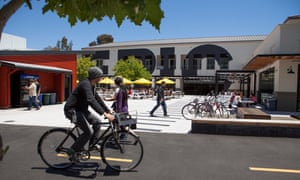


Facebook employees traverse the company’s campus. Facebook's neighbors are losing their homes. What's being done about it?
  
The first time Tameeka Bennett had to drive two hours in traffic to get to her job in East Palo Alto, she broke down in tears in her car. It was October 2014, and Bennett, 29, had never imagined she would have to move away from the Silicon Valley city where she grew up, which is one of the least affluent communities in the region.

But her family had lost their home to foreclosure, and they couldn’t find an affordable house to buy in East Palo Alto. So they were forced to move to Oakland, which is 40 miles north and a nightmarish commute away from Bennett’s job as executive director of Youth United for Community Action, an East Palo Alto not-for-profit group that fights displacement.

While Bennett recognizes that there are multiple factors driving the region’s housing crisis, it’s hard for her to ignore the most obvious force less than three miles north of her organization: the Facebook headquarters.

This week, Bennett and other northern California advocates are pressuring Facebook to make substantial investments in affordable housing as the powerful social networking company pushes forward with a major expansion that experts say will drive up housing prices and exacerbate income inequality in the center of the booming tech economy.

The brewing dispute over Facebook’s expansion in Menlo Park – which is adjacent to East Palo Alto and not far from the headquarters of Apple and Google – has exposed what many critics of the industry see as a glaring contradiction in the tech sector. That is, these hugely profitable companies cast themselves as do-gooder innovators creating transformative technology, but in their own backyard, they’re contributing to a crisis that has grave consequences for disadvantaged communities – and they’re doing little to “disrupt” the poverty plaguing their neighbors.

Menlo Park officials and residents debated Facebook’s growth plans during a lengthy city council meeting that dragged on past midnight on Tuesday evening. The public discussion came one day after reports that founder Mark Zuckerberg and his wife, Priscilla Chan, are exploring ways that their new philanthropic organization could help alleviate the high cost of housing in the region.

Facebook – which set up its huge campus in Menlo Park in 2011 – has proposed two new office buildings that would add roughly 126,000 sq ft to its campus, along with a 200-room hotel. The project is expected to bring more than 6,500 new employees to Facebook and the hotel, which would increase the entire Menlo Park workforce by more than 20%.

As part of the expansion, Facebook is required to contribute $6.3m to below-market-rate housing.

The company further agreed to provide $350,000 for a “study” of housing conditions; $1.5m for a “housing innovation fund” for various initiatives; $1m for for a “preservation fund” to buy and protect units housing “at-risk populations”; and $2.15m for reduced rents in 22 units of “workforce housing”, with priority given to teachers.

But critics say those are relatively inconsequential benefits given the size of the project and scale and urgency of the housing crisis – and considering that Facebook is now worth about $350bn, making it the sixth-most valuable company in the US.

Research has repeatedly suggested that Silicon Valley tech firms have worsened inequality, and data shows the area has lost affordable units at alarming rates. Recently, there have been numerous mass evictions and threats of widespread displacement near tech corporations.

With a surge in tech jobs at Facebook, the project will probably attract tens of thousands of additional workers in lower-paying jobs that support the industry, said Sam Tepperman-Gelfant, senior staff attorney at Public Advocates, a not-for-profit group that has, along with the ACLU, raised formal objections to Facebook’s project.

It is those workers and other poorer residents who will suffer the most from a jump in the regional housing demand, he said, pointing out that roughly 70,000 low-income workers in Silicon Valley already commute more than 50 miles to their jobs, which also has environmental consequences.

“It’s fundamentally not fair to ask low-wage workers in Silicon Valley to be bearing the personal costs for global corporate production,” he said. “Facebook could have a substantial role in correcting those deficiencies.”

In East Palo Alto, officials have also gathered compelling evidence suggesting that Facebook’s presence has had tangible consequences for low-income renters.

From 2011 to 2015, the average asking rent for a one-bedroom apartment in East Palo Alto increased by 89%, according to records.

One property owner acquired roughly 40% of the city’s entire rental housing stock in December 2011 after Facebook moved to Menlo Park – and the new landlord subsequently issued a significant number of eviction notices, officials have noted in city records.

That real estate company has specifically advertised new housing to Facebook workers, writing on its website: “Now is the time to consider affordable East Palo Alto apartments … before the rest of the Facebook and Google employees do!”

In a recent letter criticizing Facebook’s project, East Palo Alto’s mayor, Donna Rutherford, included that quote and pointed to research showing that in 67% of all recent house sales and rental units in East Palo Alto, the marketing materials have mentioned Facebook.

“It’s not that we’re against Facebook, but we want to make sure that when the expansion happens, it benefits not only a group of people, but the wider community,” said Carlos Martinez, East Palo Alto city manager.

Caprice Powell, 24, who grew up in East Palo Alto, said she is moving to Atlanta, Georgia, this summer in part because she can’t afford to rent here any more.

“Facebook is coming in and bringing along all these rich folks … They’re able to afford our housing, because it’s nothing to them.”

Powell said her sister and mother had both been priced out of East Palo Alto and that she was temporarily living in a small room in her godfather’s house – one of five people crammed into a two-bedroom. After she relocates to Georgia, she hopes to eventually return to East Palo Alto, but she’s not confident it will be financially feasible.

“It feels like East Palo Alto is not our home any more,” she said.

Bennett, who said she knew at least five local families who had been pushed out, also pointed out that Facebook had offered its employees generous bonuses to live closer to campus, which has accelerated gentrification.

“You are directly displacing families,” she said, adding that Facebook should look beyond its impact on Menlo Park and commit to funding housing in surrounding cities.

One resident at the council hearing also pointed out that black employees account for only 3% of Facebook’s senior leadership in the US, but others praised the company for bringing jobs and supporting local not-for-profit groups.

Facebook declined an interview request, but said in a statement: “We understand that our growth affects the everyday lives of our neighbors, and we want to be respectful and thoughtful about how we approach our expansion. The future of Menlo Park is extremely important to us, which is why we work with city and community leaders to tackle local priorities, including transportation, housing and the environment.”

The statement did not mention East Palo Alto.

At the council meeting, John Tenanes, Facebook’s vice-president of global facilities and real estate, did not address criticisms over housing, but said: “You have my commitment that Facebook will continue to be very active above and beyond what we’ve negotiated.”

A spokesman for the Chan Zuckerberg Initiative declined to comment on the rumors about potential housing initiatives, saying in a statement: “We are in the process of examining a number of potential issue areas for future work.”

Source: TheGuardian, Sam Levin
https://www.theguardian.com/technology/2016/jul/20/facebook-headquarters-expansion-menlo-park-california-housing


RELATED:
VIDEO: Million Dollar Shack: Trapped in Silicon Valley's Housing Bubble

Tuesday, May 17, 2016

Los Gatos residents complain about corporate buses


The controversy that's followed corporate buses from San Jose to San Francisco has arrived on Los Gatos' doorstep. Both Apple and Google operate buses that take town residents to work in Cupertino and Mountain View, but some of their neighbors are complaining.

One complainant is Michael Farr, who lives at Knowles Drive and Carpi Avenue, where Googlers are picked up in the morning and dropped off in the evening.

"They come and go just like a transit center," Farr said. "They're an accident waiting to happen. This is a residential street, not a parking lot."

Town manager Laurel Prevetti said the Googlers apparently started parking on Capri after being "kicked out of the Vasona Station shopping center"

because they were taking customer parking spaces.

Since Knowles and Capri are public streets, anyone can park there for up to 72 hours.

"We talked to Google in March to talk through some options," Prevetti said. "We have a lot of questions, we don't necessarily have a lot of answers. So, we need solutions. One solution is land: Is there land available so they can have a designated place to park?"

Mayor Barbara Spector is also working the issue, and parks and public works director Matt Morley is looking into a couple of parcels of land that could possibly be used for corporate parking.

Farr likes that idea. "They should buy a parking lot," he said.

He also thinks the buses should be regulated.

"If you want to have a shuttle, then you have to have a permit just like a taxi service," Farr said. "I find it really wrong to let big corporate buses use residential streets as a park and ride lot."

This isn't the first time residents have complained about the Google buses. In February 2012, Pam Kee told the Los Gatos Weekly-Times that the buses were endangering children walking to school on Shannon Road.

The buses no longer stop on Shannon.

Google and Apple both use the Office Depot parking lot at Lark Avenue and Los Gatos Boulevard, which is why Prevetti calls this a town-wide issue.

"We've received calls about the buses using residential streets from a few neighborhoods, so we have to look at this from a town-wide perspective," Prevetti said. "We don't want to push the problem around. Looking at the bigger picture, the buses do take cars off the road."

Even so, Prevetti said, it's a "sticky, quality of life issue" that the town council will likely discuss in June.

Source: San Jose Mercury News, Judy Peterson
http://www.mercurynews.com/real-estate-news/ci_29880745/los-gatos-residents-complain-about-corporate-buses

Tuesday, May 10, 2016

Tech boom spurs San Jose housing, office, retail towers

One of two artist renderings of an office tower at 333 W. San Fernando St. in San Jose, Calif., which will have 725,000 square feet of office space in a

SAN JOSE -- The tech boom in Silicon Valley has spurred proposals for new high-rise projects in downtown San Jose that will bring housing, offices and retail, developers said Monday.

At 225 W. Julian St. near Highway 87, developers are planning a pair of 20-story residential towers that would bring 910 residential units into downtown San Jose, along with offices and retail uses. Nearby, developers want to build a 19-story office tower totaling 725,000 square feet at 333 W. San Fernando St. in a development that would also include retail uses on the ground floor.

The technology boom and job gains in North San Jose and other parts of Silicon Valley, along with growing interest by tech companies to move into the increasingly busy downtown, has fueled both efforts.

"If you look at what is happening here, downtown San Jose has really changed, and we are close to a tipping point for downtown becoming very dynamic," said Mark Lazzarini, managing principal with DAL Properties, which believes its efforts at 222 W. Julian St. could ride that new wave.

More than any other factor, the remarkable surge in technology hiring by big tech companies such as Apple and Google, along with major players such as Samsung, have helped bolster plans by real estate developers to bring new projects into the downtown.

"We believe we can get a single tenant in our project" at 333 W. San Fernando St., said John DiNapoli, president of developer J.P. DiNapoli Cos. "We think this can be a tech tenant."

The 333 W. San Fernando complex will feature an amenity deck on the 18th floor of the tower, an outdoor level that is expected to appeal to technology tenants.

"You have so many more restaurants, hotels, along with entertainment and cultural activities, that downtown San Jose is becoming the place to live, work and play," Lazzarini said.

Another major effort to bring a tech company into new offices in downtown San Jose is being led by developer Trammell Crow. The realty firm is planning 1 million square feet of offices, housing and retail that will include a tech campus for a major tenant in a development planned for an area near the Guadalupe River not far from the SAP sports complex and the Diridon transit station.

San Jose's expansion efforts, led by former Mayor Chuck Reed and current Mayor Sam Liccardo, appear to be paying off for the downtown district.

"The city has created a job center in North San Jose, and the development and expansion activity there is making it more difficult for tech companies to find large blocks of space there," said Mark Haney, a blogger who writes about the downtown at the Think Bigger San Jose website.

The other part of the city's strategy is to encourage multiple kinds of development in downtown San Jose.

"For downtown, the challenge is what would be first, the companies or the residences," Haney said. "The residences have been built and are being built, and now it's starting to pencil out for developers to build offices for tech tenants."

What's more, the tech boom and residential boom in San Francisco's downtown and South of Market districts -- along with the move of tech firms such as Pandora Media, Sungevity and Uber Technologies -- has made urban centers more appealing to young tech workers.

"People are finding it more interesting to live in downtown areas," Haney said.

Source: San Jose Mercury News, George Avalos
http://www.mercurynews.com/business/ci_29870047/tech-boom-spurs-san-jose-housing-office-retail

Saturday, August 8, 2015

How big data is transforming real estate

How big data is transforming real estate


Photo source: Inman News

Assessing a storm's damage to a house; responding to a prospective buyer's concerns about a property; designing offices that suit the needs of its tenants—all are key tasks of the real estate business that are rapidly being made faster and less expensive as the industry adopts lessons from technology, lessons that have already dramatically changed industries such as finance and health care.

In other words, big data is transforming real estate.

"Big data is making the commercial real estate industry more transparent," said Ely Razin, CEO of CrediFi, a big data platform for the commercial real estate finance market. "It becomes a partner to the players to the community, whether they're brokers, lenders, investors or owners."

Transforming real estate finance

In commercial real estate finance, number crunching from public and private data sources is already helping potential investors make better decisions.

CrediFi's Razin said the company's platform uses credit risk algorithms to analyze huge amounts of data from public and licensed sources, which then produce risk scores for regional real estate.
For example, prospective investors analyze how sound a physical structure is, when it was last renovated or if the prospective owner is financially reliable—all important factors that impact their decision.

Companies can also assess a building's finance, like the details of a prospective building's loans and investment platform.

Changing the business of property sales

Real estate start-up VTS (stands for "View the Space") is a smartphone app hoping to transform real estate sales by enabling owners to better assess the reactions of prospective buyers, said Ryan Masiello, co-founder and chief revenue officer of VTS.
The platform aims to speed up the process of getting feedback from prospective tenants to owners, and to help the negotiating process. It recently raised $21 million.

"If 80 percent of prospective tenants aren't moving forward and giving you a proposal because they feel the space is priced too high, or the image of the space is wrong for them, like issues with the height of a ceiling or the size of a room, we capture that information directly," said Masiello

Improving building management

Big data is also changing how buildings are managed. David Kollmorgen, international director and head of business intelligence at Jones Lang LaSalle, said the emerging "the Internet of things" is making certain management tasks easier.

"We've put sensors on the equipment in a building, for example, and every 15 seconds we get a read on the air temperature, if the fan is on or off. Then we can feed data into algorithms, like if this fan is working, then it shouldn't generate a work order to fix it. We can also figure out, is weather data correlating to x, y or z."
That can reduce expenses and the wait time in fixing problems in a building, said Kollmorgen.

But the costs of implementing sensor systems takes a lot of money and planning.

"If you look at the Manhattan skyline at night, you see lots and lots of lights on even in downtown buildings, where most of the offices are closed. Just because people have the ability to improve, by retrofitting their actual electrical systems, it would be very expensive," said Keith Outlaw, licensed real estate agent at Highline Residential in New York.
Despite the initial challenge of such a large investment, making buildings "smarter" would greatly reduce waste and spending, said Outlaw.

Source: CNBC, Marguerite Ward
http://www.cnbc.com/2015/08/04/how-big-data-is-transforming-real-estate.html

Tuesday, February 24, 2015

Tech To Attract Affluent Home Buyers

I'm a Realtor here in the Silicon Valley and many of my past and current clients work for many of the big tech firms like Apple, Google, Facebook, Cisco and others. Many of my tech inclined home buyer clients end up upgrading their newly purchased home with a tech upgrade or two, but whether your in the market to buy a home or currently own one and are looking for some ideas, below is a great article you may find useful. 


Tech To Attract Affluent Home Buyers
Written by Realty Times Staff on Wednesday, 11 February 2015 12:48 pm

ERA Real Estate and HGTV reported 46 percent of consumers see smart-home technology as important for their current and future residences. But luxury homebuyers are willing to make the ultimate sacrifice. According to Digital Interiors, 94 percent of buyers surveyed would sacrifice 1,000 square feet of living space for more technology in their new home. Oversized houses are no longer the driving trend in the luxury real estate market and agents are under pressure to respond to the demand. Here’s what affluent homebuyers are looking for and which gadgets are must-haves.

Get a Smart Thermostat

Outfit your listings for luxury with smart-home additions like a smart thermostat . The Nest programs itself based on your preferences and can adjust whenever you leave to conserve energy. Your clients can control the system right from their smartphones. Owners can warm up the living room before an evening entertaining clients. Talk about how they can jet set to their vacation home and simply check-in on their property as needed. The idea behind a smart thermostat is really about controlling the overall climate of the home as opposed to an exact temperature.

Enhance your Home Surveillance

Home security systems have always dabbled in the high-tech world of smart automation. In the past, most alarms simply triggered an annoying sound and contacted the police at signs of danger.

Today, home security cameras keep an eye on the inside and outside of the home with wireless cameras. A wireless camera system can be mounted to the wall or ceiling and monitored remotely. Home buyers are sure to be wowed by its sleek and discreet design. Some home security companies, like Lorex Technology, even offer subscription-free monitoring options, yet another attractive feature for potential buyers.

New owners can keep an eye on their home from vacation, at work or on a spontaneous outing without worry.


Go High-Tech Culinary

Updating a kitchen has always been a recommended way to raise a home’s price tag and attract buyers. But affluent home shoppers are looking for more than just new appliances and chef’s kitchens. The latest technology trends include no-touch faucets and smart refrigerators that can alert you when you’re running low on groceries. The LG model features an internal camera to check on its contents, built-in Wi-Fi to connect to your mobile device and offers available accessories that can be 3-D printed. Other high-tech touches like Bluetooth smart cooking thermometers tell your mobile device when your food is ready to create perfect dishes every time.

Upgrade your Luxury Entertainment

Just about every home has a flat-screen television; some piped for surround sound and home theaters. Let your clients take entertaining to a new level by controlling everything from one device like Savant. Your clients can adjust the lighting, change the channel on your smart TV and turn on music. A system like Savant can also help monitor your home’s security and adjust the climate as needed. While clients are getting ready upstairs for an evening with friends, they can adjust the entertainment area and living room downstairs to create a luxurious atmosphere.

Tech To Attract Affluent Home Buyers