Showing posts with label low income. Show all posts

Friday, July 22, 2016

Facebook's neighbors are losing their homes. What's being done about it?

This is happening all over the silicon valley, not just the City of East Palo Alto close to Facebook. 

The big tech companies need workers, they pay them well so they can afford the high cost of housing and the high rent. So naturally housing costs goes up. The problem is, not everyone works in tech or works in tech directly so most of them don't make the high paying salary. We are talking about people in support roles for the tech industry such as janitors, cafeteria workers, security guards, delivery drivers, etc. They are the ones getting screwed in the tech economy here in the valley and the tech companies are doing little help.

Read the great article below from the Guardian and when you're done, watch the very insightful video Million Dollar Shack: Trapped in Silicon Valley's Housing Bubble linked below
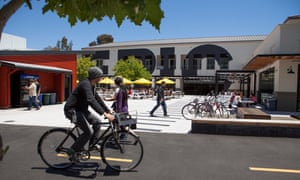


Facebook employees traverse the company’s campus. Facebook's neighbors are losing their homes. What's being done about it?
  
The first time Tameeka Bennett had to drive two hours in traffic to get to her job in East Palo Alto, she broke down in tears in her car. It was October 2014, and Bennett, 29, had never imagined she would have to move away from the Silicon Valley city where she grew up, which is one of the least affluent communities in the region.

But her family had lost their home to foreclosure, and they couldn’t find an affordable house to buy in East Palo Alto. So they were forced to move to Oakland, which is 40 miles north and a nightmarish commute away from Bennett’s job as executive director of Youth United for Community Action, an East Palo Alto not-for-profit group that fights displacement.

While Bennett recognizes that there are multiple factors driving the region’s housing crisis, it’s hard for her to ignore the most obvious force less than three miles north of her organization: the Facebook headquarters.

This week, Bennett and other northern California advocates are pressuring Facebook to make substantial investments in affordable housing as the powerful social networking company pushes forward with a major expansion that experts say will drive up housing prices and exacerbate income inequality in the center of the booming tech economy.

The brewing dispute over Facebook’s expansion in Menlo Park – which is adjacent to East Palo Alto and not far from the headquarters of Apple and Google – has exposed what many critics of the industry see as a glaring contradiction in the tech sector. That is, these hugely profitable companies cast themselves as do-gooder innovators creating transformative technology, but in their own backyard, they’re contributing to a crisis that has grave consequences for disadvantaged communities – and they’re doing little to “disrupt” the poverty plaguing their neighbors.

Menlo Park officials and residents debated Facebook’s growth plans during a lengthy city council meeting that dragged on past midnight on Tuesday evening. The public discussion came one day after reports that founder Mark Zuckerberg and his wife, Priscilla Chan, are exploring ways that their new philanthropic organization could help alleviate the high cost of housing in the region.

Facebook – which set up its huge campus in Menlo Park in 2011 – has proposed two new office buildings that would add roughly 126,000 sq ft to its campus, along with a 200-room hotel. The project is expected to bring more than 6,500 new employees to Facebook and the hotel, which would increase the entire Menlo Park workforce by more than 20%.

As part of the expansion, Facebook is required to contribute $6.3m to below-market-rate housing.

The company further agreed to provide $350,000 for a “study” of housing conditions; $1.5m for a “housing innovation fund” for various initiatives; $1m for for a “preservation fund” to buy and protect units housing “at-risk populations”; and $2.15m for reduced rents in 22 units of “workforce housing”, with priority given to teachers.

But critics say those are relatively inconsequential benefits given the size of the project and scale and urgency of the housing crisis – and considering that Facebook is now worth about $350bn, making it the sixth-most valuable company in the US.

Research has repeatedly suggested that Silicon Valley tech firms have worsened inequality, and data shows the area has lost affordable units at alarming rates. Recently, there have been numerous mass evictions and threats of widespread displacement near tech corporations.

With a surge in tech jobs at Facebook, the project will probably attract tens of thousands of additional workers in lower-paying jobs that support the industry, said Sam Tepperman-Gelfant, senior staff attorney at Public Advocates, a not-for-profit group that has, along with the ACLU, raised formal objections to Facebook’s project.

It is those workers and other poorer residents who will suffer the most from a jump in the regional housing demand, he said, pointing out that roughly 70,000 low-income workers in Silicon Valley already commute more than 50 miles to their jobs, which also has environmental consequences.

“It’s fundamentally not fair to ask low-wage workers in Silicon Valley to be bearing the personal costs for global corporate production,” he said. “Facebook could have a substantial role in correcting those deficiencies.”

In East Palo Alto, officials have also gathered compelling evidence suggesting that Facebook’s presence has had tangible consequences for low-income renters.

From 2011 to 2015, the average asking rent for a one-bedroom apartment in East Palo Alto increased by 89%, according to records.

One property owner acquired roughly 40% of the city’s entire rental housing stock in December 2011 after Facebook moved to Menlo Park – and the new landlord subsequently issued a significant number of eviction notices, officials have noted in city records.

That real estate company has specifically advertised new housing to Facebook workers, writing on its website: “Now is the time to consider affordable East Palo Alto apartments … before the rest of the Facebook and Google employees do!”

In a recent letter criticizing Facebook’s project, East Palo Alto’s mayor, Donna Rutherford, included that quote and pointed to research showing that in 67% of all recent house sales and rental units in East Palo Alto, the marketing materials have mentioned Facebook.

“It’s not that we’re against Facebook, but we want to make sure that when the expansion happens, it benefits not only a group of people, but the wider community,” said Carlos Martinez, East Palo Alto city manager.

Caprice Powell, 24, who grew up in East Palo Alto, said she is moving to Atlanta, Georgia, this summer in part because she can’t afford to rent here any more.

“Facebook is coming in and bringing along all these rich folks … They’re able to afford our housing, because it’s nothing to them.”

Powell said her sister and mother had both been priced out of East Palo Alto and that she was temporarily living in a small room in her godfather’s house – one of five people crammed into a two-bedroom. After she relocates to Georgia, she hopes to eventually return to East Palo Alto, but she’s not confident it will be financially feasible.

“It feels like East Palo Alto is not our home any more,” she said.

Bennett, who said she knew at least five local families who had been pushed out, also pointed out that Facebook had offered its employees generous bonuses to live closer to campus, which has accelerated gentrification.

“You are directly displacing families,” she said, adding that Facebook should look beyond its impact on Menlo Park and commit to funding housing in surrounding cities.

One resident at the council hearing also pointed out that black employees account for only 3% of Facebook’s senior leadership in the US, but others praised the company for bringing jobs and supporting local not-for-profit groups.

Facebook declined an interview request, but said in a statement: “We understand that our growth affects the everyday lives of our neighbors, and we want to be respectful and thoughtful about how we approach our expansion. The future of Menlo Park is extremely important to us, which is why we work with city and community leaders to tackle local priorities, including transportation, housing and the environment.”

The statement did not mention East Palo Alto.

At the council meeting, John Tenanes, Facebook’s vice-president of global facilities and real estate, did not address criticisms over housing, but said: “You have my commitment that Facebook will continue to be very active above and beyond what we’ve negotiated.”

A spokesman for the Chan Zuckerberg Initiative declined to comment on the rumors about potential housing initiatives, saying in a statement: “We are in the process of examining a number of potential issue areas for future work.”

Source: TheGuardian, Sam Levin
https://www.theguardian.com/technology/2016/jul/20/facebook-headquarters-expansion-menlo-park-california-housing


RELATED:
VIDEO: Million Dollar Shack: Trapped in Silicon Valley's Housing Bubble

Wednesday, May 18, 2016

Film spotlights Palo Alto's only mobile home park, Buena Vista

Affordable housing is a hot topic here in the Silicon Valley. Housing prices are at an all time high (not complaining as a Realtor), rents are high and there are many in this valley who don't have the well paying jobs at the valley's many tech giants such as Google, Apple or others. There are many on the lower rung of the socio-economic latter such as janitors, food service workers, etc. who are just as important to this valley as the tech workers and they still need housing - affordable housing.

So there is a low income, mobile home park in Palo Alto, Buena Vista, that is under threat of closure due to developers who want the land. For that last 3+ years the residents haven't taken the matter lying down and protested, sat in on city council meetings, etc. to stop the closure. Well now the residents of Buena Vista Mobile home park are going to have a powerful new tool in their fight against the big developer who wants the land, a Moive; NOTES FROM BUENA VISTA (Teaser).

Time will tell if this movie will be effetive in stopping the plans of the developer and city council.


PALO ALTO -- The only mobile home park in Palo Alto is the subject of a documentary that will be shown Tuesday and Wednesday as part of Affordable Housing Week 2016 in Santa Clara County.

"Notes from Buena Vista," a documentary by filmmaker Elizabeth Lo, is an exploration of the Buena Vista Mobile Home Park's 400 low-income, mostly Latino residents, who could lose their homes if property owners are successful in closing the housing site at 3980 El Camino Real.

Organizers say Lo's film addresses how "the severe shortage of affordable homes in Silicon Valley puts tremendous pressure on our communities, as households of all incomes compete to secure safe and affordable homes."

Buena Vista residents have lived with the uncertainty of their housing situation for about 3 ½ years.

The park's closure remains in limbo as residents, the property owner and the city of Palo Alto work out differences in court.

The park's owners, Toufic and Eva Jisser, filed an application to close the site in November 2012.

The Palo Alto City Council decided in May of last year to allow the Jissers to close the park.

The Buena Vista Mobile Home Park Residents Association then filed a lawsuit against the city in August, seeking to overturn the council's decision and, at the minimum, a larger relocation assistance package for tenants than required by the city.

In November, the Jissers also filed a lawsuit against the city, saying that requiring the owners to pay $8 million in tenant relocation assistance as a condition to close the park is a "staggering financial demand."

Lo's documentary explores how development pressures in Silicon Valley threaten the livability of this area for many, such as the Buena Vista residents.

The documentary will be shown at 5 p.m. Tuesday at the Aquarius Theatre, 430 Emerson St. in Palo Alto and at 5 p.m. Wednesday at Camera 12 Cinemas, 201 S. Second St. in San Jose.

Admission is free. For tickets, visit SVatHome.EventBrite.com.

A discussion with the filmmaker and panelists will follow each screening.

Tuesday's panel includes Erika Escalante, president of the Buena Vista Mobile Home Park Residents Association; Amado Padilla, Stanford University professor who authored a report on the mobile home park residents' health and education; and Kyra Kazantzis of the Law Foundation of Silicon Valley.

Wednesday's panel includes Melodie Chaney, a resident of the mobile home park; Kent Greathouse, a resident of Winchester Ranch Mobile Home Park in San Jose; Diana Castillo of the Law Foundation of Silicon Valley; and Adam Marcus of the San Jose Housing Department.

Source: San Jose Mercury News, Jacqueline Lee
http://www.mercurynews.com/real-estate-news/ci_29904055/film-spotlights-palo-altos-only-mobile-home-park

Wednesday, March 2, 2016

U.S. Supreme Court leaves San Jose housing law in place


The City of San Jose has a requirement in which builders of new construction have to allocated 15% of their units for below market rates - for low income buyers. If the builder doesn't want to allocate some of their units for low income buyers, then the builder has a fee, which works out to be over $100K. Naturally builders/developers are upset about this and took the issue to the California Supreme Court which upheld San Jose's law, so then it went to the US Supreme Court but they didn't want to hear the case.

This issue is kind of a big deal. It may affect the future of the real estate market here in numerous ways that only the time will tell. Great article below from the San Jose Mercury news.


The U.S. Supreme Court on Monday turned away a legal challenge to a San Jose affordable housing law, leaving intact the city's effort to address the exploding cost of housing in Silicon Valley.

The justices declined to hear the building industry's appeal of a ruling last year by the California Supreme Court upholding San Jose's law. In a brief opinion, Justice Clarence Thomas observed that the law on the issue remains "unsettled" and needs Supreme Court guidance, but agreed with the vote to reject the appeal because the San Jose case had technical legal problems that may prevent reaching the core questions.

In its appeal, the building industry argued that San Jose's law and others like it across California violate federal constitutional protections against the "taking" of private property. The Pacific Legal Foundation, a conservative Sacramento group representing the industry, pressed the fight to the nation's high court.

"The rights of all property owners were dealt a blow today, as San Jose's punitive treatment of homebuilders was allowed to stand," said foundation attorney Brian Hodges. "It is disappointing that the U.S. Supreme Court has chosen not to review the California Supreme Court's decision to uphold San Jose's inclusionary building mandates."

San Jose city officials welcomed the conclusion of the legal fight.

"(The) Supreme Court ruling could not have come any sooner for the thousands of families in our community who are struggling to keep up with skyrocketing rents, and we look forward to implementing this policy as quickly as possible," San Jose Mayor Sam Liccardo said.

The state Supreme Court, in a unanimous ruling in June written by Chief Justice Tani Cantil-Sakauye, determined that San Jose's affordable housing program is within the law, observing: "These problems have become more and more severe and have reached what may be described as epic proportions in many of the state's localities."

The case involved a legal challenge to a San Jose law that would require housing developers to include affordable, below-market priced units for low-income buyers on any new projects within the city. The building industry sued to block enforcement of the so-called "inclusionary housing" law several years ago.

The League of California Cities and California State Association of Counties, which backed San Jose in the case, estimate about 170 local governments have put versions of the law in place to deal with the state's shortage of affordable housing, considered an acute problem in Silicon Valley and around the Bay Area.

The state building industry, backed by groups such as the California Association of Realtors, considers such legislation a strong-arm tactic that in the long run will drive up already exorbitant housing prices. They maintain such laws will force developers to simply pass along the cost of subsidizing below-market units to new homebuyers.

In particular, the industry argues the law is an unconstitutional "taking" of property and that San Jose has not established a connection between the building of new housing and the affordable housing problem. Cities, they argue, make that case in forcing developers to pay fees to cover the impact of new housing developments on things such as local schools and parks, but haven't done so for affordable housing.

San Jose's law would require developers to offer 15 percent of units in new projects of 20 or more units at below-market rates. Developers could opt out of building affordable units by paying a fee, which the housing industry estimates could run about $122,000 per house.

Housing advocates warned of dire consequences if the Supreme Court invalidated San Jose's affordable housing regulation. California has been considered a model for such laws, designed not only to provide more low-income housing but also to get it built in a larger cross-section of neighborhoods.

Source: Mercury News, Howard Mintz
http://www.mercurynews.com/real-estate-news/crime-courts/ci_29576352/u-s-supreme-court-leaves-san-jose-housing.html