Showing posts with label California. Show all posts

Sunday, October 2, 2016

California housing market to see modest gains in 2017, Realtors forecast

File photo

California’s housing market will post modest gains next year amid tight supplies and the lowest housing affordability in six years, the California Association of Realtors forecast Thursday.

Sales of existing single-family homes – which make up about 68 percent of the overall market – are projected to rise 1.4 percent in 2017 to 413,000 transactions.

Next year’s small gain will follow a projected 2016 sales drop of 0.4 percent to 407,300 deals, the forecast said.

Meanwhile, the median house price – or price at the midpoint of all sales – is projected to rise 4.3 percent to $525,600. That’s the smallest percentage gain in six years.

By comparison, 2016 house prices are projected to be up 6.2 percent to $503,900 by the end of December.

“The net result will be California’s housing market posting a modest increase in 2017,” said Leslie Appleton-Young, the Realtor association’s chief economist. “The underlying fundamentals continue to support overall home sales growth, but headwinds, such as global economic uncertainty and deteriorating housing affordability, will temper stronger sales activity.”

Housing affordability will fall as price gains continue to outpace pay raises.

Just 29 percent California homebuyers will be able to afford a median-priced house next year, the association predicted. By comparison, more than half the buyers could afford the median-priced home in 2011-12.

In Southern California, house sales are projected to be virtually unchanged this year and next from 2015’s sales pace, the forecast said. Sales are projected to rise 0.4 percent this year and 0.7 percent next year.

The median house price in the region is projected to be up 5.4 percent by the end of 2016 and to rise 3.2 percent to $501,500 next year.

The state’s hottest housing market – the San Francisco Bay Area – will see larger price jumps amid falling sales as buyers flee to more affordable markets. The forecast projected sales declines of 6.4 percent and 5.6 percent in 2016 and 2017.

Bay Area prices, meanwhile, are forecast to increase by more than 6 percent both this year and next, rising to $833,600 in 2017.

Mortgage interest rates are forecast to rise next year, but not by much. The average rate for a 30-year fixed mortgage is expected to be 4 percent in 2017, compared to this years near-record low of 3.6 percent

Source: San Jose Mercury News, Jeff Collins
http://www.mercurynews.com/2016/09/29/california-housing-market-to-see-modest-gains-in-2017-realtors-forecast/

Wednesday, August 10, 2016

Return of The Bidding War, But Only For Certain States

Wow! Ten of the top 30 cities are right here in the Bay Area.


Return of The Bidding War, But Only For Certain States

The phenomenon is very uneven geographically, but CoreLogic says that one factor behind the sustained pace of home price appreciation is the return of bidding wars.

The company's analysis is limited in that it was done on the city level in markets where there were a hundred or more closed home sale transactions in the second quarter - criteria that is in itself a bit self-defining.  They also included properties where the sale price was bid up by $5,000 or more above the list. The cities that emerged on top for bidding wars were no surprise; they were mostly in the West and primarily in California, but some of CoreLogic's findings were still interesting.


Seventeen of the top 30 cities where multiple offers are most frequently pushing home sale prices above list are in California, and eight are in Washington.  And where they are occurring, bidding wars are not an isolated occurrence.  Almost eight of ten properties sold in the second quarter in Santa Clara went above listing price; in two other California markets, Milpitas and Fremont, it was seven of ten.  In each city falling in the top half of the list a minimum of 60 percent of sales were above the listing price and for the entire list bidding affected at least half of closed sales.

On a percentage basis, the largest average increase over listing price was in San Francisco at 12.2 percent followed by San Mateo at 11.0 percent and Montclair, New Jersey (the only market east of Colorado) at 10.8 percent. The low (keeping in mind the $5000 analysis floor) was 3.3 percent in Maple Valley, Washington.  Given some already pricy markets, the extra dollars paid by buyers was impressive, ranging from a low of $12,500 in Thornton, Colorado to $232,000 in Los Altos, California.

CoreLogic Principal Economist Bin He, who wrote up the analysis for the company's Insights Blog said, "Let us pause for a moment and think about this: if you happen to get into a bidding war in San Francisco CA, which actually occurred in six out of ten closed sales in Q2 2016, you'd better be prepared to pay an additional $134,000 for your dream home."

So what is driving the bidding wars?  He says it is that old villain, tight inventories.  While they exist in much of the country, with an average of a 3.75-month supply of homes on the market nationwide, it follows that the inventory would likely be lower in those markets which also have the greatest demand.  In California and Washington, the inventory is 2.6 months and 2.04 months respectively.

We are generally told that inventory is lowest in the bottom tier of home prices.  It would be interesting to see CoreLogic repeat this analysis with a lower floor for the list price/ceiling price relationship.  It might add yet another layer to discussions about the missing first-time homebuyer.

Source: Mortgage News Daily, Jann Swanson
http://www.mortgagenewsdaily.com/08082016_home_prices.asp

Friday, June 24, 2016

California's skyrocketing housing costs, taxes prompt exodus of residents


This article is not much of a surprise to me. Although as a Realtor I have benefited from the hot housing market, which is the result of the hot job market, it is starting to have negative consequences for the Silicon Valley and California. Many residents had enough and want out. Just recently I signed a listing agreement with seller clients of mine who want to sell their San Jose home so they can move to Oregon. How long will this bleeding of residents from California will continue? What can be done about it? No one has a clear answer.


Living in San Jose, Kathleen Eaton seemingly had it all: a well-paying job, a home in a gated community, even the Bay Area's temperate weather.

But enduring a daily grind that made her feel like a "gerbil on a wheel," Eaton reached her limit.

Faced with the exorbitant rising costs of Bay Area living, Priya Govindarajan and Ajay Patel pack up their apartment in San Francisco, Calif., ThursdaySkyrocketing costs for housing, food and gasoline, along with the area's insufferable gridlock, prompted the four-decade Bay Area resident to seek greener pastures -- 2,000 miles away in Ohio.

"It was a struggle in California," Eaton said. "It was a very difficult place to live. ... It's a vicious circle."

Eaton is far from alone.

A growing number of Bay Area residents -- besieged by home prices, worsening traffic, high taxes and a generally more expensive cost of living -- believe life would be better just about anywhere else but here.

During the 12 months ending June 30, the number of people leaving California for another state exceeded by 61,100 the number who moved here from elsewhere in the U.S., according to state Finance Department statistics. The so-called "net outward migration" was the largest since 2011, when 63,300 more people fled California than entered.

"The main factors are housing costs in many parts of the state, including coastal regions of California such as the Bay Area," said Dan Hamilton, director of economics with the Economic Forecasting Center at California Lutheran University in Thousand Oaks.

"California has seen negative outward migration to other states for 22 of the last 25 years."

A recent poll revealed that an unsettling sense of yearning has descended on people in the Bay Area: About one-third of those surveyed by the Bay Area Council say they would like to exit the nine-county region sometime soon.

"They are tired of the expense of living here. They are tired of the state of California and the endless taxes here," said Scott McElfresh, a certified moving consultant. "People are getting soaked every time they turn around."

The area's sizzling job market and robust economy have created a domino effect: income spikes for highly trained workers, more people packing the area's roads, red-hot demand for housing.

What's more, the technology boom has unleashed a hiring spree that has intensified the desire for homes anywhere near the job hubs of Santa Clara County, the East Bay and San Francisco. The South Bay job market has hit an all-time high after a 5,800-position surge in May, fueling an overall gain of 3,400 jobs for the Bay Area, according to a state labor report released Friday.

The region's soaring housing prices are a key factor driving dissatisfied residents toward the exit door. Several people who have departed, or soon will leave, say they potentially could have hundreds of thousands of dollars left over even after buying a house in their new locations.

"They're taking advantage of the housing bubble right now," McElfresh said. "The majority of the people we are seeing are moving to states that don't have state income taxes."

Thomas Norman, of San Francisco, said he and his wife, Patricia, are seriously considering leaving the Bay Area. They have actively scouted for houses in the Rocky Mountains region, including a trip to Colorado to look for prospective homes.

"The inconvenience of the Bay Area is a major factor," said Thomas Norman, a lifelong Bay Area resident burdened by a two-hour round-trip commute to an East Bay optometry practice. "The traffic is very bad. It is becoming more congested with all the housing that is being added here."

Eaton, who left the South Bay to relocate near Dayton, Ohio, cited the high cost of living as a major factor driving her decision. The struggle to make ends meet became too much.

"You can't get ahead," Eaton said. "It's more than the cost of living; it's the high taxes."

Eaton and her sister had a $724,000 house in The Villages in South San Jose that they sold before moving to Ohio. Their mortgage payments were $2,200 a month, plus $1,000 for association fees in the gated community. They were able to pay $300,000 in cash for their new home in Ohio.

Priya Govindarajan, a San Francisco resident, is planning to leave the Bay Area at the end of June and head with her husband, Ajay Patel, to North Carolina.

Govindarajan, who works in the consumer packaged goods industry, and her husband, who is in the medical profession, determined that their wages aren't going far enough to cover their living expenses.

Living in UC San Francisco housing, the couple pays $2,100 a month in rent. And they have to cough up $1,900 a month for child care.

"My husband's salary would be in the six figures, but six figures is not enough to cover the rent, day care (and) food prices," Govindarajan said. "It all starts to add up."

Govindarajan said she figures they can put down 20 percent on a nice house in North Carolina and have a monthly payment of $1,800 -- which would include the mortgage, property taxes and insurance.

"I get why people want to live in the Bay Area, I really do," Govindarajan said. "But it is so difficult to live here, especially for people coming here for the first time."

Some experts believe the boom in the Bay Area has exacerbated the problem of income inequality and the resentment that can accompany that economic reality.

"There is a declining middle class in the Bay Area," said Christopher Hoene, executive director of the California Budget & Policy Center, a research group that recently completed a study about income inequality in Silicon Valley. "Widening income inequality can create polarization socially and economically."

In 1989, the middle class accounted for 56 percent of all households in Silicon Valley, but by 2013, that share had slipped to 45.7 percent, the study found.

"The region's middle class has shrunk, while the numbers of lower-income and higher-income households has grown," the report stated. Silicon Valley, for the purposes of the study, consists of Santa Clara County, San Mateo County and San Francisco.

Lower-income residents accounted for 30.3 percent of Silicon Valley's households in 1989, and that number grew to 34.8 percent in 2013. Upper-income residents had 13.7 percent of the share of households in 1989, and that figure swelled to 19.5 percent in 2013, the study found.

"A lot of middle-class jobs have vaporized," said Russell Hancock, president of San Jose-based Joint Venture Silicon Valley. "The support positions, the assembly line positions, the jobs that paid the middle class -- a lot of those have gone away."

A big chunk of the jobs that are being created in the Bay Area are in the high-tech sector, which requires specialized skill sets to fill them. When jobs that would cater to the middle class wane, that can force people to relocate -- in many cases, out of the Bay Area entirely.

"This summer, I have booked more business than in any of the other 27 years that I've been working," said McElfresh, the moving consultant. "People are packing up and leaving."

Eaton, while happy to have escaped the high cost of living and traffic, recently found herself longing for one Bay Area staple -- its mild weather.

"There's a huge thunderstorm overhead," Eaton said while talking to a reporter. "Got to get used to that, I guess."

Source: Mercury News, George Avalos
http://www.mercurynews.com/business/ci_30037774/greener-pastures-beckon-some-beleaguered-residents

Thursday, November 26, 2015

These Are the 20 Richest Cities in America

This article is really no huge surprise to me. San Jose is the heart of the Silicon Valley and allot of tech giants reside in or around the San Jose area. According to this article from Bloomberg Business, San Jose is the #1 wealthiest city in America! No wonder why rents are high and the housing market is still hot. It just goes to show another good reason to own real estate here.

San Jose, San Francisco, Seattle: These cities house more than the headquarters of the world's largest technology companies. They are also some of the most productive hubs in the U.S. economy.

The San Jose, California metro area had the highest output per resident for 2014, according to a Bloomberg analysis of U.S. Bureau of Economic Analysis data for the 100 largest metropolitan areas. Gross metropolitan product (GMP) per capita in the Silicon Valley epicenter was $105,482, more than double the national average. Bridgeport, Connecticut ranked second at $94,349. San Francisco, Seattle and Boston followed.


These GMP per capita figures help uncover underlying economic trends, which are often masked by the population inflows and outflows that affect unadjusted output statistics. The 2014 rankings highlight a surge in tech centers since the recession, with San Jose now producing about $11,000 more per person than No. 2 Bridgeport. Until 2011, the Connecticut suburb for New York bankers held the top spot.

It's no surprise that these high-output cities also have some of the densest concentrations of educated workers, reflecting the soaring returns to schooling in today's job market. Harvard University professor Edward Glaeser says the diverging fates of high-skilled and low-skilled regions has been one of the most significant trends in the U.S. economy as well as other developed economies over the last three decades.

There's an ''ongoing trend towards skilled places being far more compensated than non-skilled places," said Glaeser, whose research focuses on what causes cities to grow.  "The poster-child of this in the data is the San Jose metropolitan area, which is off the charts in terms of income growth.''

Tech cities outside the Bay Area have also benefited from the industry's boom. Helped by not only Amazon Inc. but also newer Internet companies like Zulily Inc., Seattle's GMP per capita grew by a cumulative 7.9 percent since 2009, when the economic recovery began. (The cumulative growth since 2008 is a much more tempered 2.5 percent because of the dramatic drop in the financial crisis.) That helped the Washington city catapult to No. 4 from its No. 6 spot in 2008 through 2011. Biotech hotbed Boston also jumped two places since 2008, while Portland, Oregon (sometimes called Silicon Forest) climbed six spots.

These emerging tech hubs will probably expand even more in coming years, according to Luis Torres, a research economist specializing in regional economies at the Texas A&M Real Estate Center. Sky-high rents in northern California force workers and businesses to look elsewhere, Torres said.

Methodology: Bloomberg ranked the 100 biggest metropolitan statistical areas (MSA) in the U.S. according to their gross metropolitan product per resident from 2008 to 2014, calculated with data from the U.S. Bureau of Economic Analysis and the U.S. Census Bureau. Data for 2014 were advance statistics and subject to future revision. Previous years' data were revised from previous releases. The map above only displays the primary city in each MSA.

Source: Bloomberg Business, Ali Donaldson
http://www.bloomberg.com/news/articles/2015-11-05/these-are-the-20-richest-cities-in-america

Wednesday, September 9, 2015

Anti California Sentiment popping up in Portland area real estate

California has one of the highest real estate markets in the country and because of that, some home owners here are selling their homes and taking that money to buy a much lower cost home out of state with still some money left over. In Portland Oregon, locals there have grown resentful of outsiders, particularly people from California, with more money than common sense who are using their money to outbid other buyers and effectively pricing them out of the market. In fact they have even gone so far as to slap a No California sticker on housing For Sale signs in the area.

I guess they don't want us California folks to do to them what was done to us by foreign buyers from India and China.


'No California' stickers appear on real estate signs across Portland

Friday, September 4, 2015

Housing: Bay Area’s Achilles Heel

Very interesting article from the The Registry. According to the article, the San Francisco Bay Area is a large contributing factor to the State of California's economic growth and its budget surplus. But I'll add to that what is driving California's economic prosperity is not so much the bay area, but the Silicon Valley specifically. Right here is the epicenter of the tech universe with the likes of Apple, Google, Facebook, and others, including many new startups. 

So Matt Regan, president of the Bay Area Council, who the article quotes stated that one major concern for maintaining the bay area and the silicon valley's economic edge is the availability of housing. Without enough housing, employers may not be too keen to bring jobs here, in particular, housing located close to transportation. The Bay Area Rapid Transit (BART) expansion into San Jose and the $2B budget shortfall to complete another phase of the project into this area was cited as a possible issue.

One of the factors that is causing the housing shortfall into this region is the difficulty developers are facing with getting new housing projects approved at the local level with many city councils and officials making the approval process very onerous. It doesn't look like this problem is going to change anytime soon.

As Realtors we have to work extra hard to find housing for our buyer clients, especially in this hot market we are in (though it has cooled a little bit in the recent month or so). It is especially important for buyers to listen to the professional advice from their Realtor because we know the neighborhoods and local market conditions, and what it takes to get an offer accepted in this hyper competitive market. Lack of housing, although an issues, it is an issue that can be overcome with a knowledgeable and savvy agent (like myself :-)  ) on your side.


Housing: Bay Area’s Achilles Heel


The Bay Area is perhaps the West Coast’s most important region. And according to some, it is California’s economic engine, and one of the main reasons the state is in the black.

“Our economy is driving the economy of the state. The reason why the state has a budget surplus is because of the economy of the Bay Area,” said Matt Regan, senior vice president of public policy with the Bay Area Council. Regan, along with Essex Property Trust’s John Eudy and the Santa Clara Valley Transportation Authority’s (VTA) Deputy Director of Property Development and Management, Bijal Patel, spoke at a breakfast meeting in San Jose last week week organized by the law firm Hoge Fenton. The invitation-only event provided an update on BART’s expansion into San Jose and touched on transit-oriented developments, in general.

To illustrate just how significant the Bay Area’s contribution to the state economy is, Regan compared statistics of various metropolitan statistical areas throughout the state. In 2013 Personal Income tax returns from two Bay Area MSAs generated over $21 billion in personal income taxes for state coffers. This was done by a population of a little less than 7.5 million people. In contrast, Los Angeles County’s 10 million residents generated just $13 billion in the same period, according to Regan’s presentation. Overall, the Bay Area represented 38 percent of taxes collected in the state with roughly 19 percent of the population.

“We are doing very, very well. If we were performing at the same rate as the rest of the state of California we would still be in recession,” Regan concluded.

While Regan’s initial comments provided an energized perspective on the impact our region has on the state and national economy, they were immediately subdued by his observation that our inability to meet the demands of the employers in the region could bring a halt to our economic prosperity and importance.

Regan does not see the highest risk coming from external factors, such as the slowdown in the Chinese economy, but rather in the employers’ inability to attract the best and the brightest talent to the region. As an example, he referenced a recent visit from the University of California’s President, Janet Napolitano, who said the number one challenge for the university is the cost of housing, which results in the system’s inability to attract and keep the best professors, researchers and students in its ranks. And this issue reverberates throughout other sectors as well.

“When the property market crashed in 2008, we dropped off the cliff in terms of new housing starts. We still haven’t recovered from that crash. We’re still at less than 50 percent of new housing starts compared to 2008,” said Regan.

This is not surprising for anyone tracking the housing market in the Bay Area, which has been on a tear. Reports as well as anecdotes provide a rich sampling of just how dramatically the cost of living has risen over the period of just a few years. And housing located in proximity to transportation has been renting and selling at a premium.

Essex Property Trust has been one of the beneficiaries of this transition. “When we hit the crush in 2008, and we all saw the Great Recession, and we were wondering if we were going to become something worse or get better, we took a pause and reevaluated our investment criteria. One of the things that we decided on unilaterally was that if we came out of the recession and back into an active economic climate, we were going to concentrate our focus on [transit-oriented development,” said John Eudy.

The Palo Alto based multi-family developer has invested over $2 billion in the Bay Area in 18 different developments over the last few years that total over 5,600 units. Eight of these developments are planned for 2015 delivery.

Essex realized very early that demographics are going to work in its favor and focused its entire development portfolio in the Bay Area on building housing around transportation. The understanding was that convenience, proximity to amenities and access to public transportation and regional thoroughfares would be paramount to anything else. And the outcome proved their assumptions correct. The demand for this type of housing is outpacing other traditional suburban multi-family housing that is not focused on transportation.

“The number of walk-ins that we’re getting relative to a suburban location is close to double,” Eudy said.

This one example illustrates a strong and growing market demand for convenient housing choice, but the shortfall of our region’s production was best summarized in Regan’s assessment of the goals set by the state legislation, SB375. The legislation,  signed by Gov. Arnold Schwarzenegger in 2008, was termed by some as the anti-sprawl bill, which among other things set certain housing targets throughout the state (Plan Bay Area in our region).

These targets were based on assumptions rooted in a time that pre-dated the Great Recession and subsequent recovery. The bill helped set a regional housing target of approximately 660,000 units that needed to be built in the region by the year 2030. The Bay Area Council saw that need closer to one million units, and it unsuccessfully fought for 900,000 units.

“We argued that we needed 900,000, looking at job projection growth, but we lost that fight,” said Regan.

Almost three years into the plan, further issues evolved. The plan called for an approval of roughly 91,000 units, and only 71,497 have been approved to date, according to Regan’s presentation. Anyone following city council meetings across the region will not be surprised, since approving housing projects in the region’s 100 cities is a hard and laborious task. The shortfall of nearly 20,000 units can be felt across the entire region.

What amplifies the issue even more is the fact that Plan Bay Area assumed that these 91,000 units would accommodate approximately 155,000 jobs that would be created during the same period. What the plan failed to account for was the actuality of 456,000 jobs created during that time, exacerbating the shortage of housing even further. According to Regan’s arithmetic, the region is short nearly 200,000 housing units, a number that is now larger than the total units projected for development.

“In the 2007-2014 housing cycle, the RHNA (Regional Housing Needs Allocation) cycle, only one city out of the Bay Area’s 101 cities met its RHNA obligations, and that was Milpitas. They met 200 percent of their RHNA obligation, no one else came anywhere close to that,” added Regan. “At the local government level, there is an incredible lack of willingness or courage to build housing. It’s very unpopular.”

VTA’s Patel provided additional support for these challenges. Her agency is battling a funding shortage to finish the planned BART expansion into San Jose and Santa Clara. VTA is facing a $2.4 billion funding gap for the second phase of this expansion, and short of a celestial alignment of several variables and funding sources, BART will likely not be able to fulfill its plans to complete the two-phase extension by 2025.

“What we hear from a regional perspective in terms of our economic competitiveness and our quality-of-life as we recruit and retain talent are really the flipside of the same coin: transportation and housing—those are the two really big economic and quality-of-life challenges we face,” said Carl Guardino, president and CEO of Silicon Valley leadership group.

Source: The Registry
http://news.theregistrysf.com/housing-bay-areas-achilles-heel/

Monday, July 6, 2015

Calling All First Time Buyers

I found this great info graphic from the California Association of Realtors clearly showing the basics of buying a home hear in California. For the San Francisco Bay Area for example, $482K is just the entry level price of a home, the highest in California with a minimum income requirement of $69K annually. Of course with tech sector that dominates in this area, there are many that make that minimum income, but then again, there are many that do not.

Source: California Association of Realtors (CAR)

Tuesday, June 30, 2015

Calif. Moves to Zero Net Energy Homes by 2020

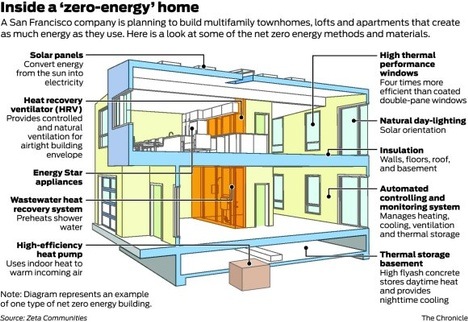
The California Energy Commission voted unanimously this month to cut energy use in new homes by 28 percent – another big move toward inching closer to zero net energy new homes in the state within five years. A zero net energy building (ZNE) is one that produces as much energy as it consumes.

CEC's latest update to its building energy efficiency standards are designed to reduce regulated energy use and is expected to save consumers $31 a month compared to homes built under the current energy code, according to the Natural Resources Defense Council.

The update in standards, known as "Title 24," will mostly apply to single-family homes and low-rise multifamily buildings. The standards set minimum energy saving requirements for new buildings and renovations in reducing energy used for lighting, heating, cooling, and ventilation. The new standards call for such items as an increase in wall insulation, a reduction in lighting energy in homes by nearly half by requiring a high-efficacy bulbs (like CFL or LED) in every socket; and the use of tankless gas water heaters, or one that boasts equivalent energy performance.

The new standards will take effect Jan. 1, 2017.

California has set a goal that all new residential buildings will be zero net energy by 2020. All new commercial buildings must meet that goal by 2030.


Source: RealtorMag Online
http://realtormag.realtor.org/daily-news/2015/06/25/calif-moves-zero-net-energy-homes-2020?om_rid=AAFmZk&om_mid=_BVjHU2B9DDBLaD&om_ntype=RMODaily