Showing posts with label foreign investment. Show all posts

Thursday, July 28, 2016

U.S. to Expand Tracking of Home Purchases by Shell Companies


More than a quarter of the all-cash luxury home purchases made using shell companies in Manhattan and Miami were flagged as suspicious in a new effort to unearth money laundering in real estate, the Treasury Department said Wednesday. As a result, officials said they would expand the program to other areas across the country.

The expansion of the effort to identify and track the people behind shell companies, begun in March, means that there will now be increased scrutiny of luxury real estate purchases made in cash in all five boroughs of New York City, counties north of Miami, Los Angeles County, San Diego County, the three counties around San Francisco and the county that includes San Antonio.

The examination, known as a geographic targeting order, is part of a broad effort by the federal government to crack down on money laundering and secretive shell companies.

“The information we have obtained from our initial G.T.O.s suggests that we are on the right track,” Jamal El-Hindi, the acting director of the Financial Crimes Enforcement Network within the Treasury, said in a department news release. “By expanding the G.T.O.s to other major cities, we will learn even more about the money laundering risks in the national real estate markets, helping us determine our future regulatory course.”

Among the suspicious transactions that the Treasury Department found tied to sales in New York or Miami this year were a $16 million cash withdrawal, a person involved in counterfeit checks and someone involved in moving $7 million around in shell companies associated with South America, Treasury officials said.

The areas being added to the order are places where buyers frequently purchase luxury real estate using shell companies, the officials said. The dollar values involved purchases of more than $500,000 or more in Bexar County, which includes San Antonio; $1 million in Florida; $2 million in California; $3 million in Manhattan; and $1.5 million in the other boroughs of New York City. Title insurance companies, which are involved in virtually all real estate transactions, are charged with carrying out the order.

Treasury officials have said that their real estate tracking program was inspired in part by a series last year in The New York Times that examined the rising use of shell companies. The investigation found that real estate professionals, especially in the luxury market, often do not know much about buyers, and it uncovered numerous buyers of high-end real estate who had been subject to government investigations around the world.

One installment of The Times’s investigation documented properties purchased in shell companies by friends and family of the prime minister of Malaysia. Those properties were subject to the largest asset forfeiture order ever in a kleptocracy case, which was announced this month.

Treasury officials said they were seeing benefits to the program in Manhattan and Miami, citing an increase in suspicious-activity reports being filed by banks and noting that the Department of Justice is finding the combination of the real estate and banking information to be helpful in its investigations.

The broadening of the rule signifies that the Treasury Department thinks the benefits to law enforcement from this sort of data collection are likely worth the cost to the industry, said Eric Berg, a lawyer at Foley & Lardner in Milwaukee and former member of the kleptocracy unit at the Department of Justice.

“There’s a lot of pushback from industry,” Mr. Berg said. “Clearly some sort of internal dialogue came to the conclusion that this is worth doing.”

Even though the title companies are ordered to identify the buyers, the burden often falls to the real estate agent, said Aaron Leider, the president of the Beverly Hills/Greater Los Angeles Association of Realtors and owner of the Keller Williams agency in the Brentwood area.

“They come to us, because who knows the client?” he said. “They don’t know the client.”

Realtor associations in California and nationally have been in discussions in recent months about how much agents need to do to comply with the rule, Mr. Leider said.

Treasury officials said the data collected in these six markets would be used to evaluate a permanent rule in the future.


Source: The New York Times, Louise Story
http://www.nytimes.com/2016/07/28/us/us-expands-program-to-track-secret-buyers-of-luxury-real-estate.html?_r=0

Monday, May 16, 2016

Chinese pour $110bn into US real estate, says study

This isn't the first time I've come across articles about Chinese buying properties in the US and posted to this blog, but here's another one for your reading pleasure folks. These Chinese investors are part of the reason why the Silicon Valley (as well as other areas) real estate market is so hot right now.

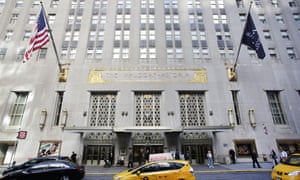
The Waldorf Astoria hotel in New York was bought by the Chinese group Anbang. But Chinese purchases of residential property outpaces commercial deals.

Chinese nationals have become the largest foreign buyers of US property after pouring billions into the market in search of safe offshore assets, according to a study.

A huge surge in Chinese buying of both residential and commercial real estate last year took their five-year investment total to more than $110bn, according to the study from the Asia Society and Rosen Consulting Group.

The sheer size of that total has helped the real estate market recover from the crash that began in 2006 and precipitated the 2008 economic crisis, they said.

Chinese investment in property has also helped to inflate prices in other developed countries, notably the UK and Australia in the wake of the dip in world stock markets in 2015.

And despite a slowdown due to Beijing’s subsequent clampdown on capital outflows, the figure for the second half of this decade is likely to double to $218bn, the study said.

“What makes China different and noteworthy is the combination of the high volume of investment (and) the breadth of its participation across all real estate categories,” including a “somewhat unique entry into residential purchases,” the study said.

The authors of the study said their numbers, based on public and real estate industry data, understate the total. They necessarily miss purchases made by front companies and trusts that do not identify the sources of the funds.

Big deals such as the Anbang insurance group’s $2bn purchase of the Waldorf Astoria hotel in New York last year and its failed $14bn offer for the Starwood group in March have made headlines. But the study said Chinese buying of US homes far outpaces its investment in commercial land and buildings.

Between 2010 and 2015, Chinese buyers put more than $17bn into US commercial real estate, with half of that spent last year alone. Unlike many countries, there are very few restrictions on what foreigners can buy in the US.

But during the same period at least $93bn went into US homes. And in the 12 months to March 2015, the latest period for which relatively comprehensive data could be gathered, home purchases totaled $28.5bn.

That took the Chinese past Canadians, who have long been the biggest foreign buyers of US residential real estate.

Geographically, Chinese buyers are concentrated in the most expensive markets: New York, Los Angeles, San Francisco and Seattle. Property in Chicago, Miami and Las Vegas is also popular.

That focus means they pay well above the average US home price: last year, Chinese buyers paid on average about $832,000 per home in the United States, compared with the average for all foreign purchases of $499,600.

The motivations are broad: some are buying second homes, some are buying as they move to the United States on EB-5 investor visas; some are investing for rental and resale.

Most of the money in US homes, the study noted, is private wealth, not corporate.

“This familiarity of utilizing real estate as an investment or wealth preservation tool is more prevalent in China and reflects the broader comfort of purchasing second homes in the United States by Chinese individuals and families,” the study noted.

Since last year, there has also been the motivation to get money outside China and into dollar assets amid worry about the continued fall in the yuan, which was devalued slightly against the US dollar in August.

The study says it expects a lot more commercial real estate buys in the United States by Chinese companies.

Last month, Chinese conglomerate HNA announced it would buy the 1,400-hotel group Carlson Hotels, owner of the Radisson brand.

“Anbang is not the only firm looking at these assets. Other Chinese entities were originally interested in acquiring Starwood in 2015 before Marriott reached an initial deal, including Jin Jiang Hotel Group, which had already acquired a European hotel chain in 2015, and CIC, the sovereign wealth fund,” the study said.

In Australia, the government recently blocked an attempt by Dakang Holdings to buy the Kidman farmland empire whose assets cover 1.3% of the Australian land mass.

Source: The Guardian, Agence France-Presse
https://www.theguardian.com/business/2016/may/16/chinese-pour-110bn-into-us-real-estate-says-study

Thursday, March 17, 2016

Foreign Buyers Are Pulling Back, Realtors Say


Demand from foreign buyers is weakening, the National Association of Realtors says, undermined by a strong U.S. dollar and rising home prices.

Last year, many real-estate experts predicted that foreign investors could flock to U.S. real estate as a safe haven amid global economic tumult. Last June, Realtors reported that Chinese buyers had surpassed Canadians as the top foreign buyers of U.S. real-estate, saying this reflected growing interest in the U.S. as a secure place to park their money.

In fact, there is growing evidence that many foreign buyers have been pulling back, in part because prices in many of the cities they favor, such as New York and San Francisco, have risen sharply. The affordability of those properties is weakened further by a stronger U.S. dollar.

In January, the median price of existing U.S. homes had increased 67% for a buyer from Brazil, factoring in the exchange rate, compared with a year earlier, according to NAR. For a buyer from Canada, it increased 27% and for a Chinese buyer, 14%.

China is also cracking down on buyers who try to evade a $50,000 annual limit on how much money they can transfer out of the country. Chinese buyers often skirted this requirement by transferring money via friends, family member or employees. In January, the country began more closely monitoring such transfers, NAR said.

Lawrence Yun, NAR’s chief economist, said it is unclear whether Chinese demand for U.S. homes will fall as much as demand from other countries. Chinese economic growth may have slowed, but the country is still reporting growth of more than 6%. And while many Chinese residents have lost money in the stock market, giving them less to spend, that could also prompt them to try to diversify their investments.

Foreign demand is difficult to quantify. NAR does so through a survey of real-estate agents it conducts annually, looking at the period from April through March. The results of this year’s survey are expected to be released in the early summer. Mr. Yun said he expects to see a decline in demand.

Foreign buyers remain a small sliver of the U.S. housing market. But any pullback could have a disproportionate effect on demand for high-end condos in places like Miami and Manhattan and luxury homes in Southern California.

There could be a silver lining, however: Falling foreign demand could help make homes more affordable for U.S. buyers.

“Given that the U.S. currently has a housing shortage, any demand pullback helps,” Mr. Yun said.

Source: The Wall Street Journal, Laura Kusisto
http://blogs.wsj.com/economics/2016/03/08/foreign-buyers-are-pulling-back-realtors-say/

Friday, February 19, 2016

Investors With Cash Edging Out First-Time Home Buyers

Many Realtors here in the Silicon Valley already know this to be true. Cash investor buyers are a significant part of this real estate market and are partly responsible for home prices being as high as they are. Case in point, just last week I made an offer for my buyer clients. They both work in the high tech field. They are both engineers with two kids and they made an offer with a 50% down payment, over asking and they still didn't get the home. They were outbid by an All Cash buyer.

The case in the same for many first time home buyers in this and other hot real estate markets. Many of these buyers are working, married couples with kids and are very well finally qualified with modest to high down payments but often times, if they are not ready for it, they get out bid by a cash buyer investor.

So if you are one of these first time home buyers looking to purchase your first property in this hot market what are you to do?

First off be pre-approved for a loan. That should go without saying and many agents, myself included, won't bother showing you a homes if you are not pre-approved with a lender.

Second, if you can afford it, is a good idea to come to the table with a higher down payment. In this market, 20% is really not enough. I hate to say it, but the reality is that in order to make your offer stronger, you have bring more money to the table. If you need to borrow money from your parents or cash-in some of your other investments such as stock options, then go ahead and do so.

Third, be prepared to pay as much as 3 to 5% over asking. You are going to be competing with other first time home buyers and the cash investors so to make an offer At or Below asking is not being realistic in this market and you kind of make yourself look silly. Not to mention that many agents will feel like you are wasting their time if you don't go at least a little over asking. Believe it or not, your agent knows this market better than you and they know what works and what does not for your market so their advice on how to offer on a property is usually correct.

Next, in order to make your offer stronger in the eyes of the seller, you might consider making other terms of the purchase contract more favorable for a seller such as a shorter escrow period or fewer days for the inspection contingency removal or none at all (be careful if you chose No inspection contingency. . . ). Of course course your Realtor should be able to realistically advise you on what is likely to work in this market and whether or not it makes sense for the property you are looking to buy.

Lastly, I often recommend that my buyers write a personal, heart-felt letters to the sellers. A hand written letter with a nice family photo with some pictures of the kids explaining why your family love the neighborhood and adore the house can go a long way with getting an offer accepted. The personal letter can be especially powerful if the sellers are a married couple that are longtime owners in the neighborhood and perhaps raiser their family there.

investors

Investors With Cash Edging Out First-Time Home Buyers

During the housing bust, investors pounced on foreclosures and short sales—houses that sell for less than the amount owed on the mortgage—to use for cheap homes they could rent out or flip for a quick profit.

Now, those easy pickings are gone, but the investors are still swarming over local housing markets, offering all-cash deals and creating headaches for the first-time home buyers who compete with them.

Regan Austin, 25 years old, and her husband lost out on an Orlando, Fla., area home earlier this year to an all-cash buyer.

“It was very disappointing. We had our heart set on that home,” said Ms. Austin. She and her husband, who are first-time home buyers, are still looking. “We never thought of the concept of having a cash buyer come in and take that out from under you.”

During the housing bubble, investors, lured by easy mortgages, helped send home prices to record levels. In the crash that followed, investors appeared again, this time offering all-cash deals on thousands of bank-owned properties to sell or rent out.

Some economists and real-estate agents say the market is going through an uneasy transition. While the foreclosure starts rate is back down to where it was before the crisis, cash and investor buying in some cities remains far above historical levels. That creates difficulty for buyers of low-price homes because more buyers are competing for fewer properties.

In October, 25% of home sales nationwide were to investors, down from a 32% peak in 2012, according to real-estate data firm CoreLogic, but still 8 percentage points greater than in 2000, before the housing boom and bust.

Meanwhile, the supply of homes for sale dwindled to 1.79 million in December, according to the National Association of Realtors, enough to last 3.9 months at the current sales pace and well below the six months considered a normal market.

The problem has become acute for buyers focused on low-price properties. According to the NAR, between December 2014 and 2015 the number of homes for sale priced below $100,000 fell 11.1%, in part because of a decline in foreclosure sales.

“Home supply is diminishing but investor demand is not going away,” said NAR chief economist Lawrence Yun.

Many economists expect housing prices to cool over the coming year, and rather than try to flip homes for a profit, some investors say they are making a long-term bet on demand for rentals, which has boomed in many parts of the country. The U.S. Census Bureau last month said 7% of rental units were vacant in the fourth quarter, near the low for the last decade and down from the peak of 11.1% in 2009. The median asking rent was $850, up 11% in the past year.

Some housing advocates say they have mixed feelings about the strong investor demand.

“Low inventory is a problem and making sure first-time home buyers have a shot should be a priority. But on the other hand, we have a rental affordability crisis,” said Sarah Edelman, director of housing policy for the left-leaning Center for American Progress.

Investor Ken Weiner, a former financial-services executive who lives in Wantagh, N.Y., didn’t buy his first single-family rental property until November, but since then has closed with an investment partner on six homes and on another three on his own, including ones in South Carolina, Illinois and Georgia. He said he plans to close on at least another seven properties by mid-year.

Mr. Weiner, who is buying homes sight unseen through investor startup Home Union, said he thinks demand for rentals among millennials and others delaying homeownership will make investing in single-family homes a fixture of the market.

“I’m not counting on appreciation,” he said. “If that comes, that’s great. I’m looking for income.”

Some real-estate agents in cities that have seen their foreclosure crisis ease said investors have moved up from bank-owned properties and now are competing for traditional, low-price homes that normally would be fodder for first-time buyers.

Lisa C. Ford, secretary for the Orlando Regional Realtor Association, said buyers there can expect to compete against at least one cash offer for any home priced below $300,000.

In Orlando, 39% of sales in October were all-cash, according to the latest data available from CoreLogic, down 5.6 percentage points from a year earlier but 23 percentage points greater than in 2006. Miami and West Palm Beach, Fla., also have seen declines but about half of homes there still sell for cash.

Don Ganguly, CEO of investor startup Home Union, has recently expanded the company’s business to facilitate investor purchases in markets such as Columbia, S.C., and Huntsville, Ala., which some investors think could have strong rental demand despite little price appreciation recently. Some investors through the site are buying newly constructed homes directly from home builders, he said.

In some cities still suffering from foreclosures, such as Newark, N.J., and New Orleans, cash purchases climbed in the past year through October, according to CoreLogic. Of the 100 largest metro areas, nearly all in the year through October saw the all-cash share of purchases fall, but only 10 have fewer all-cash sales than in 2006.

Daniel Brown, an investor who lives outside Los Angeles, met with real-estate agents in Kansas City, Chicago, Cleveland, Detroit, Pittsburgh and other cities looking for investment opportunities. He bought his first U.S. home in January 2015, and said he now owns about 60 homes with 75 units.

“An average normal city goes through its ups and downs, but most people there need somewhere to live, and next year, they’ll still need somewhere to live,” said Mr. Brown.

Source: Realtor.com, Joe Light
http://www.realtor.com/news/trends/nvestors-with-cash-edging-out-first-time-home-buyers/?iid=rdc_news_hp_carousel_theLatest

Monday, January 11, 2016

U.S. Real Estate to Draw More Foreigners in 2016, Survey Says

Foreign investment is very important here in the Silicon Valley, but apparently it is very important for a number of other top real estate markets here in the U.S. Foreign buyers view American real estate a safe investment compared to other investments and the article cites San Francisco, a city just 50 miles north of the silicon valley as one of the top cities for outside investment.


Most foreign investors expect to put more money into U.S. property this year than they did in 2015, with New York remaining the top target market worldwide, according to a survey by the Association of Foreign Investors in Real Estate.

Sixty-four percent of respondents said they intend to make modest or major increases to investments in U.S. real estate this year, while 31 percent expect to maintain their holdings or reinvest sales proceeds into other U.S. assets, according to the 24th annual survey by the group, known as AFIRE. None of the respondents plans a major decrease. About half of the group’s roughly 200 members participated in the survey.

“This is a very strong response,” Jim Fetgatter, chief executive of Washington-based AFIRE, whose members hold about $2 trillion of real estate globally, said in a phone interview. China’s economic slowdown, Brazil’s recession and Europe’s immigration crisis underscored for international investors that “the U.S., at the moment, really is the safest place for them to go.”

Foreign purchases of U.S. real estate have soared since the financial crisis, jumping to $87.3 billion of completed deals last year, from less than $5 billion in 2009, according to Real Capital Analytics Inc. Investors from Canada, Asia, Europe and Australia bought stakes in office towers, warehouses, apartment buildings, shopping malls and hotels in search of relatively higher yields. Manhattan captured $23.5 billion, or 27 percent, of 2015 purchases, Real Capital data show.

The U.S. also ranked first for countries with the best opportunity for price appreciation in 2016, followed by Brazil, Spain, Ireland and the U.K., the AFIRE survey showed.

Top Cities

London and Los Angeles were the second- and third-most-popular cities for real estate investments in the survey. Berlin climbed three places to No. 4, the first year a German city reached the top five. Paris tied with San Francisco for fifth place, according to AFIRE.

Within the U.S., multifamily and industrial real estate were the favorite property types for a second year, while retail moved up to third place from fourth. Offices fell to fourth from third, and hotels stayed at No. 5, according to the survey.

The recent passage of legislation easing taxes for foreign pension funds that buy U.S. real estate probably will boost investment further, Fetgatter said. Many cross-border investors previously bought U.S. properties with domestic majority partners.

The new law “simplifies the investment process and opens up a lot of opportunities for structuring their deals in a different way,” he said.

Source: Bloomberg Business, Hui-Young Yu
http://www.bloomberg.com/news/articles/2016-01-04/u-s-real-estate-to-draw-more-foreigners-in-2016-survey-says

Monday, November 30, 2015

Chinese Pull Back From U.S. Property Investments

Broker John Chang, left, showed a New York property to a prospective buyer last month.

Karen Xu, a Shanghai resident looking to invest in U.S. real estate, decided this spring to seek a Miami one-bedroom condominium in the $500,000-to-$750,000 price range.

China’s economic slowdown has since changed her mind. “I don’t think I’ll be investing in the U.S. right now,” said Ms. Xu, who works at an investment consulting firm. “Maybe I’ll wait another five years, or invest in China.”

Capping a five-year real-estate binge, Chinese nationals surpassed Canadian snowbirds as the top foreign buyers of U.S. homes for the year that ended in March—the most recent annual data—scooping up everything from $500,000 condos in New Jersey to $3 million vacation homes in California to $13 million Manhattan condos.

But in recent weeks, some Chinese buyers have started to pull back, scared off by China’s stock-market selloff, slowing economic growth, currency devaluation and tightened restrictions on capital outflows. On Friday, China’s benchmark stock index fell by 5.5%, its biggest daily slide since August, as Beijing authorities stepped up a crackdown on the securities industry.

“We are ready to embrace a winter for Chinese buyers in the next one year, two years,” said Daniel Chang, a New York City-based broker at Sotheby’s International Realty. Mr. Chang, who sells properties in the $2 million-to-$10 million range, said about half of the clients served by his team are Chinese.

Christina Shaw, a Realtor with Re/Max Fine Homes in Newport Beach, Calif., said one client who gave her a budget of $10 million to buy two houses in the area was now looking to reduce his budget by about one-third.


Interest from Chinese buyers “went dark” for several weeks after stocks becan their sharp fall, said Tom Mitchell, president and chief operating officer of Tri Pointe Group, a home builder in Irvine, Calif. China’s main stock index, the Shanghai Composite Index, is down 38% since its June peak.

Foreign Chinese buyers make up about 30% of customers in a handful of the company’s developments in Orange County and the San Francisco area. Price increases there, he said, have prompted clients to “pause and think.”

Zhang Xin, chief executive of SOHO China Ltd., a real-estate developer, said last month she wouldn’t buy overseas real estate today because many cities abroad are too pricey.

Real estate consultants and brokers say the pullback likely is temporary. Many Chinese view U.S. real estate as not only a good investment but as a haven for savings. Some Chinese buyers also figure a U.S. address would make it easier for their children to enroll in an American college.

“In the very short term there will be some impact for people who don’t have a foreign income stream or who don’t have a bank account or funds in overseas banks,” said Frank Chen, executive director and head of research at property consultancy CBRE China. “But the outbound real-estate investment trend is likely to remain quite strong.”

Still, even a temporary pullback could hurt markets where Chinese buyers target some of the priciest American homes, often paying in cash. The average purchase price of existing homes in the U.S. by foreign home buyers in the year ended in March was nearly $500,000, nearly double the price for all buyers, according to the National Association of Realtors. One-third of Chinese purchases were concentrated in California for the year ended in March, according to the National Association of Realtors, trailed by Washington, D.C., with 8% of purchases, and New York, at 7%.

The Chinese are attracted by many of the same qualities as local buyers: good schools, good location and a good value, compared with prices in Hong Kong, for example.

Home builders also could feel the effects. The chief executive of Walnut, Calif.-based Shea Homes, Bert Selva, told investors this month that the company has seen a “significant slowdown” in Chinese buyers in Orange County.

“That buyer is really drying up. To be honest, I don’t think that’s a bad thing, because I think there was a lot of frenzy driven by that, pushing up prices a bit,” he said in a conference call.

Chinese and other foreign buyers have helped reshape the American real-estate market, driving up prices for homes in Southern California suburbs, skyscrapers looming over New York’s Central Park and residences in such college towns as Cambridge, Mass., brokers and economists said.

Buyers from mainland China, as well as those from Hong Kong and Taiwan, spent $28.6 billion in the year that ended in March on U.S. home purchases, according to estimates by the Realtors. While that accounts for just over 2% of American home purchases by dollar volume, the percentage is much greater in the high end of the housing market in such cities as New York, San Francisco, Los Angeles and, increasingly, Miami, according to the association.

In Southern California, they have been eager property investors in the San Gabriel Valley in Los Angeles County and in Irvine in Orange County, each with a substantial Asian population.

Chinese residents began buying American homes in large numbers about five years ago, driven largely by growing wealth and a desire to safeguard savings against political instability, brokers and economists said.

American homes looked like a bargain after the real-estate crash, drawing busloads of Chinese buyers to see properties in California and Manhattan. To many, it seemed “a gold mine everywhere,” said Calvin Lo, a real-estate agent at Berkshire Hathaway HomeServices in Southern California.

To sate that demand, U.S. real-estate brokerages now hold conferences with thousands of attendees in China, and such Chinese property portals as Juwai.com, advertise U.S. properties and other country listings. “Over the long term, the stock-market gyrations reinforce preference for international investment,” said Simon Henry, co-founder of Juwai.com.

Chinese individuals are limited to annual overseas investments equal to about $50,000. For years, Chinese have surpassed that limit, in part, by funneling money through relatives and employees. In recent months, the government has made it tougher to transfer money abroad, said real-estate brokers in both countries.

“It’s like barbarians at the gate,” said John Chang, a real-estate broker with Re/Max in New York City. Chinese families want to buy, he said, “but they just can’t get the money out.”

Yang Bin, a 38-year-old businessman from Beijing, said the economic slowdown has stoked his desire to purchase a home in Silicon Valley. “I see many problems with Chinese universities, and the environment and air quality here aren’t very satisfying,” Mr. Yang said. With a budget of about $1 million, he said he wanted to buy a home that his now-8-year-old child would one day occupy.

For now, Mr. Yang is caught in the dilemma prompted by China’s economy, which, he said, “has increased my desire to buy a house in the U.S., but also requires me to wait and watch more carefully.”

Source: Wall Street Journal, Laura Kuisto
http://www.wsj.com/article_email/chinese-pull-back-from-u-s-property-investments-1448649226-lMyQjAxMTI1NDI5ODQyODgxWj

Sunday, October 18, 2015

Investment Property ROI: Why going beyond your network of friends is critical


The recovering residential housing market continues to offer lucrative investment opportunities for first time and experienced investors looking to fix and flip a house. However, a new challenge is emerging out of the recovery: a shrinking tolerance for mistakes. The single largest mistake beginner real estate investors make today is trying to do it all themselves or relying too heavily on friends and family to execute on the real estate investment.

Sometimes a friend may have a knack for what color to refinish the hardwood floors, or who to use for repairing a roof, but rarely do these close acquaintances come to the table with the focus on return on investment (ROI) necessary to be successful today. First time investors often worry that going outside their circle of friends and family to find a vendor partner to run property rehabilitation might cut into profits. This wasn't as much of an issue when the fix and flip market exploded during the economic downturn and profit was nearly guaranteed. Investors who purchased properties in 2007 or 2008 were making money and gaining valuable experience -- the market was hot and purchase prices reasonable so novice investors could have made any number of mistakes and still realized great returns on their investments.

Assessing an Ever-Changing Market

Property values in many regions of the country have recovered and fewer distressed properties are making it to the market so the market is less forgiving. Those who were investing in the downturn learned their lesson and what mistakes not to repeat when the margins were far wider than they are today. Investors who are now counting their fix and flip successes in the double digits resoundingly say an investor must be able to make an accurate assessment of the property's value and calculate a realistic cost for the rehabilitation -- and execute to achieve the desired margin.  When it comes to investing, working with the right vendor partners -- from appraisers to contractors to suppliers -- was the hardest lesson learned.

There's no easy way; investors have to be ready to work and understand and mitigate risks across the investment lifecycle. They also need to know that their insulated network of family and friends may be free or ready to do a project at a discount -- but they may not be the best people to turn to. Many investors think the more work they can do themselves the more ROI they'll see. Evaluating new vendors takes time -- but it can be time well spent if it makes an investment much more profitable by avoiding lost time and revenue from the mistakes less experienced investors and their friends are likely to make.

Third party experts can provide immediate pay-off by utilizing proven best practices and proper planning which can go a long way towards avoiding big mistakes. Appraisers can help determine as-is and after repair values and a general contractor can ensure you are receiving a proper assessment of rehab costs.  Investors can use this information to determine whether the property has the potential to achieve the returns they are seeking before buying.

Once it is determined that the end product can achieve the desired ROI, a knowledgeable and reliable team of professional partners are critical for keeping a project on track to actually deliver those returns.  These include an array of service providers, such as valuation companies, real estate agents, materials suppliers and most important, a general contractor attuned to the local market.

General Contractors: The Key to Achieving ROI

The single greatest lesson successful real estate investors have learned is how to hire one of the most important vendors: the general contractor. To do this, an investor must look outside their network to evaluate contractors and find the right fit. The investor's cousin who is handy with a hammer may not be the right choice. Hiring an experienced, professional contractor at the outset ensures their experience in the market is going to help improve the bottom line when it comes time to sell or rent the property.

Choosing a contractor begins with a background check to identify if they have had a recent bankruptcy or foreclosure events, any fraudulent or criminal activity on record, and is financially solvent and capable of seeing your project through completion. The investor should ask for a minimum of 5 references and call each and every one of them. Let me repeat: yes, 5, and yes, call everyone one of them. Keep in mind that the references supplied by vendors are almost always likely to be positive, so as you narrow the list, be sure to go see some of their work in person.

When rehabbing a property the investor also needs to know they are hiring a renovator, not a builder. A novice investor should have someone running their project that has performed rehabs on similar properties. They want a contractor who knows the neighborhood. This is important as they will know the finishes that are consistent with the surrounding homes and won't recommend granite countertops when this would be the only house on the street with that expensive upgrade. Additionally, they should know the local climate enough to know there may be particular issues, such as mold. This may seem obvious, but investors moving from the Sun Belt to the Rust Belt -- following markets primed for fixing and flipping -- are not uncommon and unfortunately they are not aware of risks inherent in the new market as their knowledge doesn't always transfer seamlessly.

At the end of a project, when the property is sold, the lessons learned with a network of skilled vendors on the team will have  prepared the investor for their next project -- not sitting back reviewing the laundry list of mistakes and who to hire to fix them. By hiring the right experts, from appraisers to contractors to suppliers, investors can find success and then share it with friends and family as they choose -- a much better outcome.

Source: RealtyTimes, Thomas O'Sullivan
http://realtytimes.com/consumeradvice/buyersadvice1/item/39050-20151009-investment-property-roi-why-going-beyond-your-network-of-friends-is-critical

Tuesday, September 15, 2015

More Chinese investment in American real estate

It can be argued that the real estate market here in the silicon valley is being propped up by foreign buyers and investors. This also seems to be the case for many other major markets in the United States. U.S. real estate is seen as a very safe investment for many foreign investors, particularly Chinese.

The article talks about the purchase of the Waldorf-Astoria hotel, a very famous and world renowned hotel being purchase by a Chinese insurance company. Obama was supposed to stay in the hotel during his visit to New York for a UN meeting, but changed to another hotel citing security concerns.

How Chinese Investors Found a Safe Haven at the Waldorf-Astoria

NEW YORK (TheStreet) -- Macroeconomic turmoil is once again putting the U.S. real estate market in the spotlight, but this time it's part of the solution, not the problem.

American real estate is becoming a refuge for Chinese investors, particularly insurance companies that may amass $3.32 trillion in premiums by 2020, who are seeking reliable returns as the world's second-largest economy slows and its stock markets decline, according to both advisers and industry executives.

Developers, financial institutions and high net-worth individuals are seeking "safe investments in income-producing commercial and residential investments rather than luxurious real estate purchases for personal use," said international real estate attorney Edward Mermelstein, who has spent 20 years advising clients on such transactions.

It's a strategy not unlike the one players use to get ahead in Hasbro's (HAS - Get Report)  Monopoly, buying real estate and adding revenue-generating houses and hotels.

Especially since August, when China's devaluation of its currency combined with an 8% drop on the Shanghai Stock Exchange to drag down equity prices worldwide, Mermelstein has seen a "positive and consistent interest" by Chinese investors. "There's an argument that this is a flight to safety," he said. "This is very much a flight to safety."

That flight builds on already increasing interest in European and U.S. assets from Chinese investors, whose purchases outside their country grew 11% to an estimated $120 billion in 2014, according to global accounting firm KPMG. High-value real estate deals in that period included the $1.95 billion purchase of New York's Waldorf Astoria hotel by insurance provider Anbang.

"Chinese real estate developers are eager to capture potentially higher and more stable returns overseas,"  KPMG noted in its "China Outlook 2015" report. "The overseas real estate market has also generated interest from Chinese companies in other industries, particularly insurance companies."

Chinese insurers have been allowed to invest as much as 15% of their assets in overseas real estate since 2012, though as of last October, they had invested only about 1%, KPMG said. Individuals are poised to gain more flexibility, too, with China's cabinet releasing a plan earlier this year that would allow people with at least $160,000 (1 million yuan) of financial assets and businesses to directly invest in real estate, stocks, and bonds in foreign markets, the Wall Street Journal has reported. The option would be limited to designated free-trade zones.

"What's going on in China has not dissuaded them one bit from continuing to look at and pursue the transactions they're working on," said Bob Knakal, Cushman & Wakefield's chairman of New York investment sales, who's working on several transactions with Chinese investors, including a $300 million project in Manhattan. "We have seen more investors coming into the market that want to deploy capital here."

The Chinese government doesn't want too much capital to flow out of the country, however.

"The government has trade-offs," said Tailan Chi, an international business professor at the University of Kansas. "First, they want to open up the capital markets gradually, so they can say the Chinese currency is largely determined by the market. Secondly, they want to prevent very large inflows or outflows of capital that would push the value of the Chinese currency up or down too quickly."

Source: TheStreet.com, Valerie Young
http://www.thestreet.com/story/13280655/1/china-boosts-spending-on-u-s-real-estate-amid-turmoil-at-home.html

Wednesday, September 9, 2015

Anti California Sentiment popping up in Portland area real estate

California has one of the highest real estate markets in the country and because of that, some home owners here are selling their homes and taking that money to buy a much lower cost home out of state with still some money left over. In Portland Oregon, locals there have grown resentful of outsiders, particularly people from California, with more money than common sense who are using their money to outbid other buyers and effectively pricing them out of the market. In fact they have even gone so far as to slap a No California sticker on housing For Sale signs in the area.

I guess they don't want us California folks to do to them what was done to us by foreign buyers from India and China.


'No California' stickers appear on real estate signs across Portland

Tuesday, September 1, 2015

The Chinese are about to flood the U.S. real estate market

There are a number of Realtors here in the Silicon Valley who specialize in foreign buyers, particularly Chinese investors, and the stock market troubles in China last week left many of those agents wondering where that leaves the US real estate market. The real estate market here in the Silicon Valley is largely propped up by the tech workers and Chinese investors, without them we wouldn't be enjoying the robust market we are having. Many of my clients came from the tech sector or foreign investors. 

Anyhow, check out the great article below from The Real Deal about the growing concern of Chinese investors with their money in the Chinese stock market and how they are increasingly looking to U.S. real estate as a safe place to park their money.

rtr4eeao

After yet another drop in the Shanghai stock market and Hang Seng index on August 6, Daniel Chang heard his cell phone ping. The real-estate agent was on a business trip in Shanghai, and he was mid-bite during a dinner when he saw his phone light up from a message on his app, WeChat.

It was a Chinese client concerned over a $6 million property she was about to buy in New York City. She was visiting New York at the time.

“I don’t know if I can do this,” she told him over voicemail. “I might have to back out.”

She wanted some time to reconsider, she said, and maybe recoup her losses on the Chinese stock. She was considering dropping the $600,000 she had already put down on the cooperative — she had already lost as much on the stock market.

Then, over the course of a week, the Shanghai Composite had a brief and unsteady rise, while the yuan devalued by 3.2%. Chang’s client surveyed the apartment one more time.

She closed the deal.

screen-shot-2015-08-26-at-12.41

Chang’s client is one of the group of wealthy Chinese caught in between a rock and a hard place: Leave their assets in China to potentially weather additional market volatility and yuan devaluations — or put it in real estate that is now more expensive than just a few weeks earlier.

“Lots of my clients have been hit heavily by the equity market,” Chang, who was once a vice president at HSBC’s private bank, told Business Insider through a series of interviews. “But that only makes them more determined to diversify out of China.”

The chaos of the past few weeks is likely to lead to an acceleration in the rate of real-estate purchases by wealthy Chinese buyers in the US and elsewhere.

“[Chinese] Investors who were looking at investing overseas may bring forward their purchases,” James MacDonald, head of Savills Research in China, wrote in an email to Business Insider. “While some of those that may not have been considering the purchase of property in the U.S. may now look at doing so.”

The Chinese see US real estate as a relatively moderate risk, high-return investment, Svenja Gudell, the chief economist at real-estate-research site Zillow, told Business Insider. Especially if buyers anticipate further RMB devaluation and market volatility.

Wealthy Chinese are already the largest group of foreign real-estate buyers in the US, with 16% of the single homes and condominiums purchased by foreign buyers snapped up by Chinese last year, according to the US National Homebuyers Association. They were trailed by Canadians, who bought 14% of homes.

These houses are typically more expensive properties, worth an average $831,800. Domestic buyers average $345,800 on a new single-family home, according to the US Census Bureau.

Brokers in the US can see the shifting sentiment among their Chinese real-estate clients.

Emma Hao, a broker for Douglas Elliman who specializes in Chinese clients, told Business Insider she’s already felt an increase in urgency among her buyers to purchase property in the US before the yuan devalues further.

“Because they are insecure about the economy and the politics, with the RMB devaluation, the stock market got mashed, and the real estate in China is a big bubble — there is nowhere to go.”

Chinese homebuyers also like the US real-estate market as a base for children who have been educated abroad, and as way to diversify holdings.

Andrew Wu, a real-estate agent at Daniel Gale Sotheby’s who caters to Chinese luxury-real-estate buyers in Long Island, told Business Insider: “They’re looking for a safe haven, and the real-estate market has always been looked upon as a safe haven for Chinese buyers.”

The US is also seen as more politically and socially stable, according to Hao. Chinese President Xi Jingping started focusing on an anti-graft campaign back in November.

Many of China’s rich have ties to the political figures, and many will look for somewhere to stay away from government scrutiny, Hao said.

“Because of the crackdown, many people got thrown into prison, and the political people are always connected to the rich people — they do business. They need their help,” she said. “People worry about their own position.”

More and more Chinese buyers will also be eyeing residential property as an investment, according to Gudell, the chief economist at Zillow.

She said she expects to see a different kind of Chinese buyer seeking property in the US: A reduction in buyers looking for homes, but an increase in those looking for investment properties.

“Where they are buying will also be different. The investor will buy in higher-tier neighborhoods, such as New York or Los Angeles,” she said.

Chinese individuals are also being actively encouraged to buy abroad by the government.

Thus far, Chinese individuals have been allowed to convert $50,000 into other currencies annually — though there are ways to skirt the regulation.

That is about to change, with the Chinese government readying the launch of the Qualified Domestic Individual Investor program.

The QDII2 is an overseas-investment scheme that would allow Chinese citizens to invest overseas directly. Those with at least $160,000 in financial assets qualify.

The program is likely to launch this year and will bolster overseas real-estate purchases on the part of the Chinese.

“With QDII2 in mind, within five years we might look back and think of the current levels of Chinese cross-border investment as quaint,” Andrew Taylor, co-CEO of Juwai.com, a website that helps Chinese to buy properties abroad, said to The Wall Street Journal in July.

Source: The Real Deal
http://therealdeal.com/blog/2015/08/30/the-chinese-super-rich-are-about-to-flood-the-us-real-estate-market/

Wednesday, August 26, 2015

'Black Monday' Rattles Housing Market


Chinese home buyers, in particular, may be more cautious in entering the U.S. housing market following Monday's massive stock market sell-off that sent stocks tumbling, according to housing analysts. The sell-off began in Beijing on Monday and sent shares plunging by record amounts across the globe. Chinese media dubbed it "Black Monday" as markets fell nearly 8.5 percent there.

In the U.S., the Dow Jones industrial average plunged more than 1,000 points just minutes after the opening bell alone on Monday. The Dow made up some ground later in the afternoon but still closed nearly 600 points in the red.

John Burns, CEO and owner of John Burns Real Estate Consulting, explained in a blog post that Chinese home buying will likely be under a cloud of uncertainty.

"While the recent Chinese stock market correction has caused a decline in sales (one of my builder clients has noticed a sharp pullback, another just told me about a home sale cancelation specifically due to the buyer's stock market losses, and one publicly traded home builder even mentioned the pullback on their earnings call), our research has convinced us of tremendous Chinese demand to buy US real estate for their families and as investments," Burns says.

However, Burns says there is some doubt over whether the Chinese will continue their big U.S. buying spree. He questions the number of people who will still be able to afford to purchase a home in the U.S. after the stock market correction and currency devaluation.

Chinese home buyers have been strong in the U.S. market lately. Sixteen percent of international home buyers come from China, according to the National Association of REALTORS®. The Chinese spent $29 billion last year on U.S. real estate, surpassing Canada as the top spenders.

Source: Realtor Magazine Online
http://realtormag.realtor.org/daily-news/2015/08/25/black-monday-rattles-housing-market?om_rid=AAFmZk&om_mid=_BV3LQtB9E6SrO7&om_ntype=RMODaily

Sunday, July 12, 2015

To the World, U.S. Real Estate Is a Good Deal

San Jose and San Francisco on the list as good buys to foreign investors. This news comes as no surprise to active agents such as myself who work with these buyers and/or have them making offers on our listings. No wonder why the market is so hot here in the Valley.


To the World, U.S. Real Estate Is a Good Deal

Building density in Kowloon, Hong Kong

U.S. housing markets are the most affordable in the world, at least according to a recent study of more than 300 metro housing markets in nine countries conducted by the research group Demographia.

U.S. housing markets were found to be more affordable than Canada, the United Kingdom, Ireland, Australia, New Zealand, Singapore, Japan, and China.

Researchers measured affordability by taking a look at median home prices and median household incomes. A market was rated "unaffordable" if it had a calculated value of higher than 3.0 and was "severely unaffordable" if above 5.1.

The U.S. markets analyzed showed a lot of variation -- such as Detroit at the bottom with a 2.1 value while San Francisco had a 9.2 value. Still, the U.S. averaged 3.4 as a whole, making it more affordable than other countries.

Hong Kong, on the other hand, was the priciest and at a record high on the survey. The survey found that even if a household could direct all of its household income toward buying a home, it would still take 17 years before the household could afford to buy. To live on Hong Kong Island alone, a resident would pay about $900 in U.S. currency for just a 150-square-foot apartment. Hong Kong is the most densely populated places across the globe; it holds 6,845 people per square kilometer. New York, as comparison, hold 2,050.

Hong Kong also had the smallest homes in the study, with the average size of a new home at just 484 square feet.

The study found the following major markets were the most unaffordable:

1. Hong Kong
2. Vancouver
3. Sydney
4. San Francisco
5. San Jose
6. Melbourne
7. London

Source: RealtorMag Online > Think Housing Is Pricey in America? Be Glad You’re Not in Hong Kong
http://realtormag.realtor.org/daily-news/2015/07/07/world-us-real-estate-good-deal?om_rid=AAFmZk&om_mid=_BVnCG4B9DXlYSt&om_ntype=RMODaily

Friday, June 19, 2015

Foreign Buyers Spend More on U.S. Real Estate

Fewer foreign buyers, but foreign buyers that remain are spending more on U.S. real estate.


Fewer international buyers are flocking to the U.S. to purchase real estate, but those who are, tend to spend more on their home purchases. The total sales dollar volume from international home buyers climbed 13 percent this year compared to last year – at a time when the total unit sales from international home buyers decreased, according to the National Association of REALTORS®' 2015 Profile of Home Buying Activity of International Clients.

From April 2014 through March 2015, total international sales were estimated at $104 billion, trumping last year's $92.2 billion. This represents 8 percent of the total existing-home sales dollar volume, according to NAR's report.

"In 2014, sales transaction to buyers outside of the U.S. dropped 10 percent, possibly due to the strengthening of the U.S. dollar in relation to international currencies and weakening foreign economies," says NAR Chief Economist Lawrence Yun. "However, the amount of money spent has increased; this means international purchasers in the U.S. have become an upscale group of buyers, spending more money on fewer homes."

Last year, five countries alone accounted for 51 percent of all purchases by international buyers: China, Canada, Mexico, India, and the United Kingdom.

Buyers from China exceeded all other countries in terms of their appetite for U.S. real estate, purchasing an estimated $28.6 billion worth of U.S. property, according to NAR's report. Canada buyers followed with $11.2 billion in purchases and then India at $7.9 billion; Mexico with $4.9 billion; and the United Kingdom at $3.8 billion.

International buyers tended to spend more on their home purchases than the average U.S. home buyer. International buyers spent, on average, $499,600 on their home purchases compared to the overall U.S. average home price of $255,600. Chinese buyers were found to most often spend the most, with an average price of $831,800 on their U.S. home purchases.

More REALTORS® are reporting working with international clients, up from 28 percent in 2013 to 35 percent in 2014. Four states accounted for half of all international sales: Florida, California, Texas, and Arizona, according to NAR's report.

Source: RealtorMag Online