Showing posts with label China. Show all posts

Monday, May 16, 2016

Chinese pour $110bn into US real estate, says study

This isn't the first time I've come across articles about Chinese buying properties in the US and posted to this blog, but here's another one for your reading pleasure folks. These Chinese investors are part of the reason why the Silicon Valley (as well as other areas) real estate market is so hot right now.

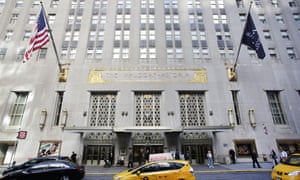
The Waldorf Astoria hotel in New York was bought by the Chinese group Anbang. But Chinese purchases of residential property outpaces commercial deals.

Chinese nationals have become the largest foreign buyers of US property after pouring billions into the market in search of safe offshore assets, according to a study.

A huge surge in Chinese buying of both residential and commercial real estate last year took their five-year investment total to more than $110bn, according to the study from the Asia Society and Rosen Consulting Group.

The sheer size of that total has helped the real estate market recover from the crash that began in 2006 and precipitated the 2008 economic crisis, they said.

Chinese investment in property has also helped to inflate prices in other developed countries, notably the UK and Australia in the wake of the dip in world stock markets in 2015.

And despite a slowdown due to Beijing’s subsequent clampdown on capital outflows, the figure for the second half of this decade is likely to double to $218bn, the study said.

“What makes China different and noteworthy is the combination of the high volume of investment (and) the breadth of its participation across all real estate categories,” including a “somewhat unique entry into residential purchases,” the study said.

The authors of the study said their numbers, based on public and real estate industry data, understate the total. They necessarily miss purchases made by front companies and trusts that do not identify the sources of the funds.

Big deals such as the Anbang insurance group’s $2bn purchase of the Waldorf Astoria hotel in New York last year and its failed $14bn offer for the Starwood group in March have made headlines. But the study said Chinese buying of US homes far outpaces its investment in commercial land and buildings.

Between 2010 and 2015, Chinese buyers put more than $17bn into US commercial real estate, with half of that spent last year alone. Unlike many countries, there are very few restrictions on what foreigners can buy in the US.

But during the same period at least $93bn went into US homes. And in the 12 months to March 2015, the latest period for which relatively comprehensive data could be gathered, home purchases totaled $28.5bn.

That took the Chinese past Canadians, who have long been the biggest foreign buyers of US residential real estate.

Geographically, Chinese buyers are concentrated in the most expensive markets: New York, Los Angeles, San Francisco and Seattle. Property in Chicago, Miami and Las Vegas is also popular.

That focus means they pay well above the average US home price: last year, Chinese buyers paid on average about $832,000 per home in the United States, compared with the average for all foreign purchases of $499,600.

The motivations are broad: some are buying second homes, some are buying as they move to the United States on EB-5 investor visas; some are investing for rental and resale.

Most of the money in US homes, the study noted, is private wealth, not corporate.

“This familiarity of utilizing real estate as an investment or wealth preservation tool is more prevalent in China and reflects the broader comfort of purchasing second homes in the United States by Chinese individuals and families,” the study noted.

Since last year, there has also been the motivation to get money outside China and into dollar assets amid worry about the continued fall in the yuan, which was devalued slightly against the US dollar in August.

The study says it expects a lot more commercial real estate buys in the United States by Chinese companies.

Last month, Chinese conglomerate HNA announced it would buy the 1,400-hotel group Carlson Hotels, owner of the Radisson brand.

“Anbang is not the only firm looking at these assets. Other Chinese entities were originally interested in acquiring Starwood in 2015 before Marriott reached an initial deal, including Jin Jiang Hotel Group, which had already acquired a European hotel chain in 2015, and CIC, the sovereign wealth fund,” the study said.

In Australia, the government recently blocked an attempt by Dakang Holdings to buy the Kidman farmland empire whose assets cover 1.3% of the Australian land mass.

Source: The Guardian, Agence France-Presse
https://www.theguardian.com/business/2016/may/16/chinese-pour-110bn-into-us-real-estate-says-study

Monday, January 25, 2016

Chinese stock market woes impacting Bay Area real estate market

It would not be exaggerating to say that a large percentage of buyers here in the bay area, the silicon valley in particular, are from China. Anyone who has been in real estate more than 10 min knows this to be true. So then to learn that because of the turmoil in Chinese stock market last week could have a negative impact on the real estate market here is more than a little worrisome. Of course one of the Realtors they interview for this ABC 7 news segment seems to think everything is alright, and for the most part it is. There are still many homes selling over asking with multiple offers. Property values are still going up, but I am thinking long term. If the Chinese stock market widen into an overall depression in that country, what impact will that have on the real estate market over hear long term?


Wednesday, September 9, 2015

Anti California Sentiment popping up in Portland area real estate

California has one of the highest real estate markets in the country and because of that, some home owners here are selling their homes and taking that money to buy a much lower cost home out of state with still some money left over. In Portland Oregon, locals there have grown resentful of outsiders, particularly people from California, with more money than common sense who are using their money to outbid other buyers and effectively pricing them out of the market. In fact they have even gone so far as to slap a No California sticker on housing For Sale signs in the area.

I guess they don't want us California folks to do to them what was done to us by foreign buyers from India and China.


'No California' stickers appear on real estate signs across Portland

Tuesday, September 1, 2015

The Chinese are about to flood the U.S. real estate market

There are a number of Realtors here in the Silicon Valley who specialize in foreign buyers, particularly Chinese investors, and the stock market troubles in China last week left many of those agents wondering where that leaves the US real estate market. The real estate market here in the Silicon Valley is largely propped up by the tech workers and Chinese investors, without them we wouldn't be enjoying the robust market we are having. Many of my clients came from the tech sector or foreign investors. 

Anyhow, check out the great article below from The Real Deal about the growing concern of Chinese investors with their money in the Chinese stock market and how they are increasingly looking to U.S. real estate as a safe place to park their money.

rtr4eeao

After yet another drop in the Shanghai stock market and Hang Seng index on August 6, Daniel Chang heard his cell phone ping. The real-estate agent was on a business trip in Shanghai, and he was mid-bite during a dinner when he saw his phone light up from a message on his app, WeChat.

It was a Chinese client concerned over a $6 million property she was about to buy in New York City. She was visiting New York at the time.

“I don’t know if I can do this,” she told him over voicemail. “I might have to back out.”

She wanted some time to reconsider, she said, and maybe recoup her losses on the Chinese stock. She was considering dropping the $600,000 she had already put down on the cooperative — she had already lost as much on the stock market.

Then, over the course of a week, the Shanghai Composite had a brief and unsteady rise, while the yuan devalued by 3.2%. Chang’s client surveyed the apartment one more time.

She closed the deal.

screen-shot-2015-08-26-at-12.41

Chang’s client is one of the group of wealthy Chinese caught in between a rock and a hard place: Leave their assets in China to potentially weather additional market volatility and yuan devaluations — or put it in real estate that is now more expensive than just a few weeks earlier.

“Lots of my clients have been hit heavily by the equity market,” Chang, who was once a vice president at HSBC’s private bank, told Business Insider through a series of interviews. “But that only makes them more determined to diversify out of China.”

The chaos of the past few weeks is likely to lead to an acceleration in the rate of real-estate purchases by wealthy Chinese buyers in the US and elsewhere.

“[Chinese] Investors who were looking at investing overseas may bring forward their purchases,” James MacDonald, head of Savills Research in China, wrote in an email to Business Insider. “While some of those that may not have been considering the purchase of property in the U.S. may now look at doing so.”

The Chinese see US real estate as a relatively moderate risk, high-return investment, Svenja Gudell, the chief economist at real-estate-research site Zillow, told Business Insider. Especially if buyers anticipate further RMB devaluation and market volatility.

Wealthy Chinese are already the largest group of foreign real-estate buyers in the US, with 16% of the single homes and condominiums purchased by foreign buyers snapped up by Chinese last year, according to the US National Homebuyers Association. They were trailed by Canadians, who bought 14% of homes.

These houses are typically more expensive properties, worth an average $831,800. Domestic buyers average $345,800 on a new single-family home, according to the US Census Bureau.

Brokers in the US can see the shifting sentiment among their Chinese real-estate clients.

Emma Hao, a broker for Douglas Elliman who specializes in Chinese clients, told Business Insider she’s already felt an increase in urgency among her buyers to purchase property in the US before the yuan devalues further.

“Because they are insecure about the economy and the politics, with the RMB devaluation, the stock market got mashed, and the real estate in China is a big bubble — there is nowhere to go.”

Chinese homebuyers also like the US real-estate market as a base for children who have been educated abroad, and as way to diversify holdings.

Andrew Wu, a real-estate agent at Daniel Gale Sotheby’s who caters to Chinese luxury-real-estate buyers in Long Island, told Business Insider: “They’re looking for a safe haven, and the real-estate market has always been looked upon as a safe haven for Chinese buyers.”

The US is also seen as more politically and socially stable, according to Hao. Chinese President Xi Jingping started focusing on an anti-graft campaign back in November.

Many of China’s rich have ties to the political figures, and many will look for somewhere to stay away from government scrutiny, Hao said.

“Because of the crackdown, many people got thrown into prison, and the political people are always connected to the rich people — they do business. They need their help,” she said. “People worry about their own position.”

More and more Chinese buyers will also be eyeing residential property as an investment, according to Gudell, the chief economist at Zillow.

She said she expects to see a different kind of Chinese buyer seeking property in the US: A reduction in buyers looking for homes, but an increase in those looking for investment properties.

“Where they are buying will also be different. The investor will buy in higher-tier neighborhoods, such as New York or Los Angeles,” she said.

Chinese individuals are also being actively encouraged to buy abroad by the government.

Thus far, Chinese individuals have been allowed to convert $50,000 into other currencies annually — though there are ways to skirt the regulation.

That is about to change, with the Chinese government readying the launch of the Qualified Domestic Individual Investor program.

The QDII2 is an overseas-investment scheme that would allow Chinese citizens to invest overseas directly. Those with at least $160,000 in financial assets qualify.

The program is likely to launch this year and will bolster overseas real-estate purchases on the part of the Chinese.

“With QDII2 in mind, within five years we might look back and think of the current levels of Chinese cross-border investment as quaint,” Andrew Taylor, co-CEO of Juwai.com, a website that helps Chinese to buy properties abroad, said to The Wall Street Journal in July.

Source: The Real Deal
http://therealdeal.com/blog/2015/08/30/the-chinese-super-rich-are-about-to-flood-the-us-real-estate-market/

Wednesday, August 26, 2015

'Black Monday' Rattles Housing Market


Chinese home buyers, in particular, may be more cautious in entering the U.S. housing market following Monday's massive stock market sell-off that sent stocks tumbling, according to housing analysts. The sell-off began in Beijing on Monday and sent shares plunging by record amounts across the globe. Chinese media dubbed it "Black Monday" as markets fell nearly 8.5 percent there.

In the U.S., the Dow Jones industrial average plunged more than 1,000 points just minutes after the opening bell alone on Monday. The Dow made up some ground later in the afternoon but still closed nearly 600 points in the red.

John Burns, CEO and owner of John Burns Real Estate Consulting, explained in a blog post that Chinese home buying will likely be under a cloud of uncertainty.

"While the recent Chinese stock market correction has caused a decline in sales (one of my builder clients has noticed a sharp pullback, another just told me about a home sale cancelation specifically due to the buyer's stock market losses, and one publicly traded home builder even mentioned the pullback on their earnings call), our research has convinced us of tremendous Chinese demand to buy US real estate for their families and as investments," Burns says.

However, Burns says there is some doubt over whether the Chinese will continue their big U.S. buying spree. He questions the number of people who will still be able to afford to purchase a home in the U.S. after the stock market correction and currency devaluation.

Chinese home buyers have been strong in the U.S. market lately. Sixteen percent of international home buyers come from China, according to the National Association of REALTORS®. The Chinese spent $29 billion last year on U.S. real estate, surpassing Canada as the top spenders.

Source: Realtor Magazine Online
http://realtormag.realtor.org/daily-news/2015/08/25/black-monday-rattles-housing-market?om_rid=AAFmZk&om_mid=_BV3LQtB9E6SrO7&om_ntype=RMODaily

Tuesday, August 25, 2015

Is China's Falling Stock Market Good for American Home Buyers?

I wrote about this yesterday for my blog post, but here it is from Realtor.com with more detail about how the Chinese stock market turmoil may affect Bay Area and Silicon Valley real estate.

Hong Kong stock market

You have likely heard: The stock market of the world’s second-largest economy, China, took a nosedive last week, falling 11.5%, causing a panic among global financial markets, and losing nearly $10 trillion since a June 3 peak.

And for the ripple effect, Japan’s Nikkei closed 4.6% lower last week, Hong Kong’s Hang Seng index closed 5.2% lower, and Australia’s main index closed 4.1% lower. The S&P 500 fell 3.2% on Friday, Nasdaq futures fell 5%, and, on Monday morning, the Dow lost 1,000 points. Ouch.

Could this possibly be good news, at least for the little-guy home buyer?

Well, the Chinese don’t have just their toes dipped in American real estate; they have their entire bodies submerged in it. Chinese investment in American real estate markets exceeded $10 billion in 2014.

“Chinese buyers have become the most aggressive foreign investors in New York City, surpassing Russians in volume and mass,” reports The Epoch Times.

San Francisco’s KCBS reports that the Chinese have largely been driving the Bay Area real estate market.

“Chinese buyers have spent more than $600 million on Bay Area real estate in the past two years,” it says. (By the way, home prices have been steadily rising in China, too.)

But tough economic times could mean less competition from Chinese investors, possibly cooling some markets and making a wee bit of room in inventory at least in the luxury market.

“There’s still a strong desire to buy in America, but maybe they’re not coming in with quite as strong offers,” Ken DeLeon told KCBS. Agents, the piece continues, are worried that “an extended global financial crisis could bring a chill wind to the Bay Area’s red-hot—and still-rising—home prices.”

But apparently it’s a different story on the East Coast. The Epoch Times reports that the stock woes may benefit New York.

“Interest in luxury tower apartments, as well as larger commercial real estate opportunities, is likely to even increase as China’s millionaires seek safe investments and higher returns in the United States,” it writes. “The Chinese stock market crash may encourage Chinese corporations to seek higher returns in New York.”

But tell that to New York City real estate brokers, who, according to the Real Estate Board of New York, lost confidence last month.

“Anticipation of an interest rate increase in the future and uncertainty about some aspects of the global economy, particularly the Greek and Chinese economies, were the key concerns cited as impacting their confidence in the market six months from now,” REBNY reported in a survey.

Is there any clearly good news for the home buyer? OK, no, not totally clear, but there’s a little something foggy on the horizon. Janet Yellen, chairwoman of the United States Federal Reserve, was moving toward an increase in interest rates, the first time since December 2008, when it was slashed to near zero.

Now, there’s speculation that “higher interest rates could further rattle markets,” writes The New York Times. That interest hike looks pretty unlikely right about now. And that is good news if you’re mortgage shopping.

Source: Realtor.com, Lisa Selin Davis
http://www.realtor.com/news/trends/chinese-stock-market-effect-on-american-real-estate-market/

Monday, August 24, 2015

China's stock market turmoil and Silicon Valley real estate.

So, in case you've been living under a rock the past 24 hours, the Chinese stock market as well as the US stock market is taking a beating. Apparently China's currency is doing well compared to the US dollar which in turn is making their exports more expensive, so China is trying to manipulate their currency to make it cheaper, and this in turn is freaking out investors both in China and on Wall Street.

What does this have to do with Silicon Valley real estate? Well, this is just speculation on my part, but these investors in China are losing allot of money and because of that, they may want to recoup at least some of their wealth by selling the real estate they own here. If too many of these properties get put on the market it could drag the market down by creating an artificial buyer's market - a good thing for those in this valley looking to buy but have been sitting on the sidelines because property values are too high, but a bad thing if you are a non investor seller looking to sell. 

Another important thing to think about with regard to market crash is that there are many here in the Silicon Valley who are invested in the stock market through their 401K and/or their tech stock options they were given for getting hired on with the company they work for. Companies such as Google, Apple and Facebook give out stock options all the time to new employees as an incentive to come work for them. Anyhow, allot of these same individuals who haven't bought a home already here in the valley might have been planning on buying a home by cashing in their stock options. Now that stock prices of many of these companies are taking a beating, these buyers might deciede to sit on the sidelines longer, which will cause property values to go down. 

This could be a temporary market hiccup or a longterm market correction. It's too early to tell.
  

Here's a simple explanation for what just happened to the stock market